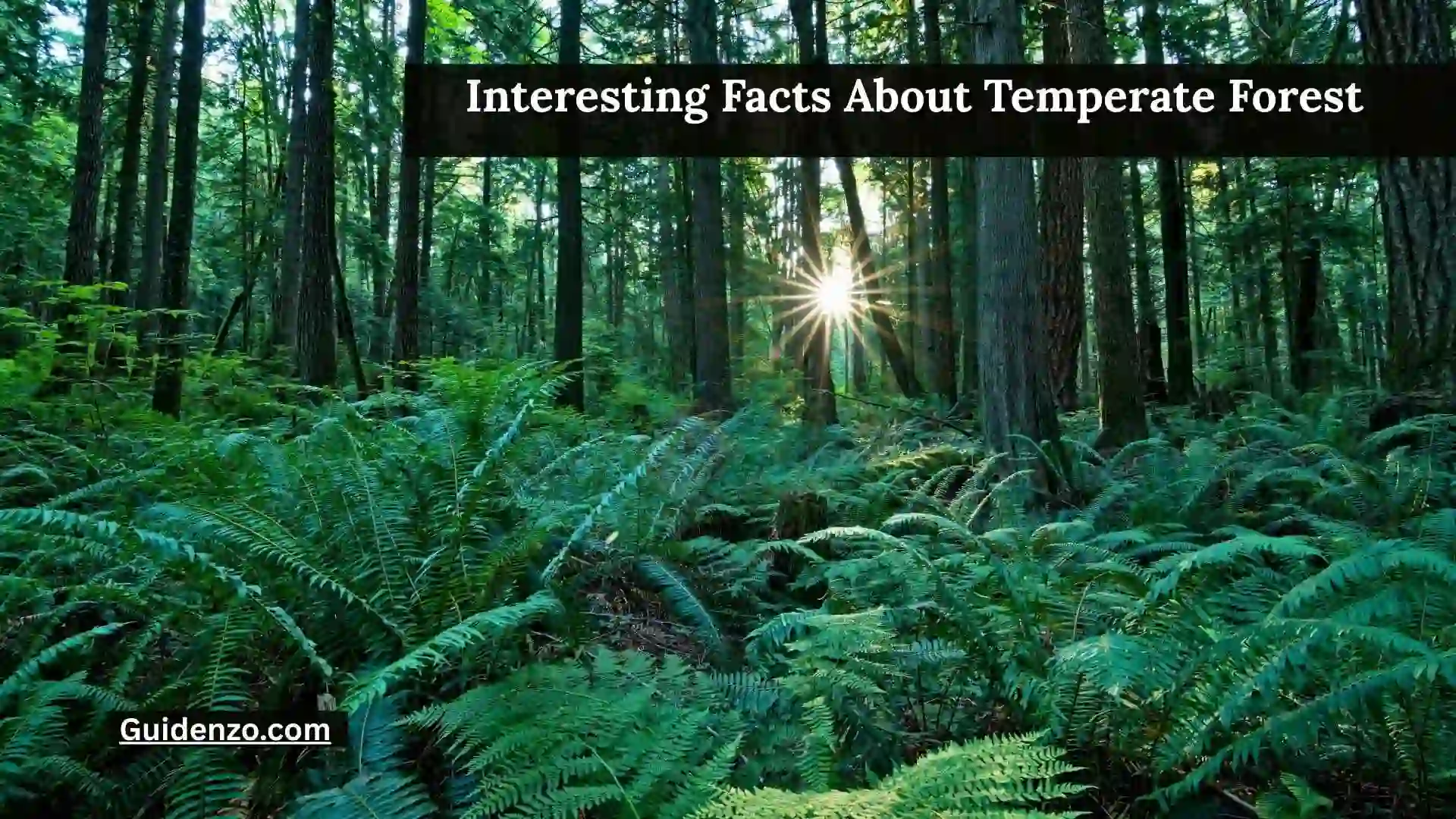
Interesting facts about temperate forest ecosystems reveal a world of seasonal change, incredible biodiversity, and complex relationships between plants, animals, fungi, and climate. These forests cover large regions of Earth and play a major role in regulating temperatures, storing carbon, protecting soil, and supporting wildlife.
Unlike tropical rainforests that remain warm and green throughout the year, temperate forests experience four distinct seasons. Trees lose their leaves in autumn, animals adapt to changing conditions, and entire ecosystems transform as winter approaches.
From ancient trees that have survived for centuries to underground fungal networks connecting plants, temperate forests contain many surprising secrets. This guide explores the most fascinating facts about temperate forests, including their geography, wildlife, history, scientific importance, myths, and why these ecosystems matter today.
Quick Answer
Temperate forests are ecosystems found mainly between tropical and polar regions where temperatures change significantly throughout the year. They are known for four seasons, deciduous trees, diverse wildlife, fertile soils, and moderate rainfall. Temperate forests exist in North America, Europe, Asia, South America, Australia, and New Zealand, and they help regulate climate, store carbon, and support biodiversity.
Quick Facts About Temperate Forests
| Category | Information |
| Topic | Temperate Forests |
| Ecosystem Type | Forest biome |
| Main Locations | North America, Europe, East Asia, South America, Australia, New Zealand |
| Climate | Moderate temperatures with four seasons |
| Annual Rainfall | Approximately 30–60 inches (75–150 cm) in many regions |
| Common Trees | Oak, maple, beech, birch, chestnut, fir, pine |
| Main Plant Type | Deciduous and evergreen trees |
| Biodiversity | Thousands of plant, animal, and fungal species |
| Tree Lifespan | Many species live 100–500+ years |
| Largest Regions | Eastern North America, Western Europe, East Asia |
| Fun Fact | Some temperate forests contain underground fungal networks that connect trees and exchange nutrients |
30 Interesting Facts About Temperate Forests
1. Temperate Forests Experience Four Distinct Seasons
The Fact
One of the most defining features of temperate forests is their changing seasons. These forests experience spring, summer, autumn, and winter, each bringing different environmental conditions.
During spring, plants grow rapidly as temperatures rise. Summer provides long daylight hours for photosynthesis. Autumn brings colorful leaves and preparation for winter. During winter, many trees become dormant to conserve energy.
Why It Matters
Seasonal changes influence every part of the ecosystem. Animals adjust their behavior, plants change their growth patterns, and food availability shifts throughout the year.
Did You Know?
The brilliant red, orange, and yellow colors of autumn leaves appear when trees stop producing chlorophyll, the pigment responsible for green color.
Additional Context
The four-season cycle makes temperate forests highly dynamic ecosystems where survival depends on adaptation and timing.
2. Temperate Forests Are Found Across Multiple Continents

The Fact
Temperate forests exist in several regions around the world, including eastern North America, Europe, China, Japan, Chile, Australia, and New Zealand.
Although these forests share similar climate patterns, their species can be very different. For example, an oak forest in the United States may look completely different from a beech forest in Europe.
Why It Matters
The global distribution of temperate forests shows how similar environmental conditions can create different ecosystems depending on geography and evolutionary history.
Did You Know?
Some temperate forests are located thousands of miles apart but contain unrelated species that perform similar ecological roles.
Additional Context
Scientists study these forests to understand how ecosystems develop under similar climate conditions in different parts of the world.
3. Many Temperate Forest Trees Lose Their Leaves
The Fact
Many temperate forest trees are deciduous, meaning they shed their leaves during autumn. Common examples include maple, oak, birch, and beech trees.
Trees lose leaves because maintaining them during freezing winters requires too much energy and water. Dropping leaves allows trees to survive harsh conditions.
Why It Matters
Leaf loss reduces water loss and protects trees from winter damage. Fallen leaves also enrich the soil as they decompose.
Did You Know?
A single large tree can release thousands of leaves during autumn.
Additional Context
Deciduous forests are closely connected to nutrient cycles because fallen leaves become food for fungi, insects, and microorganisms.
4. Temperate Forests Have Extremely Rich Soils
The Fact
Temperate forests often contain some of the most fertile soils on Earth. This fertility comes from the annual breakdown of fallen leaves, branches, and other organic material.
Decomposers such as fungi, bacteria, and insects transform dead material into nutrients that plants can reuse.
Why It Matters
Healthy soil supports large trees and diverse plant communities. Without nutrient recycling, forest growth would decline.
Did You Know?
The dark layer of organic soil found in many forests is called humus.
Additional Context
Soil quality affects everything from tree growth to water filtration and carbon storage.
5. Some Temperate Forest Trees Are Hundreds of Years Old
The Fact
Many temperate forest trees can live for centuries. Oak, beech, and some conifer species may survive for several hundred years under favorable conditions.
Ancient trees provide habitats for birds, insects, fungi, and small mammals.
Why It Matters
Old trees are important because they create complex habitats that younger forests cannot immediately replace.
Did You Know?
A tree’s age can often be estimated by counting growth rings inside its trunk.
Additional Context
Protecting old-growth temperate forests helps preserve unique ecological communities.
6. Temperate Forests Store Large Amounts of Carbon
The Fact
Trees in temperate forests absorb carbon dioxide from the atmosphere through photosynthesis. They store carbon in their trunks, roots, branches, and soil.
Healthy forests act as natural carbon storage systems.
Why It Matters
Carbon storage helps reduce the amount of greenhouse gases contributing to climate change.
Did You Know?
Forest soils can store more carbon than the trees growing above them.
Additional Context
Protecting and restoring temperate forests is considered an important climate strategy.
7. Fungi Create Underground Forest Networks
The Fact
Many temperate forests contain mycorrhizal networks, underground connections between fungi and plant roots.
Fungi help trees absorb water and nutrients while receiving sugars produced by trees through photosynthesis.
Why It Matters
These relationships show that forests are not just collections of individual trees. They function as interconnected communities.
Did You Know?
Some scientists describe these fungal networks as a “wood wide web.”
Additional Context
Research suggests these underground systems may help plants communicate chemical signals and share resources.
8. Temperate Forests Support Thousands of Species
The Fact
Temperate forests provide habitats for mammals, birds, reptiles, amphibians, insects, fungi, and countless microorganisms.
Animals commonly found in these forests include deer, foxes, bears, squirrels, owls, woodpeckers, and salamanders.
Why It Matters
Biodiversity makes ecosystems stronger and more resistant to environmental changes.
Did You Know?
A single fallen log can support hundreds of organisms, including insects, fungi, and mosses.
Additional Context
Even small forest areas can contain complex food webs.
9. Many Animals Adapt Through Seasonal Changes

The Fact
Wildlife in temperate forests has developed special adaptations for surviving seasonal conditions.
Some animals migrate, some hibernate, and others store food before winter arrives.
Why It Matters
Seasonal adaptation allows species to survive despite dramatic changes in temperature and food supply.
Did You Know?
Squirrels often hide thousands of seeds and nuts to prepare for winter.
Additional Context
Animal survival depends on timing, memory, behavior, and physical adaptations.
10. Autumn Colors Are Chemical Signals
The Fact
The colorful leaves of autumn are caused by changes in plant chemistry. As chlorophyll disappears, other pigments become visible.
Carotenoids create yellow and orange colors, while anthocyanins create red shades.
Why It Matters
Leaf color changes are not just beautiful. They represent a tree’s preparation for winter.
Did You Know?
Weather conditions can influence how bright autumn colors become.
Additional Context
Cool temperatures and sunny days often produce stronger red pigments.
11. Temperate Forests Help Control Water Cycles
The Fact
Forests absorb rainfall, slow water movement, and release moisture back into the atmosphere through a process called transpiration.
Trees act like natural water management systems.
Why It Matters
Healthy forests reduce flooding, protect rivers, and maintain local climates.
Did You Know?
Tree roots can help prevent soil from being washed away during heavy rainfall.
Additional Context
Forest removal can change local water patterns and increase erosion.
12. Temperate Forests Are Home to Many Birds
The Fact
Bird species such as woodpeckers, owls, warblers, and hawks depend on temperate forests for nesting and feeding.
Trees provide shelter, while insects and seeds provide food.
Why It Matters
Birds help control insect populations and spread seeds.
Did You Know?
Woodpeckers create tree cavities that later become homes for other animals.
Additional Context
Bird diversity is often used as an indicator of forest health.
13. Some Temperate Forests Contain Evergreen Trees
The Fact
Although many temperate forests are known for deciduous trees, some also contain evergreen species such as pine, spruce, and fir.
These trees keep their needles throughout the year.
Why It Matters
Evergreen trees allow forests to maintain vegetation even during colder months.
Did You Know?
Needle-shaped leaves reduce water loss and help evergreens survive winter conditions.
Additional Context
Mixed forests containing both deciduous and evergreen trees are common in many regions.
14. Temperate Forests Have Complex Food Webs
The Fact
Energy moves through temperate forests through interconnected food chains.
Plants provide food for herbivores, which support predators. Decomposers recycle nutrients back into the ecosystem.
Why It Matters
A balanced food web keeps populations stable.
Did You Know?
Removing one species can sometimes affect many others connected to it.
Additional Context
Ecologists study food webs to understand ecosystem stability.
15. Humans Have Relied on Temperate Forests for Thousands of Years
The Fact
Human civilizations have used temperate forests for timber, food, medicine, shelter, and fuel for centuries.
Many communities developed near forests because these ecosystems provided valuable resources.
Why It Matters
Temperate forests have shaped human history and culture.
Did You Know?
Many traditional medicines come from compounds found in forest plants.
Additional Context
Modern conservation aims to balance human needs with ecosystem protection.
16. Temperate Forests Are Different From Rainforests
The Fact
Temperate forests and tropical rainforests are both important ecosystems, but they differ greatly.
Rainforests are warmer and usually more biologically diverse, while temperate forests experience stronger seasonal changes.
Why It Matters
Understanding these differences helps people appreciate the unique role of each biome.
Did You Know?
Temperate forests often have fewer tree species but can still support complex ecosystems.
Additional Context
Both forest types are essential for global climate regulation.
17. Mosses and Lichens Are Important Forest Organisms
The Fact
Mosses and lichens grow on forest floors, rocks, and tree surfaces. They help retain moisture and contribute to nutrient cycling.
Why It Matters
Small organisms play major roles in maintaining forest health.
Did You Know?
Lichens are partnerships between fungi and algae or bacteria.
Additional Context
Scientists use lichens to monitor air quality because some species are sensitive to pollution.
18. Temperate Forests Protect Wildlife Corridors
The Fact
Connected forest areas allow animals to move safely between habitats.
Wildlife corridors help species find food, mates, and new territories.
Why It Matters
Fragmented habitats can isolate animal populations and reduce genetic diversity.
Did You Know?
Roads and cities are major causes of forest fragmentation.
Additional Context
Conservation programs often focus on reconnecting separated forest landscapes.
19. Forest Fires Can Be Natural and Necessary
The Fact
Some temperate forests depend on occasional fires for ecosystem renewal.
Fire can remove old vegetation, recycle nutrients, and create opportunities for new growth.
Why It Matters
Not every fire damages a forest. The impact depends on intensity, frequency, and ecosystem type.
Did You Know?
Some plant species release seeds more successfully after fire.
Additional Context
Human-caused fires are often more destructive because they may occur too frequently.
20. Temperate Forests Are Changing Due to Climate Change
The Fact
Rising temperatures are affecting temperate forests by changing growing seasons, species ranges, and weather patterns.
Some trees may struggle if conditions become too warm or dry.
Why It Matters
Climate changes can disrupt relationships between plants, animals, and seasons.
Did You Know?
Some species are moving toward cooler regions as temperatures rise.
Additional Context
Forest conservation helps ecosystems adapt to environmental changes.
Timeline of Temperate Forest History
| Period | Event |
| Millions of years ago | Temperate forest ecosystems developed as climates changed |
| Thousands of years ago | Humans began using forests for food, tools, and shelter |
| 1800s | Large-scale logging expanded in many regions |
| 1900s | Forest conservation movements increased worldwide |
| Today | Scientists focus on restoration, biodiversity, and climate protection |
Temperate Forest Statistics
| Feature | Approximate Information |
| Major continents | 6 inhabited continents |
| Main climate zones | Mid-latitude regions |
| Common rainfall | 30–60 inches annually |
| Common tree height | 50–100 feet or more |
| Major threats | Deforestation, fragmentation, climate change |
| Main benefits | Carbon storage, biodiversity, clean water |
Myth vs Fact About Temperate Forests
| Myth | Fact |
| Temperate forests are not very diverse | They support thousands of species |
| All temperate forest trees lose leaves | Many evergreen species remain green |
| Forests are only trees | Forests include animals, fungi, soil organisms, and plants |
| Fire always destroys forests | Some ecosystems depend on natural fire cycles |
| Older forests have little value | Old-growth forests provide unique habitats |
Common Misconceptions About Temperate Forests
Temperate Forests Are Empty During Winter
Many people assume forests become lifeless during winter, but animals remain active. Some migrate, some hibernate, and others continue searching for food beneath snow and leaves.
Forests Are Only Made of Trees
A forest is an entire ecosystem. Trees are important, but fungi, insects, microorganisms, plants, and animals all contribute to its survival.
All Temperate Forests Look the Same
Temperate forests vary widely depending on location, climate, soil, and species composition.
Why Temperate Forests Matter Today
Temperate forests provide essential ecosystem services. They store carbon, protect freshwater supplies, prevent soil erosion, and support biodiversity.
They also improve human well-being by providing recreation, clean air, natural beauty, and opportunities for scientific research.
Protecting these forests is important because they are not renewable on human timescales when destroyed. A mature forest may require centuries to develop its full ecological complexity.
Related Discoveries
Forest Ecology
Forest ecology studies relationships between organisms and their environment. It helps scientists understand how forests grow, change, and recover.
Biodiversity Conservation
Temperate forests are important areas for protecting species and maintaining genetic diversity.
Climate Science
Forest research contributes to understanding carbon cycles and climate regulation.
Urban Forests
Cities increasingly use trees and forest-like landscapes to reduce heat, improve air quality, and support wildlife.
Expert Insights
Temperate forests should be viewed as living systems rather than simple collections of trees. Every organism contributes to the balance of the ecosystem.
Scientists often focus on protecting ecosystem connections rather than only individual species. A forest with connected habitats, healthy soil, and diverse organisms is more likely to survive environmental stress.
Another important insight is that conservation does not always mean preventing all change. Forests naturally change over time. Effective management allows natural processes while reducing harmful human impacts.
Frequently Asked Questions About Temperate Forests
1. What is a temperate forest?
A temperate forest is a biome found in regions with moderate temperatures and distinct seasons. These forests usually contain deciduous trees, evergreen trees, diverse wildlife, and significant rainfall throughout the year.
2. Where are temperate forests located?
Temperate forests are found mainly in eastern North America, Europe, East Asia, parts of South America, Australia, and New Zealand.
3. What trees grow in temperate forests?
Common temperate forest trees include oak, maple, beech, birch, pine, fir, and spruce. The exact species depend on location and climate.
4. Why do temperate forest trees lose their leaves?
Many trees lose leaves to conserve water and energy during cold winter months when sunlight is limited and growth slows.
5. Are temperate forests endangered?
Many temperate forests face threats from logging, habitat loss, pollution, invasive species, and climate change.
6. How do temperate forests help humans?
They provide clean water, oxygen, carbon storage, resources, recreation, and protection against soil erosion.
7. What animals live in temperate forests?
Common animals include deer, foxes, bears, squirrels, rabbits, birds, amphibians, reptiles, and many insects.
8. How old can temperate forest trees become?
Many temperate forest trees live for hundreds of years, while some individual trees can survive much longer.
9. What is the difference between a temperate forest and a rainforest?
Temperate forests have stronger seasonal changes and cooler temperatures, while rainforests are warmer and generally receive more rainfall.
10. How can people protect temperate forests?
People can help by supporting conservation, reducing waste, planting native trees, protecting habitats, and using forest resources responsibly.
Key Takeaways
- Temperate forests are ecosystems with moderate climates and four distinct seasons.
- They exist across North America, Europe, Asia, South America, and other regions.
- Many temperate trees lose leaves to survive winter conditions.
- Forests contain complex relationships between trees, fungi, animals, and microorganisms.
- Temperate forests store carbon and help regulate climate.
- Biodiversity makes these ecosystems resilient and valuable.
- Human activities and climate change threaten many temperate forest regions.
- Protecting forests preserves both wildlife and human benefits.
Conclusion
Interesting facts about temperate forest ecosystems show that these landscapes are far more than groups of trees. They are living networks where plants, animals, fungi, soil, water, and climate interact in remarkable ways.
From ancient trees and colorful autumn leaves to underground fungal connections and seasonal wildlife adaptations, temperate forests demonstrate nature’s ability to create balance and resilience.
As the world faces environmental challenges, protecting temperate forests has become more important than ever. These forests support biodiversity, store carbon, and provide benefits that reach far beyond their boundaries. Understanding their hidden wonders helps us appreciate why these ecosystems deserve protection for future generations.

I am Oliver Ashford, a curious writer with a passion for uncovering the surprising stories hidden behind everyday things. I enjoy exploring history, science, nature, and unusual human achievements. Through my writing, I aim to make learning enjoyable by turning fascinating information into simple, engaging, and memorable facts.
Books:
- The Curious World: 500 Facts That Surprise Everyone
- Hidden Stories Behind Everyday Things