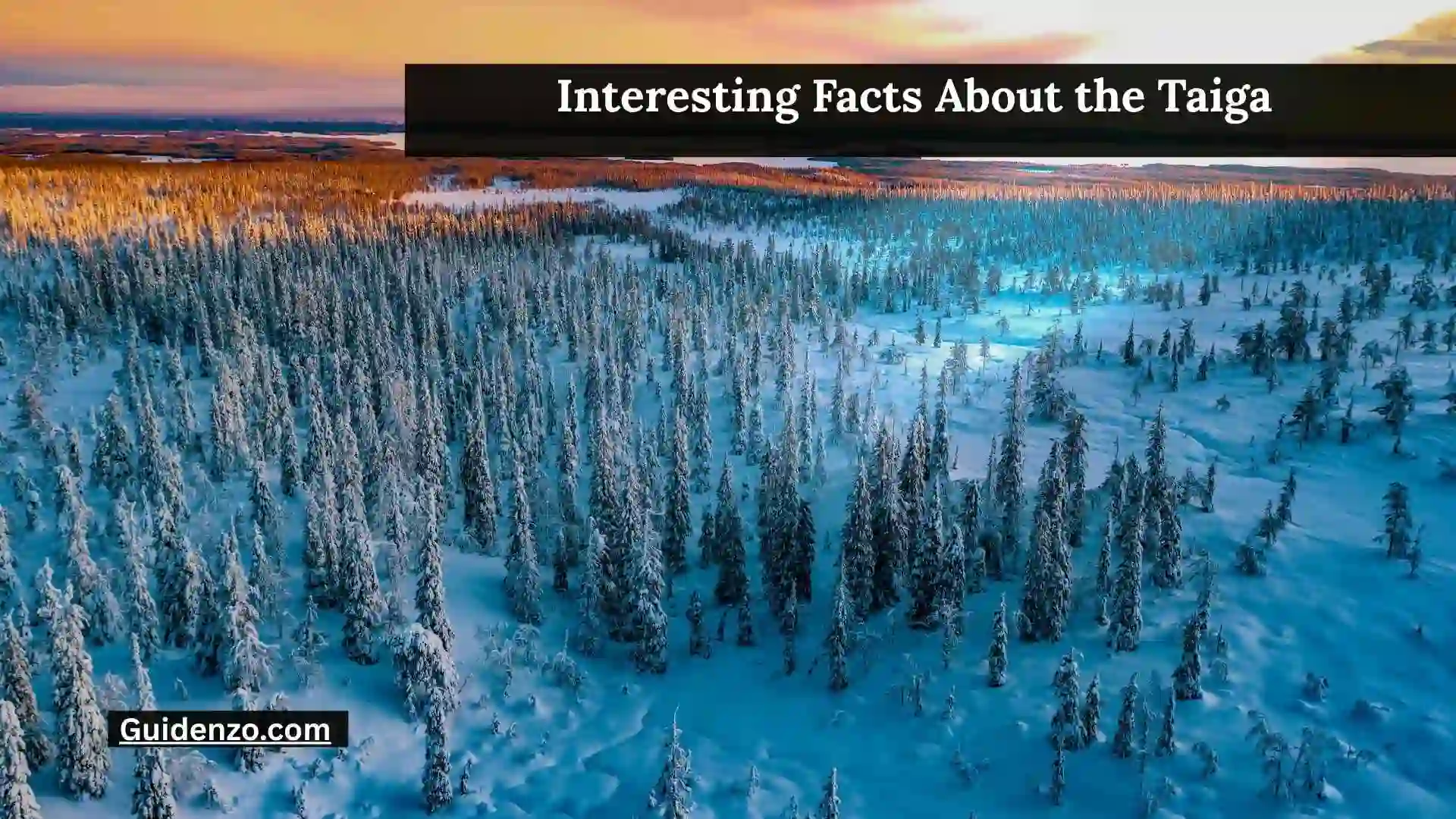
Interesting facts about the taiga reveal one of Earth’s most remarkable natural environments, a vast wilderness shaped by freezing winters, resilient plants, and incredible wildlife. Stretching across northern regions of North America, Europe, and Asia, the taiga is the planet’s largest land biome and plays a major role in regulating Earth’s climate.
Often called the boreal forest, the taiga may appear quiet and empty at first glance, but it supports thousands of species and stores enormous amounts of carbon. From trees that survive extreme cold to animals adapted for months of darkness, this ecosystem is full of surprising stories.
In this article, you will discover the geography, history, wildlife, climate, scientific importance, cultural connections, and the most fascinating facts about the taiga.
Quick Answer
The taiga is the world’s largest terrestrial biome, covering vast areas of Canada, Alaska, Scandinavia, and Russia. It is a cold forest ecosystem dominated by conifer trees such as spruce, pine, and fir. The taiga is important because it stores carbon, supports unique wildlife, influences global climate patterns, and acts as a major natural carbon reservoir.
Quick Facts About the Taiga
| Category | Information |
| Common Name | Taiga or Boreal Forest |
| Scientific Classification | Terrestrial biome |
| Location | Northern North America, Europe, and Asia |
| Largest Regions | Russia, Canada, Alaska, Scandinavia |
| Approximate Coverage | About 11% of Earth’s land surface |
| Climate | Subarctic with long cold winters |
| Main Vegetation | Spruce, fir, pine, larch, mosses, lichens |
| Largest Forest Area | Siberian taiga in Russia |
| Age | Developed after the last Ice Age approximately 10,000 years ago |
| Temperature Range | Winters can fall below -40°F (-40°C) |
| Wildlife | Moose, bears, wolves, lynx, foxes, birds |
| Lifespan of Trees | Many conifers can live hundreds of years |
| Fun Fact | The taiga is the largest forest region on Earth |
40 Interesting Facts About the Taiga
1. The Taiga Is the Largest Forest Biome on Earth
The Fact:
The taiga is the largest terrestrial biome, covering millions of square miles across the Northern Hemisphere. It forms a massive green belt that stretches from Alaska and Canada across northern Europe and into Russia.
Why It Matters:
Because of its enormous size, the taiga influences global weather patterns, biodiversity, and carbon storage. It is one of the most important ecosystems for maintaining Earth’s environmental balance.
Did You Know?
The Russian taiga alone covers a larger area than many entire countries combined.
Additional Context:
Although people often imagine tropical rainforests as the world’s largest forests, the boreal forest actually covers more land area because of its continuous northern distribution.
2. The Taiga Exists Mainly in the Northern Hemisphere
The Fact:
The taiga is found almost entirely in the Northern Hemisphere because the southern continents do not have large areas with the same combination of cold temperatures and landmass.
Why It Matters:
The location of the taiga is closely connected to Earth’s climate zones. Its position near the Arctic Circle creates the long winters and short summers needed for this ecosystem.
Did You Know?
Major taiga regions include Canada, Alaska, Norway, Sweden, Finland, and Russia.
Additional Context:
The taiga forms a transition zone between the colder tundra to the north and warmer temperate forests to the south.
3. The Taiga Is Also Called the Boreal Forest
The Fact:
The terms “taiga” and “boreal forest” are often used interchangeably, although they come from different languages and scientific traditions.
Why It Matters:
Understanding both names helps people recognize that they describe the same important ecosystem.
Did You Know?
The word “boreal” comes from Boreas, the ancient Greek god associated with the north wind.
Additional Context:
“Taiga” comes from a Russian word describing the northern forest regions. Scientists commonly use “boreal forest” when discussing ecology and climate.
4. Taiga Winters Are Among the Harshest on Earth
The Fact:
The taiga experiences extremely cold winters, with temperatures sometimes dropping below -40°F (-40°C). Snow can cover the ground for many months.
Why It Matters:
These harsh conditions determine which plants and animals can survive. Only species with special adaptations can thrive in such an environment.
Did You Know?
Some taiga areas experience winter darkness for several weeks because of their northern latitude.
Additional Context:
Despite the extreme cold, the taiga is not lifeless. Many organisms have evolved remarkable strategies to survive freezing conditions.
5. Conifer Trees Dominate the Taiga Landscape
The Fact:
The taiga is famous for its evergreen conifer trees, including spruce, fir, pine, and larch. These trees have needle-like leaves that help them survive cold climates.
Why It Matters:
Conifers shape the entire ecosystem by providing food, shelter, and nesting areas for countless species.
Did You Know?
Evergreen needles reduce water loss compared with broad leaves.
Additional Context:
The dark green color of conifer forests helps absorb sunlight, which provides some warmth during cold months.
6. Some Taiga Trees Can Live for Hundreds of Years
The Fact:
Many taiga trees grow slowly but survive for centuries. Some spruce and pine species can live several hundred years under suitable conditions.
Why It Matters:
Older forests provide valuable habitats and store large amounts of carbon.
Did You Know?
Slow growth helps trees conserve energy in environments where the growing season is short.
Additional Context:
Ancient trees also preserve information about past climates through their growth rings.
7. The Taiga Has a Very Short Growing Season
The Fact:
Plants in the taiga often have only a few months each year to grow and reproduce. Summers are short but can have long daylight hours.
Why It Matters:
The limited growing period explains why many taiga plants grow slowly and have specialized adaptations.
Did You Know?
Near the Arctic Circle, summer days can remain bright for almost 24 hours.
Additional Context:
The combination of sunlight and warmer temperatures allows plants to rapidly complete important growth processes.
8. The Taiga Stores Massive Amounts of Carbon

The Fact:
The taiga is one of the world’s largest carbon storage systems. Trees, soil, and peatlands in boreal regions hold enormous amounts of carbon.
Why It Matters:
Carbon storage helps regulate the amount of carbon dioxide in the atmosphere, influencing climate stability.
Did You Know?
Boreal soils can store more carbon than the vegetation growing above them.
Additional Context:
When forests are damaged by fires, logging, or climate change, stored carbon can be released back into the atmosphere.
9. The Taiga Contains Huge Peatlands
The Fact:
Many taiga regions contain wetlands and peatlands formed from partially decomposed plants accumulated over thousands of years.
Why It Matters:
Peatlands act like natural carbon banks and help regulate water flow.
Did You Know?
Some peat deposits in northern regions are thousands of years old.
Additional Context:
Protecting peatlands is considered important for preventing additional greenhouse gas emissions.
10. Wildlife in the Taiga Has Incredible Adaptations
The Fact:
Animals living in the taiga have developed unique features to survive cold temperatures, limited food, and seasonal changes.
Why It Matters:
These adaptations show how life can adjust to extreme environments.
Did You Know?
Many mammals grow thicker winter coats during colder months.
Additional Context:
Species survival depends on behaviors such as migration, hibernation, camouflage, and food storage.
11. Moose Are Iconic Taiga Animals
The Fact:
The moose is one of the most recognizable large mammals of the taiga. These animals feed on shrubs, aquatic plants, and tree vegetation.
Why It Matters:
Moose influence plant growth and provide food for predators such as wolves.
Did You Know?
Male moose grow some of the largest antlers among modern mammals.
Additional Context:
Their long legs help them move through deep snow and wetlands.
12. The Taiga Supports Large Predator Populations
The Fact:
Predators such as gray wolves, lynx, bears, and wolverines live throughout many taiga regions.
Why It Matters:
Predators maintain ecological balance by controlling prey populations.
Did You Know?
The Canada lynx has large paws that work like natural snowshoes.
Additional Context:
Healthy predator populations are often indicators of functioning ecosystems.
13. Many Taiga Birds Migrate Thousands of Miles
The Fact:
Although the taiga is cold, it becomes an important breeding ground for many birds during summer.
Why It Matters:
Migratory birds connect ecosystems across continents.
Did You Know?
Some birds travel between Arctic regions and tropical areas each year.
Additional Context:
Long summer daylight provides abundant insects and food for raising young birds.
14. The Taiga Has Extremely Poor Soil in Many Areas
The Fact:
Many taiga soils are acidic and low in nutrients because cold temperatures slow decomposition.
Why It Matters:
Poor soil conditions limit plant diversity compared with warmer forests.
Did You Know?
Fallen needles from conifer trees contribute to acidic soil conditions.
Additional Context:
Despite limited nutrients, taiga plants have adapted successfully over thousands of years.
15. Wildfires Are a Natural Part of the Taiga Ecosystem
The Fact:
Fire plays an important ecological role in many taiga regions by clearing old vegetation and allowing new growth.
Why It Matters:
Some plants depend on fire to reproduce or release seeds.
Did You Know?
Certain pine species require heat from fires to open their cones.
Additional Context:
However, climate change and human activities can increase fire frequency and intensity.
16. The Siberian Taiga Is the Largest Continuous Forest Area
The Fact:
Russia contains the largest continuous stretch of taiga on Earth, extending across Siberia.
Why It Matters:
The Siberian forest is a major global carbon reservoir and wildlife habitat.
Did You Know?
Some Siberian areas remain among the least populated places on Earth.
Additional Context:
The size and remoteness of Siberia make studying and protecting these forests challenging.
17. The Taiga Was Shaped by Ancient Ice Ages
The Fact:
The modern taiga developed after glaciers retreated at the end of the last Ice Age.
Why It Matters:
Ice ages influenced the distribution of plants, animals, and landscapes.
Did You Know?
Glaciers carved many lakes and valleys now found in northern forests.
Additional Context:
Today’s taiga represents thousands of years of ecological change.
18. The Taiga Has Fewer Plant Species Than Tropical Forests
The Fact:
Compared with tropical rainforests, the taiga has lower plant diversity because cold temperatures restrict growth.
Why It Matters:
Different ecosystems support different types of biodiversity.
Did You Know?
A tropical forest may contain hundreds of tree species, while a taiga forest may be dominated by only a few.
Additional Context:
Low diversity does not mean low importance. Each taiga species plays a critical ecological role.
19. The Taiga Helps Control Earth’s Climate
The Fact:
The taiga affects climate by storing carbon, influencing water cycles, and reflecting sunlight.
Why It Matters:
Changes in boreal forests can influence global climate systems.
Did You Know?
Snow-covered forests reflect some sunlight back into space.
Additional Context:
Scientists closely monitor taiga regions because they respond quickly to warming temperatures.
20. Indigenous Peoples Have Deep Connections With the Taiga
The Fact:
Many Indigenous communities have lived in and around the taiga for thousands of years.
Why It Matters:
Traditional knowledge provides valuable understanding of forest ecosystems.
Did You Know?
Indigenous cultures often use forest plants, animals, and landscapes in sustainable ways.
Additional Context:
Protecting the taiga also means respecting the cultural heritage connected to these lands.
Timeline of the Taiga
| Time Period | Important Event |
| Over 10,000 years ago | Glaciers retreat after the last Ice Age |
| 8,000–10,000 years ago | Boreal forests expand across northern regions |
| Thousands of years ago | Indigenous cultures develop relationships with taiga environments |
| 1800s–1900s | Large-scale forestry begins in many regions |
| Late 20th century | Scientists increase research on boreal climate importance |
| Today | Conservation efforts focus on protecting forests and carbon storage |
Taiga Statistics Table
| Feature | Approximate Information |
| Global Coverage | About 11% of Earth’s land area |
| Main Locations | Canada, Russia, Alaska, Scandinavia |
| Dominant Trees | Spruce, fir, pine, larch |
| Winter Duration | Up to 6–8 months in many regions |
| Major Animals | Moose, wolves, bears, lynx |
| Main Threats | Climate change, logging, wildfires |
| Ecosystem Type | Boreal forest biome |
Myth vs Fact About the Taiga
| Myth | Fact |
| The taiga is an empty frozen wasteland | The taiga supports thousands of species |
| Only a few plants survive there | Many specialized plants thrive in the biome |
| Forest fires are always harmful | Natural fires can support ecosystem renewal |
| The taiga has no climate importance | It stores huge amounts of carbon |
| All taiga forests look identical | Different regions have unique species and landscapes |
Common Misconceptions About the Taiga
The Taiga Is Not the Same as the Tundra
The taiga and tundra are both northern ecosystems, but they are different. The tundra is colder and usually lacks large trees, while the taiga contains extensive forests.
The Taiga Is Not Always Covered in Snow
Although winters are long and snowy, summers can be surprisingly warm and productive, allowing plants and animals to thrive.
The Taiga Is Not Biologically Empty
Many people underestimate the biodiversity of boreal forests. Mammals, birds, insects, fungi, and plants create complex food networks.
Why the Taiga Matters Today
The taiga matters because it helps regulate Earth’s climate, protects biodiversity, supports Indigenous communities, and provides important natural resources.
As global temperatures rise, northern forests are experiencing changes such as increased wildfires, shifting species ranges, and changing soil conditions. Protecting the taiga is important not only for northern countries but for the entire planet.
Related Discoveries and Concepts
The taiga connects to many important scientific topics, including:
- Boreal forest ecology: The study of northern forest systems.
- Carbon cycles: How carbon moves between forests, soil, and the atmosphere.
- Climate change research: Monitoring how warming affects cold ecosystems.
- Permafrost studies: Understanding frozen ground beneath northern landscapes.
- Wildlife adaptation science: Exploring how animals survive extreme environments.
Expert Insights
Scientists consider the taiga one of Earth’s most important natural systems because it combines enormous size with significant climate influence. Unlike smaller ecosystems, changes across millions of square miles of boreal forest can affect global carbon levels.
Experts also emphasize that conservation requires balancing human needs with ecosystem protection. Sustainable forestry, Indigenous land management, and wildfire research all contribute to maintaining healthy taiga landscapes.
Frequently Asked Questions About the Taiga
1. What is the taiga?
The taiga is the world’s largest forest biome, located across northern regions of North America, Europe, and Asia. It is characterized by cold climates, conifer forests, short summers, and unique wildlife adapted to extreme conditions.
2. Why is the taiga important?
The taiga is important because it stores carbon, supports biodiversity, regulates climate systems, and provides habitats for many species. It also holds cultural importance for Indigenous communities.
3. What trees grow in the taiga?
The main trees found in the taiga are spruce, fir, pine, and larch. These conifers have adaptations that allow them to survive cold temperatures and short growing seasons.
4. What animals live in the taiga?
Common taiga animals include moose, wolves, brown bears, black bears, lynx, foxes, wolverines, and many migratory birds.
5. How cold does the taiga get?
Winter temperatures in the taiga can fall below -40°F (-40°C), especially in Siberia and northern Canada. Winters are usually long and severe.
6. Is the taiga bigger than a rainforest?
Yes. The taiga is the largest terrestrial biome by land area, covering more ground than tropical rainforests.
7. What threatens the taiga?
Major threats include climate change, increased wildfires, habitat loss, industrial development, and unsustainable logging.
8. Where is the largest taiga forest?
The largest continuous taiga region is located in Siberia, Russia.
9. Do people live in the taiga?
Yes. Indigenous communities and small settlements exist throughout many taiga regions, although population density is generally low.
10. How old is the taiga?
Modern taiga forests developed after the last Ice Age, roughly 10,000 years ago, although individual forests have changed continuously over time.
Key Takeaways
- The taiga is Earth’s largest forest biome.
- It stretches across Canada, Russia, Alaska, and northern Europe.
- Conifer trees dominate because they survive cold conditions.
- The taiga stores enormous amounts of carbon.
- Wildlife has developed unique adaptations for survival.
- Wildfires are a natural part of many taiga ecosystems.
- Indigenous cultures have deep connections with boreal forests.
- Protecting the taiga helps protect global climate stability.
Conclusion
Interesting facts about the taiga show that this vast northern forest is far more than a cold wilderness. It is a living ecosystem filled with resilient trees, fascinating wildlife, ancient landscapes, and important environmental functions.
From Siberia’s endless forests to Canada’s boreal landscapes, the taiga plays a powerful role in Earth’s natural systems. Understanding and protecting this biome helps preserve biodiversity, support climate balance, and protect one of the planet’s greatest natural treasures.

I am Henry Calloway, an independent researcher and writer who enjoys finding extraordinary facts in ordinary places. From mysterious historical events to remarkable discoveries in nature and science, I believe every subject has a surprising side. I write to entertain curious minds and make complex information easy for everyone.
Books:
- Strange But True: Facts From Around the World
- The Unexpected Guide to Everything