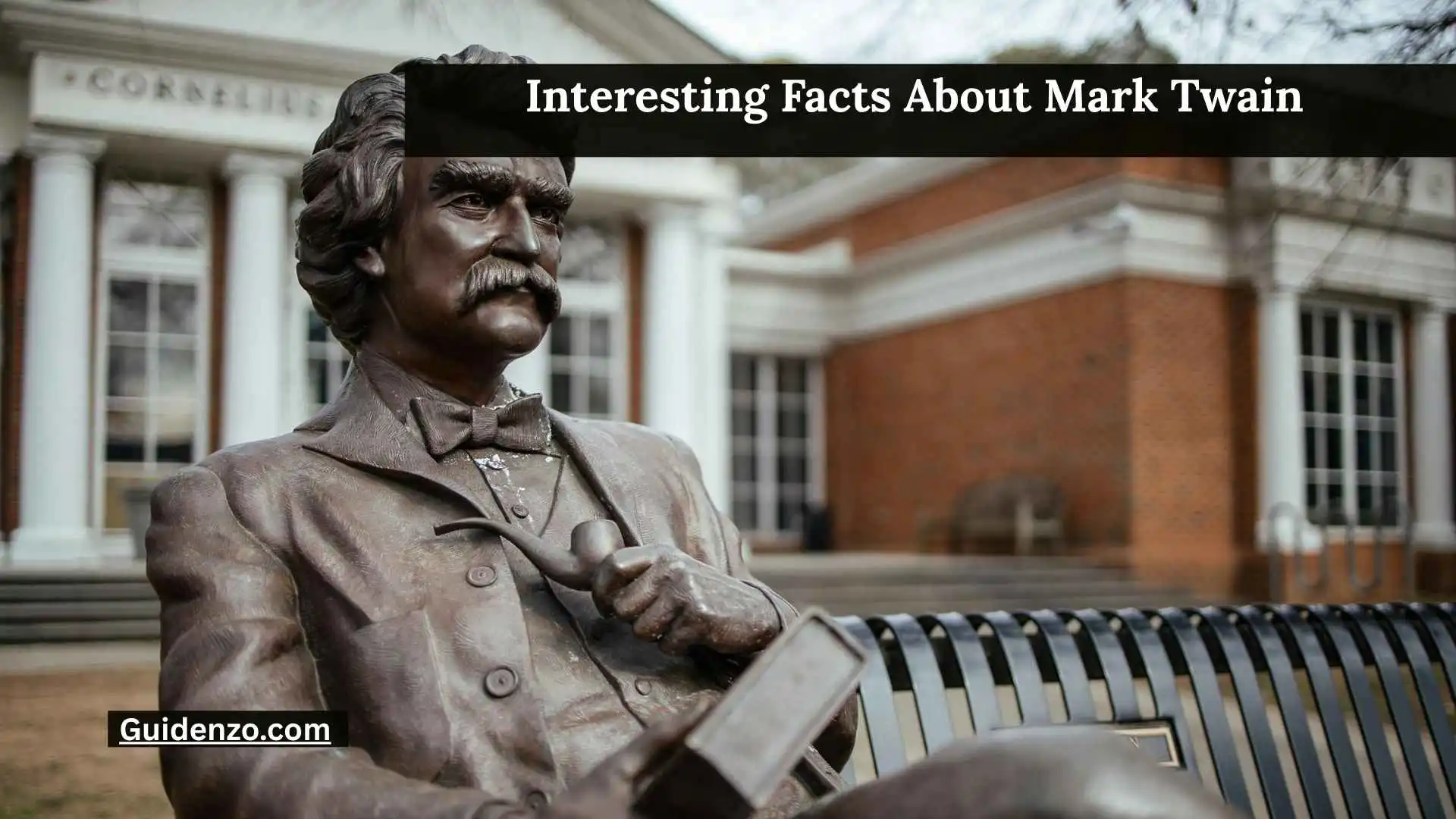
Mark Twain remains one of America’s most enduring literary voices more than a century after his death. His sharp wit, unforgettable characters, and fearless commentary on human nature continue to shape how readers understand the 19th century and the American experience itself. Beyond the familiar stories of Tom Sawyer and Huckleberry Finn lies a life packed with surprising turns, personal tragedies, inventive experiments, and cosmic coincidences that make the man behind the pen name even more compelling.
Quick Answer
Mark Twain, born Samuel Langhorne Clemens in 1835, was a riverboat pilot, journalist, inventor, and novelist whose pen name came from a Mississippi River depth measurement. He predicted his own death would coincide with Halley’s Comet, owned up to 19 cats at once, held three patents, lost a fortune on a failed typesetting machine, and left behind no living direct descendants. His life mixed literary genius with financial disasters and profound personal loss.
Quick Facts Table
| Category | Details |
| Real Name | Samuel Langhorne Clemens |
| Born | November 30, 1835, Florida, Missouri |
| Died | April 21, 1910, Redding, Connecticut |
| Pen Name Origin | Riverboat term for two fathoms (12 feet) |
| Primary Occupations | Author, journalist, lecturer, river pilot |
| Famous Works | The Adventures of Tom Sawyer, Adventures of Huckleberry Finn |
| Family | Married Olivia Langdon; four children |
| Notable Quirk | Owned as many as 19 cats |
| Fun Fact | Predicted he would die with Halley’s Comet |
Main Interesting Facts
1. His Birth and Death Aligned with Halley’s Comet
Samuel Clemens entered the world just after Halley’s Comet appeared in 1835 and left it the day after the comet’s return in 1910. In 1909 he openly predicted the connection, writing that he came in with the comet and expected to go out with it. The timing was uncanny enough that many still treat the story as one of literature’s strangest coincidences. The alignment gave his life a dramatic frame that matched the theatrical flair he brought to his public persona. It also underscored how closely he linked personal destiny with larger natural events.
Why it matters: The story humanizes a literary giant and shows how he shaped his own legend.
Did you know? He called the prospect of missing the comet’s return “the greatest disappointment of my life.”
2. His Real Name Was Samuel Langhorne Clemens
Mark Twain was a carefully chosen pen name. Born Samuel Langhorne Clemens, he experimented with other pseudonyms such as Josh and Thomas Jefferson Snodgrass before settling on Mark Twain in 1863. The name stuck because it carried the authority of his river experience and sounded distinctive. Readers quickly associated the signature with a distinctive American voice. The dual identity allowed him to separate private life from public performance while still drawing on authentic experience.
Why it matters: Understanding the name shift reveals how deliberately he crafted his literary identity.
Did you know? He later claimed he “confiscated” the name from an earlier river writer.
3. “Mark Twain” Means Safe Water Depth
On the Mississippi, leadsmen called “mark twain” to signal two fathoms—twelve feet—of water, the minimum safe depth for steamboats. Clemens adopted the phrase after working as a pilot. The term carried both technical precision and a sense of reassurance. By choosing it, he tied his writing career to the river that shaped his early imagination. The name became a permanent reminder that his greatest material came from lived experience rather than pure invention.
Why it matters: It roots his literary fame in practical knowledge of the American landscape.
Did you know? He first used the signature in Nevada newspaper work long after leaving the river.
4. He Was Born Premature and Frail
Clemens arrived two months early in a small Missouri cabin and remained sickly for years. His mother later admitted she saw “no promise” in the infant. The family worried he might not survive childhood. That early fragility contrasts sharply with the robust public figure he later became. Surviving those first years may have sharpened his appreciation for life’s uncertainties, a theme that runs through much of his darker humor.
Why it matters: The detail challenges the image of an always-confident American icon.
Did you know? He remained frail until about age seven.
5. Childhood in Hannibal Shaped His Fiction
When Clemens was four, the family moved to Hannibal, Missouri, on the Mississippi. The river town, with its caves, steamboats, and mix of frontier energy and social tensions, became the model for St. Petersburg in Tom Sawyer and Huckleberry Finn. Real childhood friends and local events supplied characters and episodes. The setting allowed him to explore freedom, conscience, and the contradictions of American life with lasting power.
Why it matters: Hannibal turned personal memory into national myth.
Did you know? He once discovered a corpse in his father’s office—an experience that later fed his fiction.
6. His Brother Henry Died in a Steamboat Explosion

Clemens encouraged his younger brother Henry to work on the steamboat Pennsylvania. In June 1858 a boiler exploded near Memphis, killing Henry and many others. Clemens had left the boat shortly before the disaster and carried lifelong guilt. The tragedy ended his carefree river years and deepened the melancholy that later balanced his humor. He never fully recovered from the loss.
Why it matters: Personal grief gave emotional weight to his later writing about the river.
Did you know? He claimed to have dreamed details of Henry’s death beforehand.
7. He Briefly Served in a Confederate Unit
At the start of the Civil War, Clemens joined a short-lived Missouri militia unit. After two weeks of confused marching and no combat, he left for the West with his brother Orion. The episode was more farcical than heroic. He later treated it with characteristic self-mockery. The experience confirmed his preference for observation over ideology.
Why it matters: It shows how quickly he rejected sectional conflict in favor of broader experience.
Did you know? Commercial river traffic stopped with the war, ending his piloting career.
8. He Tried Mining Before Turning to Journalism
In Nevada Territory, Clemens attempted silver mining and prospecting with little success. The harsh conditions and financial disappointment pushed him toward newspaper work in Virginia City. Journalism gave him a platform for the humorous sketches that first made his name. Failure in one field forced him into the work that defined his life.
Why it matters: Economic necessity often drives creative careers more than pure inspiration.
Did you know? He lived for a time on a place called Jackass Hill.
9. He Owned as Many as Nineteen Cats
Clemens was a devoted cat lover. At one point the household held nineteen cats with inventive names such as Beelzebub, Blatherskite, and Sour Mash. When traveling he sometimes “rented” cats for company. He once remarked that crossing a man with a cat would improve the man but degrade the cat. The affection reveals a softer, more private side of the public satirist.
Why it matters: The detail humanizes a writer often remembered mainly for sharp social criticism.
Did you know? He preferred cats to most people.
10. He Held Three U.S. Patents
Twain patented an adjustable elastic strap for clothing, a history trivia game focused on European monarchs, and a self-pasting scrapbook whose gummed pages needed only moistening. The scrapbook sold well. The other two inventions found limited markets. His inventive streak showed the same restless curiosity that fueled his writing.
Why it matters: The patents prove he was more than a literary figure; he was a practical tinkerer.
Did you know? The clothing strap is sometimes viewed as an early approach to modern suspenders or even bra-strap design.
11. He Lost a Fortune on the Paige Typesetter
Twain invested heavily—estimates range from $200,000 to $300,000 in contemporary dollars—in an automatic typesetting machine that never became commercially viable. The failure contributed to his bankruptcy in the 1890s. The episode revealed both his optimism about technology and his poor judgment as an investor. He later refused an early opportunity to invest in the telephone.
Why it matters: The story illustrates how even brilliant minds can misread commercial trends.
Did you know? In the 1890s most American families earned less than $1,200 a year.
12. He Paid Off His Debts Through Global Lectures
After bankruptcy, Twain embarked on a demanding worldwide lecture tour. He repaid every creditor in full rather than settling for less. The effort restored his finances and public standing. It also demonstrated a stubborn sense of personal honor that matched the moral seriousness beneath his humor.
Why it matters: The recovery shows resilience as important as genius.
Did you know? The tour took him across Europe, Asia, and other regions.
13. Thomas Edison Filmed Him in 1909
In 1909 Edison visited Twain’s Stormfield home in Redding, Connecticut, and shot what is believed to be the only existing motion-picture footage of the author. The short film shows Twain in his white suit walking outside and sitting with two of his daughters. The images preserve his physical presence in a way still photographs cannot.
Why it matters: The footage offers a rare moving glimpse of a figure otherwise known through text and static images.
Did you know? Twain and Edison shared an interest in technology and invention.
14. He Wore White Suits as a Signature Style

In later years Twain adopted all-white suits as his public uniform, especially in winter. The choice made him instantly recognizable and reinforced his image as an original. The white clothing also suited the dramatic persona he cultivated on the lecture circuit. Style became part of the brand.
Why it matters: Visual identity amplified his literary celebrity.
Did you know? The suits appear clearly in the Edison film.
15. He Married Olivia Langdon and Had Four Children
In 1870 Twain married Olivia “Livy” Langdon, whose family wealth and refined background contrasted with his rough frontier experience. They had four children: Langdon, Susy, Clara, and Jean. Only Clara survived him into later adulthood. Family life brought both deep affection and repeated heartbreak.
Why it matters: Private sorrow shaped the darker undertones of his later work.
Did you know? Livy often edited and influenced his manuscripts.
16. Three of His Children Died Young
Son Langdon died of diphtheria at nineteen months. Daughter Susy died of meningitis at twenty-four. Jean died of an epileptic seizure in 1909. These losses left Twain with lasting grief. He outlived most of his immediate family.
Why it matters: The tragedies explain the growing pessimism in his later writing.
Did you know? There are no living direct descendants of Mark Twain.
17. He Published Ulysses S. Grant’s Memoirs
Twain’s publishing firm issued the Personal Memoirs of U.S. Grant. The book became a bestseller and provided crucial financial support for Grant’s widow. Twain took pride in the project and in helping a national hero’s family. The episode linked literary and historical legacy.
Why it matters: It shows Twain’s willingness to use his influence for others’ benefit.
Did you know? Grant wrote much of the manuscript while dying of cancer.
18. He Coined the Term “Gilded Age”
In collaboration with Charles Dudley Warner, Twain published The Gilded Age in 1873. The title became the standard label for the post-Civil War era of rapid industrialization, political corruption, and conspicuous wealth. The phrase still shapes how historians describe the period.
Why it matters: A single book title entered the permanent vocabulary of American history.
Did you know? The novel itself mixed satire with serious social observation.
19. Huck Finn Was Based on a Real Boy
The character of Huckleberry Finn drew heavily on Tom Blankenship, a poor Hannibal boy Twain knew in childhood. Blankenship’s father had a reputation as a drunk, and the family lived in hardship. Twain later said he drew the character “exactly as he was.” The real boy supplied authenticity that pure invention could not match.
Why it matters: The connection grounds one of literature’s most famous figures in documented reality.
Did you know? Twain heard conflicting stories about Blankenship’s later life.
20. Huckleberry Finn Faced Immediate Controversy
Within a month of its American publication, the Concord Public Library banned the book for coarse language and low moral tone. Later critics attacked its racial language and portrayal of Jim. The novel has remained one of the most frequently challenged books in American schools. Its power and its problems remain inseparable.
Why it matters: The controversy shows how literature can force uncomfortable conversations across generations.
Did you know? Ernest Hemingway later called it the source of all modern American literature.
21. He Wrote a Bawdy Elizabethan Sketch Called “1601”
In 1876 Twain privately circulated a short, deliberately crude dialogue set in Queen Elizabeth’s court. The piece features frank discussion of bodily functions among historical figures. It circulated among friends and later gained notoriety as literary pornography by Victorian standards. The sketch reveals a private, irreverent side rarely shown in his public work.
Why it matters: It demonstrates the full range of his comic instincts.
Did you know? He published it anonymously at first.
22. He Once Lectured on the Science of Onanism
In 1879 Twain delivered a humorous lecture titled “Some Thoughts on the Science of Onanism.” The talk treated a taboo subject with mock-scientific seriousness and pure comedy. Sigmund Freud was reportedly in the audience for a related lecture. The episode shows how far he was willing to push social boundaries for a laugh.
Why it matters: It highlights the boldness of his stage persona.
Did you know? Another lecture topic was “The First Watermelon I Ever Stole.”
23. He Was Friends with Nikola Tesla
Twain and Tesla shared interests in science and invention. Twain once visited Tesla’s laboratory and participated in experiments involving electrical currents and vibrating platforms. The friendship linked literary and scientific creativity in the late nineteenth century. Twain’s digestive troubles even led him to try Tesla’s oscillator.
Why it matters: The relationship shows Twain’s engagement with the technological frontier of his time.
Did you know? He volunteered as a human subject for some demonstrations.
24. He Received Honorary Degrees from Major Universities
Yale, the University of Missouri, and Oxford University awarded him honorary degrees. In 1907 Oxford conferred a Doctor of Letters degree. The academic recognition confirmed his status far beyond popular entertainment. He took quiet pride in the honors.
Why it matters: Formal recognition from elite institutions cemented his place in the literary canon.
Did you know? He appeared in academic gown for the Oxford ceremony.
25. He Predicted Reports of His Death Were Exaggerated
When a cousin’s illness was misreported as Twain’s own, he issued the famous clarification that “the report of my death was an exaggeration.” He later polished the line into the better-known version. The episode became one of his most quoted witticisms. It also illustrated how quickly rumor could spread even in the nineteenth century.
Why it matters: The quip remains a perfect example of his dry style under pressure.
Did you know? The original wording was simpler; he improved it later.
26. He Turned Down an Early Chance to Invest in the Telephone
While losing money on other inventions, Twain reportedly declined an opportunity to invest in Alexander Graham Bell’s telephone. The decision ranks among history’s more ironic missed financial opportunities. It underscores how even perceptive observers can misjudge emerging technology.
Why it matters: The story is a cautionary tale about timing and innovation.
Did you know? He later became an enthusiastic early telephone user himself.
27. He Claimed to Be the First Private Telephone User in New England
Twain took pride in early adoption of the telephone for personal use. The claim fits his pattern of embracing new devices even when his investments in them failed. Technology fascinated him as both practical tool and cultural force.
Why it matters: It shows consistency between his inventive patents and everyday habits.
Did you know? He once received mail addressed simply “Mark Twain, God Knows Where.”
28. He Stood Five Feet Eight and a Half Inches Tall

Contemporary descriptions record his height as 5 feet 8½ inches. The measurement is ordinary, yet the public image of the white-suited, mustached lecturer felt larger. Physical detail reminds readers that the legend rested on a real human frame.
Why it matters: Small facts keep mythic figures grounded.
Did you know? Red hair, invisible in black-and-white photos, was part of his appearance.
29. He Believed Joan of Arc Was the Greatest Human Being After Christ
Twain ranked Joan of Arc extraordinarily high and considered his historical novel about her among his best work. The admiration reveals a serious, almost reverent side rarely associated with the humorist. The book received less popular attention than his Mississippi novels yet mattered deeply to him.
Why it matters: The preference shows the range of his literary ambitions.
Did you know? An asteroid was later named 2632 Mark Twain in his honor.
30. He Helped a Black Yale Student Obtain Proper Clothing
When Richard T. Greener, the first Black graduate of Harvard, lacked formal attire for a Yale event, Twain intervened with the dean. He argued that society had ground the manhood out of Black Americans and should therefore help restore dignity. The episode reveals progressive instincts rare for his era.
Why it matters: It adds nuance to discussions of race in his life and work.
Did you know? He also served as vice-president of an anti-imperialist league.
31. His Hartford Home Was a Literary Landmark
From 1874 to 1891 the Clemens family lived in an elaborate house in Hartford, Connecticut. There he wrote some of his most famous books. The house, now a museum, preserves the environment in which Tom Sawyer and Huckleberry Finn took shape. Architecture and creativity intersected under one roof.
Why it matters: Place shaped productivity.
Did you know? Summers in Elmira, New York, also provided crucial writing time.
32. He Wrote the First Novel Entirely on a Typewriter
Twain claimed Adventures of Huckleberry Finn was the first novel composed entirely on a typewriter. Whether strictly accurate or slightly exaggerated, the claim reflects his eagerness to adopt new writing tools. Technology and literature advanced together in his career.
Why it matters: It positions him as an early adopter of writing technology.
Did you know? He remained interested in mechanical invention throughout his life.
33. He Survived Multiple Family and Financial Crises
Beyond the children’s deaths and bankruptcy, Twain endured the early loss of siblings and the failure of speculative land investments begun by his father. Each setback tested but did not destroy his productivity. Resilience became as characteristic as wit.
Why it matters: Endurance under pressure is part of his lasting example.
Did you know? His father’s death when Sam was eleven forced him to leave school and work.
34. His Final Years Were Marked by Isolation and Reflection
After Olivia’s death in 1904 and Jean’s in 1909, Twain lived largely alone at Stormfield. He continued dictating autobiography and observing the world with increasing bitterness. The late writings contain some of his sharpest social criticism. Isolation refined rather than silenced his voice.
Why it matters: Late work reveals the full complexity of his worldview.
Did you know? He died of heart complications after a final trip to Bermuda.
35. His Humor Masked a Serious Moral Vision
Beneath the jokes and tall tales lay a consistent concern with hypocrisy, cruelty, and the gap between American ideals and American practice. Readers who stop at the comedy miss the depth. The combination of entertainment and ethical inquiry explains why his work still feels urgent.
Why it matters: The dual quality keeps him relevant across changing cultural climates.
Did you know? William Dean Howells called him “the Lincoln of our literature.”
Timeline of Key Milestones
- 1835: Born in Florida, Missouri, near the appearance of Halley’s Comet.
- 1839: Family moves to Hannibal.
- 1847: Father dies; Clemens leaves school.
- 1857–1861: Works as Mississippi River pilot.
- 1858: Brother Henry dies in steamboat explosion.
- 1861: Brief Confederate service; heads west.
- 1863: First uses the name Mark Twain in print.
- 1869: The Innocents Abroad becomes a bestseller.
- 1870: Marries Olivia Langdon.
- 1876: Publishes The Adventures of Tom Sawyer.
- 1884–1885: Publishes Adventures of Huckleberry Finn.
- 1894: Declares bankruptcy.
- 1895–1896: Global lecture tour to repay debts.
- 1909: Edison films him; daughter Jean dies.
- 1910: Dies in Redding, Connecticut, after Halley’s Comet returns.
Myth vs Fact
| Myth | Fact |
| Twain said “The coldest winter I ever spent was a summer in San Francisco.” | No evidence he said this; similar remarks exist from others. |
| “It’s easier to fool people than to convince them they have been fooled” is a Twain quote. | Unproven; a related but different statement appears in his autobiography. |
| He invented the white suit purely for fashion. | It became a signature later in life and reinforced his public image. |
| He was a consistent financial genius. | He made and lost large sums; the Paige typesetter was a major disaster. |
| Huckleberry Finn was immediately celebrated without controversy. | It faced bans almost at once for language and tone. |
Common Misconceptions
Many people assume Twain’s humor was purely light entertainment. In reality it often carried sharp social criticism. Another frequent error is treating every witty remark attributed to him as authentic; dozens of popular quotations lack documentary support. Some readers also believe his views on race were simple or static, yet his writing and private actions show evolution and complexity. Finally, the image of the carefree river pilot overlooks the profound guilt and grief that followed his brother’s death.
Why This Topic Matters
Mark Twain’s life and work continue to illuminate questions of free speech, racial justice, technological change, and personal integrity. His willingness to examine American contradictions remains useful in any era that prefers comfortable myths to uncomfortable truths. Understanding the full range of interesting facts about Mark Twain equips readers to engage his books with clearer eyes and richer context.
Related Discoveries
Twain’s career intersects with the rise of American realism, the Gilded Age economy, early motion pictures, and the professionalization of the lecture circuit. His friendships with figures such as Tesla and Edison place him inside the broader story of American innovation. The ongoing scholarly editing of his autobiography continues to reveal new layers of the private man.
Expert Insights
Twain’s greatest achievement was the creation of a distinctly American literary voice that rejected European models without abandoning moral seriousness. The river, the frontier, and the lecture platform all trained him to listen carefully to ordinary speech and turn it into art. Modern readers benefit most when they approach both the comedy and the darkness together rather than choosing one at the expense of the other. His financial failures and personal losses remind us that creative success rarely arrives without cost.
Frequently Asked Questions
What was Mark Twain’s real name?
Samuel Langhorne Clemens. He adopted Mark Twain as a pen name in 1863 while working as a journalist in Nevada.
Why did he choose the name Mark Twain?
It was a riverboat term meaning two fathoms of water—safe depth for steamboats. He linked the name to his years as a pilot on the Mississippi.
Did Mark Twain really predict his own death?
He predicted he would die with the return of Halley’s Comet, and he did die the day after its closest approach in 1910.
How many patents did Mark Twain hold?
Three: an adjustable clothing strap, a history game, and a self-pasting scrapbook.
Was Huckleberry Finn based on a real person?
Yes. The character drew heavily on Tom Blankenship, a boy Twain knew in Hannibal.
Did Mark Twain go bankrupt?
Yes. Heavy investment in a failed typesetting machine and other ventures led to bankruptcy in the 1890s. He later repaid his debts in full.
Is there any film of Mark Twain?
Yes. Thomas Edison shot short footage of him in 1909 at his Connecticut home.
Did Mark Twain have living descendants?
No. Only one of his four children, Clara, survived into later adulthood, and the direct line ended.
What is Mark Twain’s most famous book?
Adventures of Huckleberry Finn is widely regarded as his masterpiece and a cornerstone of American literature.
Where is Mark Twain buried?
Woodlawn Cemetery in Elmira, New York, alongside his wife and several children.
Key Takeaways
- Mark Twain was the pen name of Samuel Langhorne Clemens, born in 1835 and died in 1910.
- His name came from a Mississippi River depth call meaning safe water.
- He predicted and fulfilled a death timed with Halley’s Comet.
- He was an inventor, cat lover, failed investor, and relentless lecturer.
- Personal tragedy and financial disaster coexisted with literary triumph.
- His humor always carried serious moral and social observation.
- Controversy around Huckleberry Finn has never fully subsided.
- No living direct descendants remain.
- Primary sources and careful scholarship still refine our understanding of his life.
Conclusion
The most interesting facts about Mark Twain reveal a man far more complex than the white-suited humorist of popular memory. River pilot, grieving brother, inventive tinkerer, bankrupt lecturer, and unmatched storyteller—he compressed a full spectrum of American experience into one lifetime.
His books and the life behind them continue to reward readers who look past the easy laughs to the harder truths he never stopped examining.

I am Oliver Ashford, a curious writer with a passion for uncovering the surprising stories hidden behind everyday things. I enjoy exploring history, science, nature, and unusual human achievements. Through my writing, I aim to make learning enjoyable by turning fascinating information into simple, engaging, and memorable facts.
Books:
- The Curious World: 500 Facts That Surprise Everyone
- Hidden Stories Behind Everyday Things