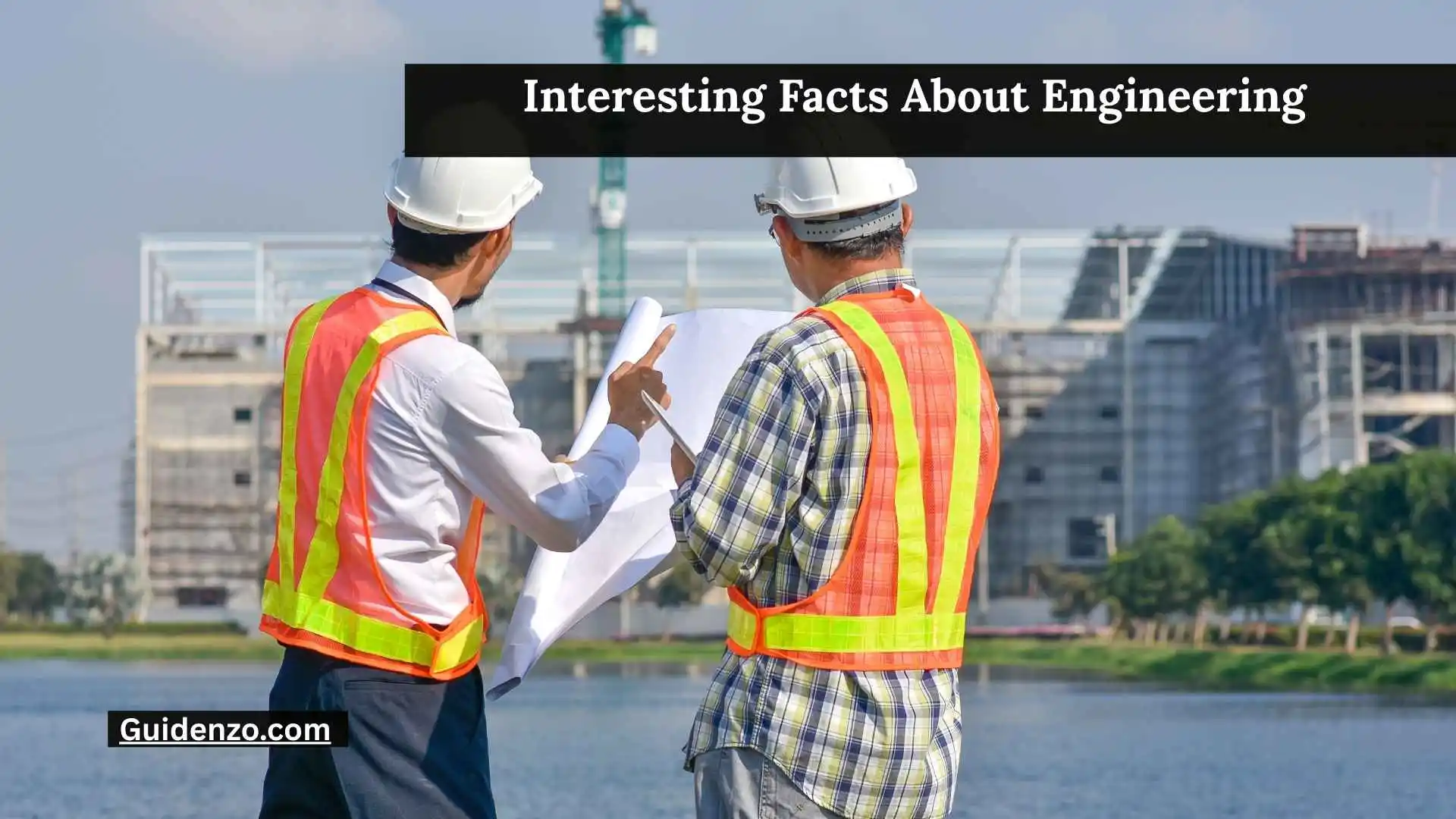
Engineering shapes the world around us in ways most people never stop to notice. From the shoes on your feet to the skyscraper casting a shadow over your morning commute, human civilization is built on the ingenuity, calculations, and creative problem-solving of engineers. While many view engineering as a cold science of numbers and blueprints, it is actually a deeply imaginative discipline that transforms wild visions into tangible reality.
Have you ever wondered why Roman concrete still stands strong after two millennia while modern structures sometimes crumble in decades? Or how a bridge can stretch miles across open water without collapsing under its own weight? Engineering is the invisible magic powering modern society. It sits at the intersection of imagination and physical law.
Far from being a dry academic pursuit, engineering is filled with breathtaking triumphs, historical anomalies, and bizarre innovations that defy common belief. This comprehensive exploration uncovers thirty-five fascinating insights into the profession, highlighting how human creativity harnesses physics, materials science, and mathematics to build the future. Prepare to look at your everyday environment through a completely new lens.
Quick Answer
Engineering is the practical application of science and mathematics to design, build, and maintain structures, machines, systems, and processes. It encompasses diverse disciplines like civil, mechanical, electrical, and aerospace engineering. Far from modern invention, engineering dates back to ancient construction feats like the Egyptian pyramids and Roman aqueducts, serving as the foundational driver of human technological evolution and infrastructure development.
Quick Facts Table
| Topic | Category | Location | Discovery / Origin | Age | Size / Scale | Lifespan / Impact | Fun Fact |
| Roman Concrete | Materials Engineering | Global | Ancient Rome | ~2,100 Years | Varies | Indefinite | Self-heals when exposed to seawater. |
| Great Pyramid | Civil Engineering | Giza, Egypt | Ancient Egypt | ~4,500 Years | 146.6m Height | Millennia | Aligned with true north within 1/15th of a degree. |
| Burj Khalifa | Structural Engineering | Dubai, UAE | Modern Era | ~16 Years | 828m Height | Decades+ | Uses a Y-shaped floor plan to reduce wind forces. |
Main Interesting Facts
1. Roman Concrete Actually Gets Stronger Over Time
- The Fact: Ancient Roman marine concrete contains volcanic ash, lime, and seawater that react chemically over centuries to form interlocking mineral crystals, making it exceptionally durable against ocean waves.
- Why It Matters: Modern concrete typically degrades after a century, whereas Roman structures like the Pantheon and ancient piers have survived for over two thousand years in harsh marine environments.
- Did You Know? The secret ingredient is tobermorite, a rare mineral that grows inside the concrete when seawater washes through tiny cracks, effectively healing the material over time.
- Additional Context: Modern civil engineers are currently reverse-engineering Roman formulas to create sustainable, long-lasting building materials that drastically reduce carbon emissions caused by cement production.
2. The Great Pyramid Was Once the Tallest Man-Made Structure for 3,800 Years
- The Fact: Standing at an original height of 146.6 meters, the Great Pyramid of Giza held the global height record for nearly four millennia until Lincoln Cathedral surpassed it in medieval England.
- Why It Matters: It demonstrates an astonishing level of ancient logistical mastery, precision surveying, and structural engineering execution without the aid of modern mechanical equipment or computers.
- Did You Know? The base of the pyramid is remarkably level, with a variation of less than two centimeters across its entire 13-acre footprint, showcasing elite ancient craftsmanship.
- Additional Context: Builders utilized carefully engineered internal ramps, precision-cut limestone blocks weighing multiple tons each, and an intelligent weight-distribution system above the king’s chamber to prevent collapse.
3. The Golden Gate Bridge Sings in the Wind
- The Fact: After structural modifications were made to the Golden Gate Bridge in 2020 to improve aerodynamic stability, strong western winds passing through the railings caused the bridge to emit a loud musical hum.
- Why It Matters: This unexpected acoustic phenomenon highlights how complex fluid dynamics and wind-tunnel testing interact with massive civil structures in real-world environments.
- Did You Know? The eerie tone can be heard across San Francisco and sounds remarkably like a giant pipe organ playing a perpetual chord during heavy gales.
- Additional Context: Engineers design suspension bridges to flex and twist safely in high winds, avoiding catastrophic resonant frequencies like the infamous Tacoma Narrows Bridge failure of 1940.
4. The Panama Canal Lifts Ships Over Mountains Using Gravity
- The Fact: Instead of cutting a sea-level channel through the continental divide—which would have caused massive landslides—engineers designed a system of giant water locks that raise ships 26 feet above sea level to an artificial lake.
- Why It Matters: It revolutionized global maritime trade by cutting thousands of miles off the journey between the Atlantic and Pacific Oceans without using pumps; gravity naturally moves fresh water from Lake Gatún.
- Did You Know? Every time a ship passes through the locks, roughly 52 million gallons of fresh water are pulled from the lake and emptied into the ocean.
- Additional Context: The original construction project was one of the deadliest engineering endeavors in history, costing thousands of lives primarily due to tropical diseases before modern sanitation protocols were implemented.
5. NASA’s Saturn V Rocket Generated More Power Than Millions of Cars
- The Fact: The Saturn V rocket, which propelled humans to the Moon, generated an astounding 160 million horsepower during liftoff, roughly equivalent to the output of several million modern automobiles combined.
- Why It Matters: It remains the most powerful operational launch vehicle ever successfully flown, representing the absolute pinnacle of aerospace propulsion engineering.
- Did You Know? The sound waves generated during liftoff were so intense they could have melted concrete and destroyed the rocket itself, requiring a massive water deluge sound-suppression system on the launchpad.
- Additional Context: Aerospace engineers had to solve unprecedented thermodynamic, metallurgical, and orbital mechanics challenges while working with computing power weaker than a modern smartphone.
6. The Leaning Tower of Pisa Was Saved by Soil Extraction
- The Fact: Engineers successfully stabilized the leaning Italian bell tower in the late 1990s by extracting small amounts of soil from underneath the raised north side, causing the tower to straighten slightly.
- Why It Matters: It proved that geotechnical engineering can safely correct historical foundation failures without dismantling or harming priceless cultural heritage sites.
- Did You Know? The tower began leaning during its construction in the twelfth century because it was built on soft, unstable alluvial soil consisting of clay, mud, and sand.
- Additional Context: For centuries, various architects attempted to fix the lean by adding lopsided stones or counterweights, often worsening the problem until modern soil mechanics provided a scientific solution.
7. The Eiffel Tower Shrinks and Grows with the Weather
- The Fact: Because it is constructed from puddled iron, the Eiffel Tower expands during hot summer days and contracts during cold winter nights, causing the tip to move up to 15 centimeters and sway slightly in the wind.
- Why It Matters: Thermal expansion is a fundamental consideration in mechanical and structural engineering, dictating how materials behave under fluctuating environmental temperatures.
- Did You Know? On exceptionally hot days, the thermal expansion creates a measurable sun-bend effect, as the side facing the sun expands faster than the shaded side.
- Additional Context: Gustave Eiffel designed the lattice tower with open ironwork specifically to minimize wind resistance, allowing the massive structure to withstand fierce Parisian storms safely.
8. The Burj Khalifa Uses a Y-Shaped Floor Plan to Defeat Wind Vortexes

- The Fact: The world’s tallest building utilizes a stepped, Y-shaped floor plan that breaks up wind currents and prevents dangerous vortex shedding from forming along its smooth glass exterior.
- Why It Matters: Supertall skyscrapers face extreme wind loads at high altitudes; aerodynamic shaping is just as important to their survival as internal steel reinforcement.
- Did You Know? As the tower rises, wings are systematically set back in a spiral pattern, constantly altering the cross-sectional shape to confuse the wind.
- Additional Context: The building features a complex condensation recovery system that collects water from the humid air conditioning units, providing millions of gallons of irrigation water annually.
9. The World’s First Programmed Computer Was Mechanical
- The Fact: Designed by Charles Babbage in the 1830s, the Analytical Engine was a mechanical computer driven by steam power, utilizing punch cards inspired by the Jacquard textile loom.
- Why It Matters: It laid the conceptual foundation for modern computing hardware and software logic long before electricity was harnessed for commercial data processing.
- Did You Know? Ada Lovelace wrote the world’s first algorithm for this machine, earning her historical recognition as the first computer programmer.
- Additional Context: Babbage never completed the physical construction during his lifetime due to funding disputes and nineteenth-century machining tolerances, but modern reconstructions prove his design was fully viable.
10. Buckminster Fuller Popularized the Geodesic Dome
- The Fact: Geodesic domes distribute structural stress across a network of triangular framing elements, making them remarkably strong relative to their weight and internal volume.
- Why It Matters: They revolutionized architectural engineering by demonstrating how lightweight spatial structures could cover massive open areas without needing interior columns.
- Did You Know? A geodesic dome actually becomes proportionally stronger and more stable as it is scaled up in size.
- Additional Context: These structures are frequently used for radar enclosures, botanical gardens, and extreme-weather shelters because they effortlessly deflect heavy winds and snow loads.
11. The Millau Viaduct Towers Higher Than the Eiffel Tower
- The Fact: Crossing the Tarn River valley in France, the Millau Viaduct is a cable-stayed bridge whose tallest mast reaches 336 meters, making it taller than the Eiffel Tower.
- Why It Matters: It represents a masterclass in structural engineering, balancing the extreme forces of high-altitude crosswinds and deep valley topography.
- Did You Know? The roadway deck is curved slightly to give drivers optical guidance and sloped to help rainwater drain efficiently off the surface.
- Additional Context: The bridge was constructed using innovative incremental launching techniques, pushing massive steel deck segments out from both sides of the canyon until they met precisely in the middle.
12. Carbon Nanotubes Are Stronger Than Steel at a Fraction of the Weight
- The Fact: Carbon nanotubes—cylindrical structures of carbon atoms arranged in a hexagonal lattice—possess a tensile strength hundreds of times greater than structural steel while weighing significantly less.
- Why It Matters: Materials science and nanotechnology engineering are pushing the boundaries of what is possible in aerospace, electronics, and infrastructure reinforcement.
- Did You Know? These microscopic tubes are theoretically strong enough to serve as the tether material for a hypothetical space elevator stretching from Earth to geostationary orbit.
- Additional Context: Mass-producing carbon nanotubes with uniform defect-free structures remains a major manufacturing challenge for contemporary industrial engineers.
13. The Hoover Dam Required So Much Concrete It Took Years to Cool
- The Fact: The massive volume of concrete poured into the Hoover Dam generated so much internal heat during the curing process that, left unchecked, it would have taken 125 years to cool and crack completely.
- Why It Matters: Civil engineers solved this by pouring the dam in interlocking vertical blocks and running miles of cooling pipes filled with refrigerated water through the structure.
- Did You Know? The concrete used in the dam is still undergoing a chemical curing process today, meaning the structure remains slowly hardening.
- Additional Context: The project pushed the limits of safety engineering, leading to improved construction site protocols and the widespread use of hard hats in American industry.
14. Skyscraper Elevators Use Destination Dispatch Systems
- The Fact: Modern supertall buildings use algorithmic elevator routing where passengers select their destination floor on a keypad before entering the cab, grouping riders going to the same floors together.
- Why It Matters: This eliminates traditional up/down buttons and drastically reduces waiting times and energy consumption in buildings with thousands of occupants.
- Did You Know? Some high-speed elevators travel at speeds exceeding 40 miles per hour, requiring sophisticated pressure-regulation systems to prevent passenger ear discomfort.
- Additional Context: Counterweights and regenerative braking systems in modern elevator motors capture braking energy and feed it back into the building’s electrical grid.
15. The Channel Tunnel Features an Underwater Service Tube
- The Fact: Connecting the United Kingdom and France, the Channel Tunnel consists of two rail tunnels and a central service tunnel bored deep beneath the seabed of the English Channel.
- Why It Matters: It is one of the most ambitious subterranean civil engineering projects in history, requiring laser-guided tunneling machines to meet underground with millimeter precision from opposite countries.
- Did You Know? The service tunnel is continuously pressurized with fresh air to keep it smoke-free in case of emergencies, serving as a safe escape route for passengers.
- Additional Context: Spanning over 31 miles, the underwater section is the longest submarine rail tunnel in the world, requiring complex ventilation and drainage infrastructure.
16. The First Digital PID Controllers Automated Industrial Chemistry
- The Fact: Proportional-Integral-Derivative (PID) controllers are feedback loops used in industrial control systems to regulate temperature, pressure, flow rate, and motor speed automatically.
- Why It Matters: They form the invisible algorithmic backbone of modern manufacturing plants, chemical refineries, and automated robotics, ensuring stable and safe operations.
- Did You Know? Over 90 percent of all industrial control loops in use today are based on PID algorithms or variations thereof.
- Additional Context: Control systems engineering requires a deep understanding of differential equations, signal processing, and system dynamics to prevent dangerous oscillations or runaway processes.
17. The Akashi Kaikyo Bridge Can Withstand 170 MPH Winds and Major Earthquakes
- The Fact: As the world’s longest suspension bridge, the Akashi Kaikyo Bridge in Japan utilizes a rigid steel truss stiffening girder system and massive pendulum dampeners to absorb seismic shocks.
- Why It Matters: Located in a region prone to violent typhoons and earthquakes, the bridge was engineered to flex up to ten meters horizontally without structural failure.
- Did You Know? During construction in 1995, the infamous Kobe earthquake struck just miles away, shifting the bridge towers apart by nearly a meter and forcing engineers to recalculate their alignment instantly.
- Additional Context: Steel cables within the suspension system are composed of thousands of thin wires tightly bound together, providing immense redundancy and tensile strength.
18. Buckminsterfullerene (Buckyballs) Revolutionized Nanotechnology
- The Fact: Discovered in 1985, buckminsterfullerene is a spherical carbon allotrope shaped like a soccer ball, inspiring a brand new field of chemical and materials engineering.
- Why It Matters: Its unique molecular geometry opened doors for targeted drug delivery systems, organic solar cells, and ultra-lubricating industrial fluids.
- Did You Know? The molecule was named in honor of architect Buckminster Fuller because its symmetric cage structure resembles his signature geodesic domes.
- Additional Context: Nanotechnology engineers study fullerenes to understand how carbon bonds behave at the quantum level, bridging macroscopic engineering with atomic physics.
19. The Deepwater Horizon Drilling Rig Operated in Extreme Underwater Pressures
- The Fact: Floating deepwater drilling rigs operate in ocean depths exceeding 5,000 feet, where water pressure crushes materials and temperatures hover near freezing.
- Why It Matters: Offshore petroleum and subsea engineering require hyper-advanced robotics, acoustic telemetry, and high-pressure blowout preventers to maintain well integrity.
- Did You Know? The blowout preventer valves sitting on the ocean floor weigh over 300 tons and are operated by remote-controlled underwater robotic submersibles.
- Additional Context: Subsea engineering disasters have historically driven stringent regulatory reforms, pushing the industry toward safer automated shut-off systems and rigorous stress testing.
20. Nikola Tesla Pioneered Alternating Current Power Grids
- The Fact: Nikola Tesla’s development of polyphase alternating current (AC) electrical systems allowed electricity to be transmitted over hundreds of miles with minimal energy loss.
- Why It Matters: It defeated Thomas Edison’s local direct current (DC) standard, making widespread electrification and modern industrial power grids possible.
- Did You Know? The Niagara Falls hydroelectric power plant, designed by Tesla and George Westinghouse, was the first large-scale AC power generation facility in the world.
- Additional Context: Electrical engineering continues to build on Tesla’s foundational work, transitioning modern grids toward smart-grid technologies, renewable integration, and high-voltage direct current transmission.
21. Biomimicry Drives Modern Aerospace Engineering
- The Fact: Engineers study the flight mechanics of owls, the aerodynamics of kingfishers, and the skin textures of sharks to design quieter aircraft, faster trains, and efficient wind turbines.
- Why It Matters: Nature has spent billions of years optimizing biological forms for energy efficiency and fluid dynamics, providing readymade blueprints for human innovation.
- Did You Know? The front nose of Japan’s bullet train was redesigned to mimic the beak of the kingfisher bird, successfully eliminating the loud sonic boom tunnel-clap effect.
- Additional Context: Biomimetic engineering merges biology with mechanical design, ensuring that artificial systems align harmoniously with environmental laws and sustainable principles.
22. The International Space Station Is Humanity’s Most Expensive Engineering Project
- The Fact: Orbiting 250 miles above Earth, the International Space Station cost over $150 billion to build and assemble piece-by-piece in zero gravity.
- Why It Matters: It stands as a triumph of international aerospace engineering, life-support systems design, and orbital docking mechanics.
- Did You Know? Solar arrays on the station span an area larger than a football field, generating sufficient electricity to power dozens of homes on Earth.
- Additional Context: Engineers had to account for extreme temperature swings ranging from -150°C to +120°C as the station orbits into and out of Earth’s shadow every 90 minutes.
23. The Three Gorges Dam Generates So Much Energy It Slows Earth’s Rotation
- The Fact: Holding back 39 billion cubic meters of water, the sheer mass of the Three Gorges Dam shifted the distribution of Earth’s water enough to measurably lengthen the length of a day.
- Why It Matters: It illustrates the monumental scale of modern civil and hydraulic engineering, proving that human infrastructure can influence planetary geophysics.
- Did You Know? Raising that massive volume of water 175 meters above sea level increased Earth’s moment of inertia, slowing the planet’s daily rotation by roughly 0.06 microseconds.
- Additional Context: The dam features a massive five-tier ship lock system to lift cargo vessels over the barrier, alongside 32 giant hydroelectric turbine generators.
24. Finite Element Analysis (FEA) Revolutionized Structural Testing
- The Fact: Before computers, engineers had to build physical prototypes and test them to destruction; today, Finite Element Analysis software breaks complex geometries into millions of tiny mathematical elements to simulate stress.
- Why It Matters: It allows aerospace, automotive, and civil engineers to optimize designs, reduce material weight, and predict failure points before a single piece of steel is cut.
- Did You Know? FEA software relies on solving massive matrices of simultaneous differential equations based on Hooke’s Law and Newton’s laws of motion.
- Additional Context: Modern computational power enables real-time multi-physics simulations, combining thermal, structural, and fluid dynamics into a single unified virtual test model.
25. The London Underground Was Bored Using a Tunnel Shield
- The Fact: Invented by Marc Isambard Brunel, the tunneling shield was inspired by the shell-boring behavior of a marine shipworm, allowing workers to excavate soft river mud safely without cave-ins.
- Why It Matters: It enabled the construction of the world’s first underground railway network in 1863, transforming urban transit and subterranean engineering forever.
- Did You Know? Workers inside the original Thames Tunnel worked in pressurized iron boxes to hold back water, frequently suffering from decompression sickness.
- Additional Context: Modern tunnel boring machines (TBMs) are essentially colossal factory trains underground, cutting rock, erecting concrete segment rings, and removing debris simultaneously.
26. The Tacoma Narrows Bridge Collapse Led to Modern Aeroelasticity
- The Fact: In 1940, newly built aerodynamic plate girders on the Tacoma Narrows Bridge caught a modest 40 mph crosswind, creating a torsional flutter that tore the bridge apart in minutes.
- Why It Matters: Captured on film, the dramatic collapse fundamentally changed how civil engineers study wind tunnel aerodynamics and bridge deck stiffness.
- Did You Know? The only fatality during the collapse was a cocker spaniel named Tubby trapped inside a stranded car on the bridge deck.
- Additional Context: The disaster led to the creation of entire academic departments dedicated to aeroelasticity, ensuring modern suspension bridges are aerodynamically stable and torsionally rigid.
27. The James Webb Space Telescope Folds Like Origami
- The Fact: Too large to fit inside any existing rocket fairing, the James Webb Space Telescope was engineered with a deployable beryllium mirror and a five-layer sunshield that unfolds autonomously in space.
- Why It Matters: It represents an extraordinary achievement in mechanical deployment systems engineering, operating flawlessly one million miles from Earth without human repair capability.
- Did You Know? The gold coating on its primary mirror segments is only 100 nanometers thick—roughly one-thousandth the thickness of a human hair.
- Additional Context: Aerospace engineers designed intricate cable-pulley systems and electric release motors to ensure the delicate sunshield unfurled without snagging or tearing in a vacuum.
28. Transistor Scaling Drives the Digital Revolution
- The Fact: Gordon Moore’s observation that the number of transistors on a microchip doubles roughly every two years has driven semiconductor engineering for over half a century.
- Why It Matters: Electrical and computer engineers have consistently shrunk transistors down to the nanometer scale, enabling pocket-sized smartphones with more computing power than room-sized supercomputers of the past.
- Did You Know? Modern processors contain billions of microscopic transistors switching on and off billions of times per second.
- Additional Context: As transistors approach quantum limits where electrons leak through barriers, engineers are turning to 3D chip architectures and quantum computing paradigms.
29. The Qingdao Haiwan Bridge Crosses Over 26 Miles of Open Water
- The Fact: As one of the world’s longest sea-crossing bridges, the Qingdao Haiwan Bridge in China is supported by over 5,000 concrete piles driven into the seabed to withstand typhoons and ship impacts.
- Why It Matters: It demonstrates the massive scale of modern regional infrastructure engineering, connecting sprawling urban centers across complex marine environments.
- Did You Know? The bridge was engineered to withstand magnitude 8.0 earthquakes, typhoons, and collisions from 300,000-ton cargo vessels.
- Additional Context: Construction teams utilized modular pre-cast concrete segments manufactured onshore, dramatically accelerating assembly timelines on the open water.
30. The Voyager Probes Are Powered by Nuclear Batteries
- The Fact: Launched in 1977, Voyager 1 and Voyager 2 rely on Radioisotope Thermoelectric Generators (RTGs) that convert the heat generated by decaying plutonium-238 into electrical power.
- Why It Matters: Nuclear engineering and deep-space systems allowed these probes to survive interstellar journeys far beyond the reach of solar panels.
- Did You Know? Despite operating for nearly half a century in deep space, the probes still communicate with NASA engineers across billions of miles.
- Additional Context: Aerospace engineers carefully programmed redundant computer memory systems and low-power instrument profiles to stretch the dwindling nuclear fuel supply into the 2020s.
31. The Shard Uses Prefabricated Modules to Conquer Tight Urban Spaces
- The Fact: London’s tallest skyscraper was constructed using an innovative top-down construction method where the foundation and lower core were built while upper steel frames were erected simultaneously.
- Why It Matters: Urban civil engineering must adapt to highly constrained downtown environments where staging areas and crane placements are severely limited.
- Did You Know? The glass facade features specialized angled panes designed to reflect sunlight and sky colors, reducing solar heat gain inside the building.
- Additional Context: The tower incorporates an extensive energy center that recycles waste heat from mechanical equipment to provide efficient district heating.
32. The Maglev Train Floats on Magnetic Fields
- The Fact: Magnetic levitation (Maglev) trains eliminate mechanical wheel-on-rail friction entirely, using powerful electromagnets to lift and propel the train above a guideway.
- Why It Matters: Transportation engineering achievements like the Shanghai Maglev allow commercial rail transit to reach speeds exceeding 260 miles per hour in absolute silence and stability.
- Did You Know? Because there is no physical contact between the train and the track except for air resistance, mechanical wear and tear is virtually zero.
- Additional Context: Superconducting magnets cooled by liquid helium generate the intense magnetic fields required to support the heavy passenger cars at high velocities.
33. The Panama Canal Expansion Added Water-Saving Basins
- The Fact: When the Panama Canal was expanded to accommodate massive New Panamax container ships, engineers added giant water-saving basins that recycle 60 percent of the water used in each lock cycle.
- Why It Matters: Hydraulic and environmental engineering successfully balanced surging global trade volumes with regional freshwater conservation needs.
- Did You Know? The rolling gates used in the new locks weigh thousands of tons yet are balanced so precisely that a single electric motor can move them smoothly.
- Additional Context: Geotechnical engineers conducted extensive seismic profiling along the canal route to reinforce slopes against catastrophic mudslides during heavy tropical downpours.
34. The Great Wall of China Utilized Sticky Rice Mortar
- The Fact: Ming dynasty builders mixed sticky rice soup with slaked lime to create an organic-inorganic composite mortar that bound stone bricks together with extraordinary elasticity and water resistance.
- Why It Matters: Materials engineering in antiquity often relied on organic additives that interacted with mineral matrices to outperform simple clay or mud mortars.
- Did You Know? Amylopectin, the starch found in sticky rice, acted as an inhibitor that prevented calcium carbonate crystals from growing too large, creating a tight micro-structure.
- Additional Context: This ancient mortar is so durable that sections of the wall remain remarkably intact despite centuries of harsh weather and seismic activity.
35. The International System of Units Was Engineered for Global Precision
- The Fact: In 2019, metrology and physics engineering redefined the fundamental SI base units (like the kilogram and the ampere) using fixed universal physical constants rather than physical metal artifacts.
- Why It Matters: Precision engineering relies on absolute, unvarying measurement standards to ensure manufacturing tolerances, scientific experiments, and global trade align perfectly.
- Did You Know? The old international prototype kilogram stored in France had inexplicably lost microscopic weight over time, prompting the scientific shift to Planck’s constant.
- Additional Context: Precision engineering and quantum metrology now allow engineers to measure time, voltage, and mass with absolute certainty down to sub-atomic scales.
Historical Timeline of Engineering Milestones
- ~2560 BCE: Completion of the Great Pyramid of Giza, showcasing ancient surveying and stone-cutting mastery.
- ~312 BCE: Construction of the Appian Way and Aqua Appia, launching Roman hydraulic and civil engineering supremacy.
- 1830s: Charles Babbage designs the mechanical Analytical Engine, laying the groundwork for digital computing.
- 1883: Completion of the Brooklyn Bridge, marking the first use of steel-wire suspension cables in civil engineering.
- 1903: The Wright brothers achieve powered controlled flight, birthing modern aerospace engineering.
- 1947: Bell Labs invents the solid-state transistor, sparking the electronics and semiconductor revolution.
- 1969: Apollo 11 lands humans on the Moon, representing the zenith of systems and propulsion engineering.
- 1994: The Channel Tunnel opens, connecting Britain and France via underwater rail infrastructure.
- 1998–present: Assembly of the International Space Station in low-Earth orbit.
- 2019: The International System of Units (SI) is redefined using fundamental physical constants.
Statistics Table
| Engineering Metric / Project | Value / Measurement | Engineering Significance |
| Saturn V Thrust | 7.6 million pounds | Maximum lift force achieved by an operational rocket. |
| Burj Khalifa Height | 828 meters | Height record for structural engineering skyscrapers. |
| Three Gorges Capacity | 22,500 megawatts | Largest hydroelectric power generating facility on Earth. |
| Akashi Kaikyo Span | 1,991 meters | Longest central suspension bridge span globally. |
| Channel Tunnel Length | 50.45 kilometers | Longest underwater tunnel section in operation. |
Myth vs Fact
| Common Myth | Factual Reality |
| Pyramids were built by enslaved laborers. | Archaeological evidence confirms they were constructed by skilled, paid civic workers and rotation laborers fed well and buried with honor. |
| The Great Wall of China is visible from space with the naked eye. | Under normal orbital viewing conditions without magnification, the wall is far too narrow to distinguish from surrounding terrain. |
| Roman concrete formulas were permanently lost to history. | Modern materials science has successfully identified volcanic ash and tobermorite crystals as the secret to its self-healing durability. |
| Engineers just do math; they aren’t creative. | Engineering requires intense creative problem-solving, artistic spatial design, and imaginative conceptualization. |
Common Misconceptions
A widespread misunderstanding is that engineering is merely a subset of applied science. In truth, science discovers how the natural world works, whereas engineering creates things that have never existed before. Science explores reality; engineering invents possibilities.
Another common misconception is that structural failures are always caused by miscalculations in math. In reality, historical disasters like the Tacoma Narrows Bridge or early jetliner metal fatigue stemmed from a lack of understanding regarding dynamic phenomena like resonance, material fatigue, and complex fluid-structure interactions rather than basic arithmetic errors. Furthermore, many assume modern infrastructure will last forever without maintenance; civil engineers know that all structures require proactive inspection, rehabilitation, and adaptive management to withstand environmental weathering.
Why This Topic Matters Today
As humanity faces unprecedented global challenges—including climate change, rapid urbanization, sustainable energy transitions, and resource scarcity—engineering has never been more vital. Civil and environmental engineers are developing carbon-capture concrete and flood-resilient coastal barriers. Electrical and software engineers are optimizing smart power grids and artificial intelligence hardware. Biomedical engineers are designing synthetic organs and advanced prosthetics.
Understanding engineering fosters a scientifically literate society capable of evaluating technological claims, supporting robust public infrastructure investments, and appreciating the immense human effort embedded in everyday modern conveniences.
Related Discoveries
- Materials Science: The study of atomic structures and crystal lattices to create stronger, lighter, and more heat-resistant industrial alloys.
- Thermodynamics: The branch of physics dealing with heat transfer, work, and energy conversion that governs all mechanical and propulsion systems.
- Control Systems Theory: The mathematical modeling of feedback loops used to stabilize automated robots, chemical plants, and aircraft autopilots.
- Fluid Dynamics: The study of liquid and gas motion utilized in aerodynamics, hydraulic dam design, and weather prediction models.
Expert Insights
Engineering excellence extends far beyond drafting blueprints or compiling spreadsheets; it represents a philosophy of managed risk and optimized compromise. Every engineering design involves balancing competing constraints: cost, weight, safety, durability, and aesthetics.
An amateur designer seeks perfection in a single metric, while a master engineer anticipates edge cases, component fatigue, human error, and environmental extremes. This holistic approach ensures that bridges stand through earthquakes, airplanes fly safely through turbulence, and software systems scale gracefully under millions of simultaneous users. By viewing constraints not as barriers but as creative boundaries, engineering continually redefines the limits of what is physically possible.
Frequently Asked Questions
What is the difference between science and engineering?
Science focuses on discovering and understanding natural laws through observation and experimentation. Engineering applies those scientific principles to design, build, and optimize practical solutions, structures, and machines for human use.
What are the four main branches of engineering?
The four traditional pillars are civil, mechanical, electrical, and chemical engineering. Modern engineering has since branched into dozens of specialized fields, including aerospace, biomedical, computer, and environmental engineering.
Who is considered the first engineer in history?
Imhotep, an ancient Egyptian architect, vizier, and physician who designed the Step Pyramid of Djoser around 2600 BCE, is widely recognized as the earliest documented engineer in recorded history.
Why do suspension bridges sway in the wind?
Suspension bridges are engineered to be flexible rather than rigid. Allowing the deck to move and sway dissipates kinetic energy from strong winds, preventing catastrophic structural fatigue or snapping.
How do civil engineers test concrete strength?
Engineers pour fresh concrete samples into cylindrical molds during construction, cure them under identical site conditions, and crush them in hydraulic compression testing machines after seven and twenty-eight days.
What is the tallest bridge in the world?
The Millau Viaduct in southern France is the tallest bridge structure globally, featuring a mast rising 336 meters above the valley floor, eclipsing the height of the Eiffel Tower.
How do skyscrapers survive earthquakes?
Engineers equip supertall skyscrapers with deep bedrock foundations, flexible steel frames, and massive tuned mass dampers—heavy pendulums that swing opposite to seismic shaking to neutralize building sway.
What causes metal fatigue in aircraft?
Metal fatigue occurs when microscopic cracks propagate through structural components due to repeated cycles of mechanical stress, pressure differentials, and thermal expansion during flight.
Why are triangles used in bridge and truss design?
A triangle is the only geometric polygon that cannot deform without breaking its sides or joints. This inherent rigidity makes triangular framing the ultimate geometry for load-bearing structures.
How did ancient Romans build roads that lasted millennia?
Roman roads were constructed in deep excavated trenches using multi-layered foundations of heavy stone slabs, crushed rock, sand, and tightly interlocking surface paving stones crowned for water drainage.
Key Takeaways
- Engineering bridges the gap between theoretical science and practical human application.
- Historical innovations, from Roman concrete to geodesic domes, showcase timeless problem-solving.
- Modern engineering tackles critical global challenges like renewable energy, climate resilience, and automation.
- Design constraints like wind, weight, and thermal expansion drive creative, resilient solutions.
Conclusion
Engineering is the ultimate testament to human ambition and intellect. From ancient stone pyramids defying the desert sun to carbon nanotubes shaping the atomic future, this discipline transforms abstract equations into the physical reality of human civilization.
By understanding the ingenuity behind our bridges, rockets, skyscrapers, and power grids, we gain a profound appreciation for the invisible network of problem-solvers who built our world. Engineering will continue to push the boundaries of exploration, ensuring that whatever humanity can imagine, we can eventually engineer.

I am Amelia Whitmore, a writer fascinated by the strange, wonderful, and often overlooked details of our world. I love researching unusual facts about people, places, animals, and history. My goal is to share knowledge in a friendly way that sparks curiosity and encourages readers to keep discovering something new.
Books:
- Amazing Facts You Never Learned at School
- The Little Book of Big Surprises