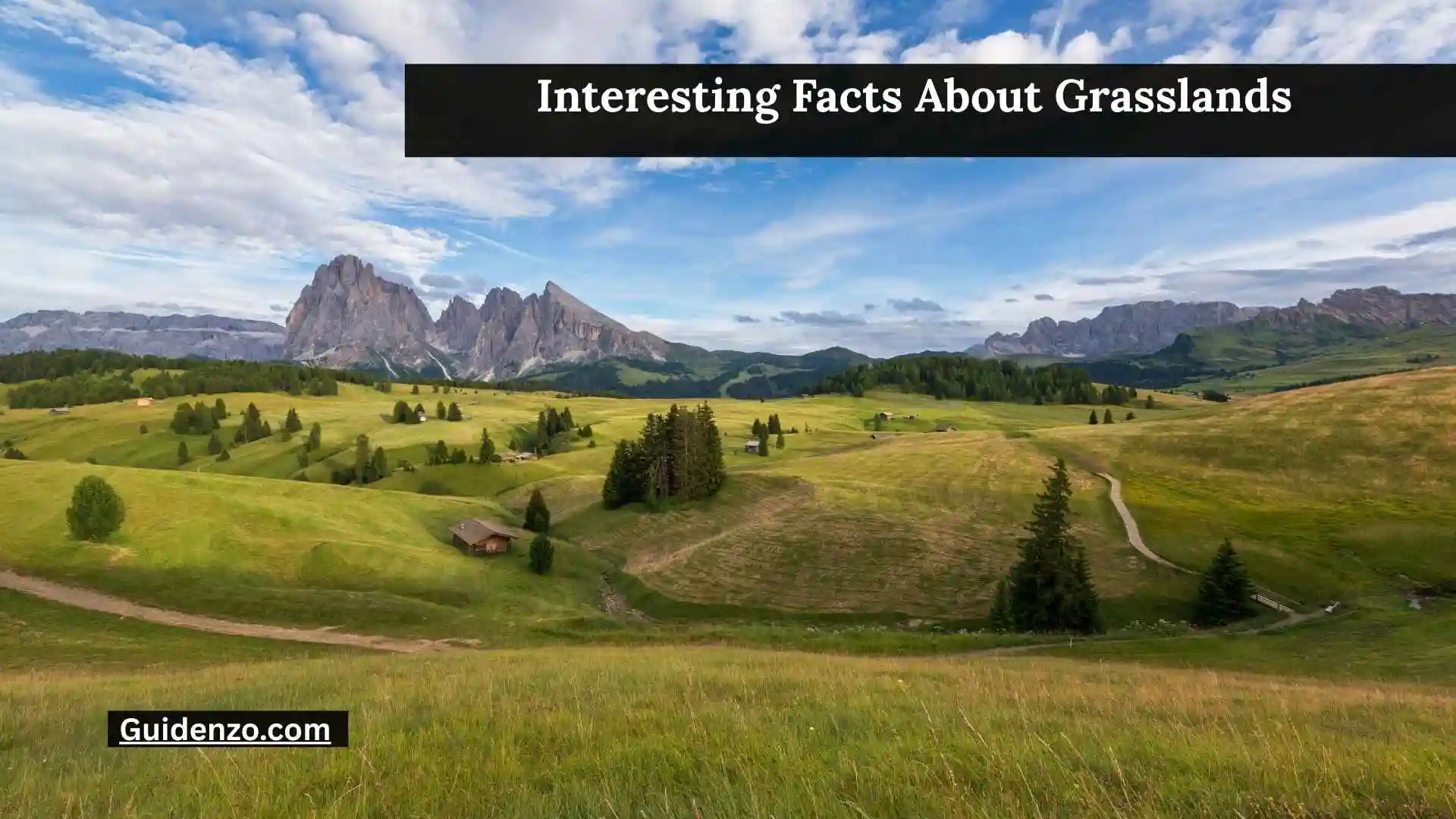
Interesting facts about grasslands reveal one of Earth’s most important yet often overlooked ecosystems. Covering large portions of continents, grasslands support millions of animals, store enormous amounts of carbon, influence global weather patterns, and provide food and livelihoods for billions of people.
These open landscapes may appear simple because they are dominated by grasses, but they contain complex networks of plants, animals, fungi, and microorganisms. From the African savanna where lions hunt to the North American prairies shaped by bison, grasslands tell a remarkable story of survival, adaptation, and ecological balance. In this article, you will discover fascinating facts about grasslands, including their history, biodiversity, scientific importance, threats, and why protecting them matters for the future.
Quick Answer
Grasslands are ecosystems dominated by grasses and other small plants rather than large forests. They cover about 40% of Earth’s land area and exist on every continent except Antarctica. These ecosystems support unique wildlife, store carbon underground, protect soil, regulate water cycles, and provide essential resources such as food, grazing land, and medicines. Major grasslands include prairies, savannas, steppes, pampas, and velds.
Quick Facts About Grasslands
| Topic | Information |
| Category | Terrestrial ecosystem |
| Main Vegetation | Grasses, herbs, wildflowers, and scattered shrubs |
| Global Location | Every continent except Antarctica |
| Approximate Coverage | Around 40% of Earth’s land surface, including many semi-natural grass areas |
| Major Types | Tropical grasslands, temperate grasslands, savannas, steppes, prairies, pampas, and velds |
| Age | Ancient grasslands developed millions of years ago |
| Largest Grassland Regions | African savannas, Eurasian steppes, North American prairies |
| Climate | Usually moderate rainfall with seasonal droughts or dry periods |
| Key Animals | Bison, zebras, elephants, lions, antelopes, prairie dogs, and many birds |
| Important Role | Carbon storage, biodiversity conservation, agriculture, and climate regulation |
| Fun Fact | Many grass species survive fires because their growing points remain protected underground |
Main Interesting Facts About Grasslands
1. Grasslands Cover a Huge Portion of Earth’s Land
The Fact:
Grasslands are among the largest ecosystems on the planet. They cover roughly 40% of Earth’s land area when natural grasslands and grass-dominated landscapes are considered. They stretch across continents, from the African savannas and South American pampas to the Eurasian steppes and North American prairies.
Why It Matters:
Because grasslands occupy such a large area, their health directly affects global climate, wildlife populations, agriculture, and human communities.
Did You Know?
Grasslands are sometimes called the “breadbaskets of the world” because many major agricultural regions developed from fertile grassland soils.
Additional Context:
Although grasslands appear empty compared with forests, they are highly productive ecosystems filled with underground roots, insects, fungi, and microorganisms.
2. Grasslands Exist on Every Continent Except Antarctica
The Fact:
Natural grasslands are found on every continent except Antarctica. They appear in different forms depending on climate, soil, and geography. African savannas, North American prairies, Eurasian steppes, and South American pampas are all examples of grassland ecosystems.
Why It Matters:
Their worldwide distribution shows how adaptable grasses are and how important these ecosystems are to different cultures and environments.
Did You Know?
The same basic grass family can include species adapted to deserts, wetlands, mountains, and plains.
Additional Context:
Each region has developed unique plants and animals that depend on local grassland conditions.
3. Grasslands Are Defined by Limited Tree Growth
The Fact:
Grasslands develop where conditions prevent forests from dominating. The main reasons are usually insufficient rainfall, seasonal drought, frequent fires, grazing animals, or a combination of these factors.
Why It Matters:
Understanding why grasslands exist helps scientists protect them. Removing natural fire cycles or changing grazing patterns can transform grasslands into forests, deserts, or degraded landscapes.
Did You Know?
Many grasslands naturally contain scattered trees, especially in savannas.
Additional Context:
Grasslands are not simply “empty forests.” They are distinct ecosystems shaped by unique environmental pressures.
4. Grass Has a Secret Survival Advantage
The Fact:
Many grasses survive extreme conditions because their growing points are located near the ground or underground. Unlike trees, which can die when their stems are damaged, grasses can regrow after grazing, drought, or fire.
Why It Matters:
This adaptation allows grasslands to recover from disturbances and remain productive over long periods.
Did You Know?
Some grasses can regrow after being eaten by large herbivores such as bison, zebras, and antelope.
Additional Context:
Their underground root systems act like natural survival storage systems, helping plants quickly recover when conditions improve.
5. Grassland Soils Are Among the Most Fertile on Earth
The Fact:
Many grasslands contain deep, nutrient-rich soils because grasses constantly add organic material underground. When roots die and decompose, they increase soil fertility and improve soil structure.
Why It Matters:
These soils support agriculture and help grow important crops such as wheat, corn, and barley.
Did You Know?
The black soils of many temperate grasslands are famous for their high organic matter content.
Additional Context:
The same soil qualities that make grasslands valuable for farming also make them important carbon storage systems.
6. Grasslands Store Massive Amounts of Carbon Underground
The Fact:
Grasslands store significant amounts of carbon, especially in their extensive root systems and soils. Unlike forests that store much of their carbon above ground, grasslands keep a large portion beneath the surface.
Why It Matters:
Healthy grasslands help reduce atmospheric carbon dioxide and contribute to climate regulation.
Did You Know?
Some grassland soils can store carbon for centuries or even thousands of years.
Additional Context:
When grasslands are converted into farmland or degraded, stored carbon can be released into the atmosphere.
7. African Savannas Are Among the Most Famous Grasslands
The Fact:
The African savanna is one of the world’s best-known grassland ecosystems. It contains a mixture of grasses and scattered trees and supports iconic animals such as elephants, giraffes, lions, cheetahs, and zebras.
Why It Matters:
Savannas support some of Earth’s greatest wildlife diversity and attract global conservation efforts.
Did You Know?
The seasonal movement of animals across African grasslands is one of the largest wildlife migrations on Earth.
Additional Context:
Savannas depend on a delicate balance between rainfall, fire, plant growth, and animal grazing.
8. The Great Plains Were Once Dominated by Vast Grasslands
The Fact:
North America’s Great Plains once contained enormous grasslands stretching from Canada to Texas. These prairies supported millions of bison and countless other species before widespread settlement changed the landscape.
Why It Matters:
The Great Plains demonstrate how human activities can rapidly transform ecosystems.
Did You Know?
Tallgrass, mixed-grass, and shortgrass prairies developed based on differences in rainfall.
Additional Context:
Today, conservation programs work to restore portions of these historic grasslands.
9. Grasslands Support Some of the World’s Largest Animal Herds
The Fact:
Open grasslands provide abundant food for large herbivores. Animals such as wildebeest, bison, zebras, and antelope gather in huge groups because grasses can support many plant-eating animals.
Why It Matters:
Large herbivore populations shape grassland ecosystems by controlling plant growth and spreading nutrients.
Did You Know?
Animal migrations in grasslands can involve millions of individuals moving across vast distances.
Additional Context:
These movements create relationships between grazing animals, predators, plants, and soil systems.
10. Fire Is a Natural Part of Many Grasslands
The Fact:
Fire plays an important ecological role in many grasslands. Natural fires remove dead plant material, recycle nutrients, and prevent woody plants from taking over open landscapes.
Why It Matters:
Removing all fire from certain grasslands can disrupt natural processes.
Did You Know?
Many grasses are specially adapted to survive fire and grow again afterward.
Additional Context:
Modern conservation often uses controlled burns to maintain healthy grassland ecosystems.
11. Grasslands Have Incredible Underground Biodiversity
The Fact:
A grassland’s most important activity often happens below the surface. Roots, fungi, bacteria, insects, and small animals create complex underground communities.
Why It Matters:
These hidden networks support plant growth, soil health, and nutrient cycling.
Did You Know?
A single patch of grassland soil can contain billions of microorganisms.
Additional Context:
Scientists increasingly study underground ecosystems to understand climate resilience.
12. Grasslands Are Home to Unique Birds
The Fact:
Many birds depend on grasslands for nesting, feeding, and migration. Species such as meadowlarks, bustards, ostriches, and grassland sparrows rely on open habitats.
Why It Matters:
Grassland birds are indicators of ecosystem health because they quickly respond to habitat changes.
Did You Know?
Some grassland birds build nests directly on the ground because trees are naturally scarce.
Additional Context:
Loss of grassland habitat is one reason many bird populations have declined.
13. The Eurasian Steppe Is One of the World’s Largest Grassland Zones
The Fact:
The Eurasian Steppe stretches across Eastern Europe and Central Asia. It has historically supported nomadic cultures, horse breeding, and important trade routes.
Why It Matters:
The steppe has influenced human history, migration patterns, and cultural development.
Did You Know?
The famous Silk Road crossed many steppe regions.
Additional Context:
The steppe ecosystem supports animals adapted to cold winters and dry summers.
14. Grasslands Help Prevent Soil Erosion
The Fact:
Grass roots hold soil together and reduce erosion caused by wind and water. This protection is especially important in areas with strong seasonal winds.
Why It Matters:
Healthy grasslands help maintain fertile land and prevent desertification.
Did You Know?
The loss of prairie grasses contributed to severe soil erosion during the Dust Bowl of the 1930s.
Additional Context:
Restoring native grasses can improve soil stability and water retention.
15. Grasslands Have Shaped Human Civilizations
The Fact:
Many civilizations developed around grassland regions because they provided grazing areas, fertile soils, and transportation routes.
Why It Matters:
Grasslands are not only ecological systems but also important cultural landscapes.
Did You Know?
Nomadic herding societies have depended on grasslands for thousands of years.
Additional Context:
Modern agriculture, ranching, and conservation all continue to interact with grassland environments.
16. Some Grasslands Are Older Than Human Civilization
The Fact:
Many grassland ecosystems formed millions of years ago as climates changed and forests declined in certain regions.
Why It Matters:
Their long history shows that grasslands are ancient natural systems, not temporary landscapes.
Did You Know?
The expansion of grasslands influenced the evolution of many grazing mammals.
Additional Context:
Fossil evidence shows that grassland environments played a major role in animal evolution.
17. Grasslands Influence Global Water Cycles
The Fact:
Grasslands affect how water moves through ecosystems. Their roots improve soil structure, allowing rainfall to enter the ground and recharge water supplies.
Why It Matters:
Healthy grasslands reduce flooding and help maintain freshwater availability.
Did You Know?
Damaged grasslands often lose their ability to absorb water efficiently.
Additional Context:
Grassland conservation benefits both wildlife and human communities.
18. Tropical Grasslands Have Dramatic Seasons
The Fact:
Savannas experience distinct wet and dry seasons. During the rainy season, grasses grow rapidly, while the dry season creates challenges for plants and animals.
Why It Matters:
Seasonal changes drive animal migrations and survival strategies.
Did You Know?
Many savanna animals time births with seasonal plant growth.
Additional Context:
The balance between rainfall and drought determines savanna productivity.
19. Grasslands Are Threatened by Human Activities
The Fact:
Grasslands face threats from agriculture expansion, urban development, invasive species, overgrazing, and climate change.
Why It Matters:
Loss of grasslands affects biodiversity, food systems, and climate regulation.
Did You Know?
Grasslands are among the world’s most altered ecosystems.
Additional Context:
Conservation efforts focus on protecting remaining natural areas and restoring degraded landscapes.
20. Protecting Grasslands Protects Wildlife
The Fact:
Conserving grasslands helps protect thousands of species that depend on open habitats.
Why It Matters:
Healthy ecosystems support biodiversity and human well-being.
Did You Know?
Many endangered species rely on specific grassland habitats.
Additional Context:
Protected areas, sustainable farming, and responsible grazing can help preserve these landscapes.
Timeline of Grassland History
| Time Period | Important Event |
| Millions of years ago | Early grasses evolved and began spreading worldwide |
| Around 20–30 million years ago | Grasslands expanded significantly in many regions |
| Several million years ago | Grazing mammals evolved alongside grassland ecosystems |
| Thousands of years ago | Humans began using grasslands for hunting and livestock grazing |
| 1800s | Large-scale agricultural conversion transformed many grasslands |
| 1930s | Dust Bowl highlighted the dangers of grassland degradation |
| Today | Conservation programs focus on restoration and sustainable management |
Grassland Statistics
| Category | Approximate Information |
| Global land coverage | About 40% when grass-dominated areas are included |
| Continents with grasslands | 6 continents |
| Major grassland types | More than 5 major categories |
| Common plant group | Poaceae (grass family) |
| Largest herbivores | Elephants, bison, giraffes, and cattle |
| Major threats | Agriculture, climate change, habitat conversion |
Myth vs Fact About Grasslands
| Myth | Fact |
| Grasslands are empty landscapes | Grasslands contain complex ecosystems with thousands of species |
| All grasslands are dry deserts | Many grasslands receive enough rainfall to support rich biodiversity |
| Grass is simple and unimportant | Grasses support food chains, soil health, and climate regulation |
| Fires always destroy grasslands | Many grasslands depend on natural fire cycles |
| Forests are always better ecosystems | Grasslands provide unique ecological benefits forests cannot replace |
Common Misconceptions About Grasslands
Grasslands Are Not Just Fields of Grass
A common misunderstanding is that grasslands are simply open spaces covered with grass. In reality, they include complex communities of plants, animals, fungi, insects, and microorganisms.
Grasslands Are Not Naturally Damaged Forests
Many people assume grasslands are places where forests disappeared. While some grasslands can result from environmental changes, many developed naturally over millions of years.
Grasslands Do Not Lack Wildlife
Grasslands support some of the planet’s most famous animals, including predators, large herbivores, reptiles, birds, and insects.
Why Grasslands Matter Today
Grasslands are essential for maintaining ecological balance. They provide food, protect soil, store carbon, support biodiversity, and help regulate water systems. They also support farming communities and cultural traditions around the world.
As climate change increases pressure on ecosystems, protecting grasslands has become increasingly important. Restoring degraded grasslands can improve soil quality, increase wildlife habitat, and strengthen climate resilience.
Related Discoveries
Grassland research connects with many scientific fields, including:
- Ecology: Understanding relationships between species and environments.
- Climate Science: Studying carbon storage and climate regulation.
- Soil Science: Exploring underground ecosystems and fertility.
- Evolutionary Biology: Examining how grazing animals and grasses evolved together.
- Conservation Biology: Developing methods to protect threatened habitats.
Expert Insights
Scientists view grasslands as dynamic ecosystems shaped by natural forces such as rainfall, fire, grazing, and seasonal changes. A healthy grassland is not one without change. Instead, it is an ecosystem where change happens in a balanced way.
Modern conservation focuses on maintaining natural processes rather than simply protecting individual species. For example, allowing controlled grazing and carefully managed fire can help preserve grassland health.
Experts also emphasize that grassland protection benefits humans. Healthy soils improve agriculture, stored carbon helps address climate challenges, and biodiversity supports ecosystem stability.
Frequently Asked Questions About Grasslands
1. What are grasslands?
Grasslands are ecosystems where grasses and other small plants dominate the landscape. They usually develop in regions where rainfall is too low for large forests but sufficient to support continuous plant growth.
2. How much of Earth is covered by grasslands?
Grasslands cover a significant portion of Earth’s land surface, often estimated at around 40% when grass-dominated landscapes are included. Their exact coverage varies depending on classification methods.
3. What animals live in grasslands?
Grasslands support animals such as lions, elephants, zebras, bison, antelope, prairie dogs, birds, reptiles, and countless insects.
4. Why are grasslands important?
Grasslands protect soil, store carbon, support wildlife, provide agricultural resources, and help regulate water cycles.
5. Are grasslands found only in hot climates?
No. Grasslands exist in tropical, temperate, and cold regions. Examples include African savannas and cold Eurasian steppes.
6. Why do grasslands have few trees?
Grasslands often have limited tree growth because of seasonal drought, fire, grazing pressure, or insufficient rainfall.
7. Can grasslands recover after damage?
Yes. Many grasslands can recover when natural processes are restored, although severe degradation may require active restoration.
8. What is the difference between a prairie and a savanna?
Prairies are temperate grasslands, usually with few trees. Savannas are tropical grasslands with scattered trees and strong wet and dry seasons.
9. How do grasslands help climate change?
Grasslands store carbon in their soils and roots, helping remove carbon dioxide from the atmosphere.
10. What is the biggest threat to grasslands?
Major threats include land conversion, unsustainable agriculture, overgrazing, invasive species, and climate change.
Key Takeaways
- Grasslands are among Earth’s largest and most important ecosystems.
- They exist on every continent except Antarctica.
- Grass roots create some of the world’s richest soils.
- Grasslands store large amounts of carbon underground.
- Fire and grazing are natural parts of many grassland ecosystems.
- They support incredible wildlife diversity.
- Human activities have greatly changed many grassland regions.
- Protecting grasslands benefits both nature and people.
Conclusion
Interesting facts about grasslands show that these landscapes are far more complex and valuable than they first appear. Beneath every open field of grass exists a powerful ecosystem connected through roots, soil, animals, and natural processes.
From supporting iconic wildlife to storing carbon and protecting fertile land, grasslands play a vital role in Earth’s health. Understanding and protecting these ecosystems helps preserve biodiversity, strengthen food systems, and create a more sustainable future. Grasslands are not empty spaces. They are living landscapes with stories millions of years in the making.

I am Henry Calloway, an independent researcher and writer who enjoys finding extraordinary facts in ordinary places. From mysterious historical events to remarkable discoveries in nature and science, I believe every subject has a surprising side. I write to entertain curious minds and make complex information easy for everyone.
Books:
- Strange But True: Facts From Around the World
- The Unexpected Guide to Everything