Elvis Presley remains one of the most magnetic figures in modern culture. More than four decades after his death, his voice, image, and story still shape music, fashion, and popular imagination. From a two-room house in Tupelo, Mississippi, to the global stage, his journey mixed extraordinary talent with personal struggles, quiet generosity, and lasting cultural impact. These interesting facts about Elvis Presley go beyond the jumpsuits and hit records. They reveal the man behind the legend—his twin brother, his karate obsession, his unexpected political meeting, his record-breaking achievements, and the quieter moments that defined him.
Readers will discover how a truck driver became the face of rock and roll, why he never toured overseas, the surprising origins of his biggest hits, and the real stories behind the myths that still surround him. Every detail is grounded in documented history, offering a richer understanding of the performer who changed American music forever.
Quick Answer
Elvis Presley, born January 8, 1935, in Tupelo, Mississippi, rose from poverty to become the King of Rock and Roll. He sold hundreds of millions of records, starred in 31 films, served in the U.S. Army, and left an unmatched cultural legacy. He had a stillborn twin, never wrote his own songs, dyed his naturally light hair black, and died at age 42 in 1977 at Graceland. His influence on music, style, and popular culture continues worldwide.
Quick Facts Table
| Category | Detail |
| Full Name | Elvis Aaron Presley |
| Born | January 8, 1935, Tupelo, Mississippi |
| Died | August 16, 1977, Memphis, Tennessee (age 42) |
| Spouse | Priscilla Beaulieu (married 1967–1973) |
| Child | Lisa Marie Presley |
| Home | Graceland, Memphis, Tennessee |
| Career Peak | 1956–1977 |
| Notable Achievement | One of the best-selling solo artists in history |
| Fun Fact | Never performed a concert outside North America |
Main Interesting Facts About Elvis Presley
1. He Had an Identical Twin Who Was Stillborn
Elvis Aaron Presley was born 35 minutes after his identical twin brother, Jesse Garon Presley, who was stillborn on January 8, 1935, in a two-room house in East Tupelo, Mississippi. Jesse was buried the next day in an unmarked grave in Priceville Cemetery. The loss shaped Elvis’s early life and sense of identity. His mother, Gladys, often told him that he carried the spirit of both boys, and Elvis later spoke of feeling a lifelong connection to the twin he never knew. This early tragedy contributed to the intense bond he shared with his mother and the sense of loneliness that sometimes appeared in his adult years.
2. His Middle Name Spelling Changed Over Time
Elvis’s birth certificate listed his middle name as “Aron,” possibly chosen to match the spelling of his twin’s middle name, Garon. Later in life, after reviewing official records, he learned the state of Mississippi had already recorded it as “Aaron.” He adopted the more conventional spelling, and “Aaron” appears on his tombstone at Graceland. The dual spellings still appear in historical documents and continue to spark discussion among fans and researchers.
3. He Grew Up Without Basic Modern Conveniences
In his early childhood, Elvis’s family lived without electricity, indoor plumbing, or running water. The small house his father and uncle built reflected the deep poverty of the Great Depression in rural Mississippi. These conditions made music one of the few accessible forms of entertainment and expression. Church gospel singing and radio broadcasts became early influences that later shaped his distinctive style mixing country, blues, and gospel.
4. His Father Spent Time in Prison for Forging a Check
Vernon Presley forged a $4 check and received a three-year prison sentence, though he served less than a year. The family’s financial hardship deepened during this period. After Vernon’s release, the Presleys became more involved in their local church, where young Elvis first began singing publicly. The experience of poverty and family struggle remained part of Elvis’s personal story even after fame arrived.
5. His First Guitar Cost Less Than Eight Dollars
For his eleventh birthday in 1946, Elvis wanted a bicycle. His parents could not afford one and instead bought him a guitar from Tupelo Hardware Company for about $7.75 plus tax. Gladys helped with the purchase. The inexpensive instrument became the foundation of his musical education. Elvis never learned to read or write music formally; he developed his style entirely by ear and by absorbing the sounds around him.
6. He Made His First Public Performance at Age Ten
In October 1945, ten-year-old Elvis stood on a chair and sang “Old Shep” at a youth talent contest during the Mississippi-Alabama Fair and Dairy Show in Tupelo. He placed fifth and won free fair rides. The performance marked his earliest documented appearance before an audience and hinted at the stage presence that would later captivate millions.
7. He Recorded His First Song as a Gift for His Mother
In 1953, eighteen-year-old Elvis paid $4 at the Memphis Recording Service (home of Sun Records) to record “My Happiness” and “That’s When Your Heartaches Begin” as a birthday present for Gladys. The vanity recording brought him to the attention of Sun founder Sam Phillips and set the stage for his professional breakthrough the following year.
8. His Breakthrough Song Came Almost by Accident
During a July 1954 session at Sun, after several uninspired takes, Elvis began playing Arthur “Big Boy” Crudup’s blues song “That’s All Right.” Guitarist Scotty Moore and bassist Bill Black joined in, and the energy shifted. The resulting recording became his first single and the spark that launched rock and roll into the mainstream. Dewey Phillips played it repeatedly on local radio the same night, and calls poured in.
9. He Never Wrote His Own Songs
Despite recording more than 600 songs, Elvis never wrote lyrics or composed music. In a 1957 interview he stated clearly that he had never written a song or even had an idea for one. He chose material carefully, shaped arrangements through performance, and delivered interpretations that made many songs his own. Songwriters often shared publishing credits with him as part of industry practice at the time, but the creative writing remained with others.
10. His Natural Hair Color Was Not Black
Elvis was born with dark blond or light brown hair. As a teenager he began dyeing it black, first using shoe polish because it was cheaper than commercial dye. The jet-black pompadour became one of his most recognizable visual trademarks and helped his blue eyes stand out. Only a few early photographs show his natural lighter color.
11. He Earned a Black Belt in Karate
While stationed in Germany with the U.S. Army, Elvis began studying karate. He later trained with respected instructors and earned a black belt in 1960. He continued advancing and eventually reached the rank of seventh-degree black belt. He incorporated martial arts demonstrations into some of his stage shows and once considered making a film centered on karate.
12. He Served in the Army at the Height of His Fame
Drafted in 1957 and inducted in March 1958, Elvis served two years of active duty, including time in West Germany. He insisted on regular soldier treatment rather than special entertainment assignments. His service interrupted a massive career peak yet also broadened his life experience. While in Germany he met Priscilla Beaulieu, whom he later married.
13. He Met His Future Wife When She Was Fourteen
Elvis met Priscilla Beaulieu in 1959 while stationed in Germany. He was 24; she was 14. After careful consideration and with her parents’ eventual approval, the relationship developed over years. They married on May 1, 1967, in Las Vegas and had one child, Lisa Marie, in 1968. The marriage ended in divorce in 1973.
14. He Bought Graceland at Age 22
In 1957 Elvis purchased the Memphis mansion known as Graceland for $102,500. Built in 1939 on land once part of a larger farm named for the original owner’s daughter, Grace, the home became his primary residence for the rest of his life. He lived there with his parents and later with Priscilla and Lisa Marie. Today Graceland ranks among the most visited private homes in the United States.
15. Graceland Is the Second-Most Visited House in America

Only the White House draws more visitors than Graceland among American residences open to the public. Hundreds of thousands of people tour the estate each year, viewing the music rooms, the Jungle Room, the racquetball court, and the Meditation Garden where Elvis, his parents, and other family members are buried.
16. He Starred in 31 Feature Films
Between 1956 and 1969 Elvis appeared in 31 movies, many of them musicals produced under formulaic Hollywood contracts. While some films were critically dismissed, several became commercial successes and introduced his music to new audiences. Titles such as Jailhouse Rock, King Creole, and Blue Hawaii remain closely associated with his screen image.
17. He Never Performed Outside North America
Despite enormous international record sales—estimated at roughly 40 percent of his total—Elvis gave only a handful of concerts outside the United States, all in Canada in 1957. Manager Colonel Tom Parker, an undocumented immigrant from the Netherlands who lacked a U.S. passport, is widely believed to have discouraged overseas touring for personal reasons. Elvis never appeared on European or other international stages.
18. His First National Television Appearance Drew Record Audiences
On September 9, 1956, Elvis performed on The Ed Sullivan Show. Approximately 60 million viewers—more than 80 percent of the television audience—tuned in. The performance, which included hip movements later restricted by network cameras, cemented his status as a national phenomenon and a figure of both adoration and controversy.
19. He Received a Polio Vaccine on National Television
In October 1956 Elvis received a polio vaccine on The Ed Sullivan Show. The public demonstration encouraged many young people who previously saw themselves as low-risk to get vaccinated, contributing to broader public health efforts during the polio epidemic.
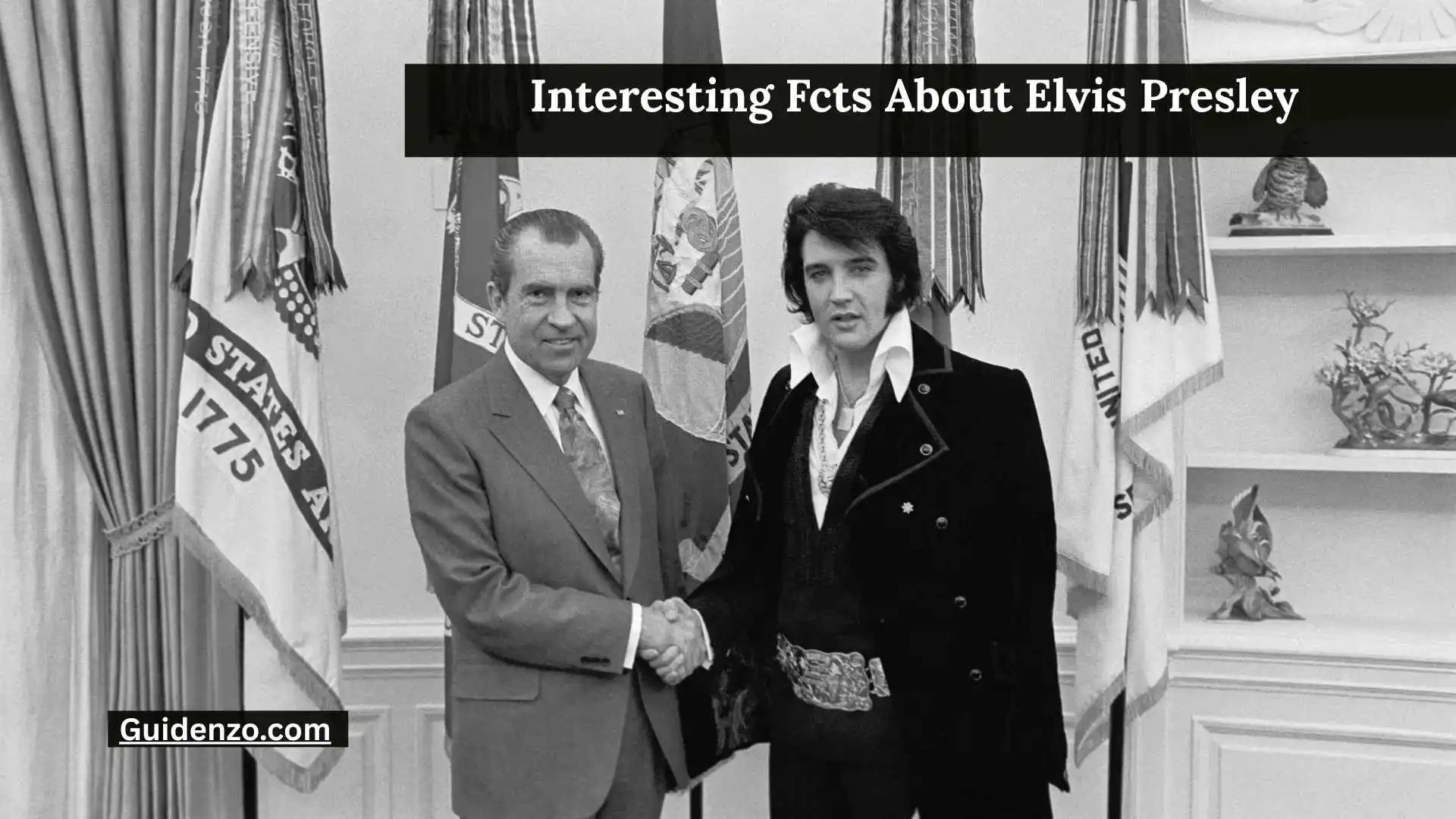
20. He Met President Richard Nixon to Obtain a Badge
On December 21, 1970, Elvis arrived unannounced at the White House seeking a federal narcotics badge. He met with President Nixon, expressed concern about drug culture and anti-American influences, and received an honorary badge from the Bureau of Narcotics and Dangerous Drugs. The meeting produced one of the most famous photographs in presidential history.
21. He Collected Guns Enthusiastically
At the time of his death Elvis owned dozens of firearms, including handguns and at least one machine gun. He enjoyed target shooting and sometimes fired weapons for recreation at Graceland. The collection reflected both a personal interest in law enforcement imagery and the security concerns that accompanied extreme fame.
22. He Occasionally Impersonated a Police Officer
In the early 1970s Elvis sometimes placed a blue light on his car, pulled over drivers, and approached them in a police-like manner. Instead of issuing tickets he often gave autographs and encouraged safer driving. The unusual habit illustrated both his fascination with authority figures and his playful side.
23. One of His Albums Contained No Songs
To fulfill a contractual obligation, Elvis released Having Fun with Elvis on Stage, an album consisting entirely of stage banter and spoken interjections with no musical performances. Both Elvis and critics disliked the project, yet it still charted, demonstrating the commercial power of his name alone.
24. He Once Swallowed a Cap from His Teeth On Stage
During a performance of “Jailhouse Rock,” Elvis accidentally swallowed one of the caps covering his teeth. The object lodged in his lung and required throat surgery for removal. The incident became one of the stranger footnotes in his performing career.
25. His Favorite Jumpsuit Was the American Eagle
Among the many elaborate stage costumes of the 1970s, Elvis particularly favored the American Eagle (or Aloha) jumpsuit worn during the 1973 Aloha from Hawaii satellite concert. The outfits, often costing tens of thousands of dollars in period prices and requiring weeks of craftsmanship, became visual symbols of his later career.
26. He Owned a Chimpanzee Named Scatter
Elvis kept a pet chimpanzee named Scatter who was known for mischievous behavior, including tugging at women’s skirts. Scatter was eventually confined to a room at Graceland after causing repeated disruptions. The unusual pet added to the eccentric atmosphere surrounding the Memphis Mafia and life at the mansion.
27. He Purchased Franklin D. Roosevelt’s Presidential Yacht
In 1964 Elvis bought the USS Potomac, the 165-foot vessel that had served as FDR’s “floating White House,” for $55,000. He later donated the yacht for charitable purposes. The purchase reflected both his interest in American history and his pattern of large, spontaneous acquisitions.
28. He Helped Popularize the Fool’s Gold Loaf
Elvis once flew friends from Memphis to Denver specifically to eat a massive sandwich known as the Fool’s Gold Loaf—hollowed French bread filled with a jar of peanut butter, a jar of jelly, and a pound of bacon. The indulgent meal became legendary among accounts of his later eating habits, which also included deep-fried pickles and other rich Southern favorites.
29. His Last Words Were Spoken to His Girlfriend
On the night of August 15–16, 1977, Elvis told girlfriend Ginger Alden he was going into the bathroom to read. When she cautioned him not to fall asleep there, he replied, “Okay, I won’t.” Hours later she found him unresponsive. He was pronounced dead at Baptist Memorial Hospital in Memphis. The official cause was cardiac arrhythmia, with prescription drug use contributing to his health decline.
30. He Is Buried at Graceland with Family Members
Elvis, his parents Vernon and Gladys, his grandmother, and later his grandson Benjamin Keough and daughter Lisa Marie are interred in the Meditation Garden at Graceland. The site draws continuous visitors who leave flowers, notes, and tributes.
31. He Holds Multiple Guinness World Records and Chart Achievements

Elvis is recognized for extraordinary commercial success, including records for gold and platinum certifications. Estimates of worldwide record sales range widely, with many sources citing figures exceeding 500 million units when including all formats and territories. He remains one of the highest-selling solo artists in history.
32. A Postage Stamp Featuring Him Became the Most Popular Commemorative Issue
In 1993 the United States Postal Service issued an Elvis Presley stamp after a public vote that favored the younger 1950s image over a later portrait. More than a million votes were cast, and the stamp became the most popular commemorative issue of its kind.
33. He Was Related to Two U.S. Presidents
Genealogical research has linked Elvis as a distant relative of both Abraham Lincoln and Jimmy Carter. The connections, though remote, add an unexpected historical thread to his American story.
34. He Changed Lyrics Mid-Performance for Humor
During a live version of “Are You Lonesome Tonight?” Elvis altered a line to “Do you gaze at your bald head and wish you had hair?” and then dissolved into laughter. The recording was later released and charted in the United Kingdom, capturing his spontaneous stage personality.
35. He Maintained a Close Circle Known as the Memphis Mafia
Elvis surrounded himself with a group of friends and bodyguards nicknamed the Memphis Mafia. He gave many of them gold rings engraved with a lightning bolt and the letters TCB—“Taking Care of Business.” The circle provided companionship, protection, and constant company during years of intense fame.
36. His Early Style Drew Heavily from Black Musical Traditions
Elvis openly acknowledged the influence of Black blues, gospel, and rhythm-and-blues artists. He recorded songs originated by performers such as Arthur Crudup and credited the depth of that musical tradition. Discussions of cultural exchange and appropriation surrounding his career continue among historians and critics, but his own statements consistently recognized the Black roots of the music he popularized.
37. He Returned to Live Performance with the 1968 Comeback Special
After years focused on Hollywood films, Elvis staged a televised special in 1968 that reintroduced him as a vital live performer. The intimate segments with his original musicians and the powerful closing performance of “If I Can Dream” marked a creative and commercial rebirth that led to the successful Las Vegas residencies of the 1970s.
38. The Aloha from Hawaii Concert Was a Global Satellite Broadcast
In January 1973 Elvis performed a live concert in Honolulu that was broadcast via satellite to audiences around the world. The event was a technological milestone for the era and remains one of the most widely viewed concerts of its time.
39. He Performed Hundreds of Shows in Las Vegas
Beginning in 1969, Elvis established a long-running residency at the International Hotel (later the Las Vegas Hilton). He performed hundreds of sold-out shows, often two a night, cementing the image of the jumpsuit-clad showman that many fans associate with his later career.
40. His Estate Continues to Generate Significant Revenue
After his death, careful management of Graceland, licensing, and the catalog turned the Elvis Presley estate into a lasting commercial enterprise. Lisa Marie Presley and later her children, along with professional management, maintained the brand and property that still attract global attention.
Timeline of Key Milestones
| Year | Event |
| 1935 | Born in Tupelo, Mississippi; twin brother stillborn |
| 1948 | Family moves to Memphis |
| 1953 | Records first vanity disc at Sun |
| 1954 | Releases “That’s All Right”; career begins |
| 1956 | National breakthrough; first RCA hits and Ed Sullivan appearance |
| 1957 | Buys Graceland |
| 1958–1960 | Serves in U.S. Army; meets Priscilla |
| 1967 | Marries Priscilla Beaulieu |
| 1968 | Comeback television special |
| 1969 | Begins Las Vegas residencies |
| 1973 | Aloha from Hawaii satellite concert; divorces Priscilla |
| 1977 | Dies at Graceland on August 16 |
Statistics Table
| Metric | Approximate Figure / Note |
| Feature films | 31 |
| Estimated worldwide record sales | Hundreds of millions (exact totals vary by source and methodology) |
| RIAA certifications | Highest number of gold and platinum awards among solo artists in many categories |
| Graceland visitors | Hundreds of thousands annually |
| Age at death | 42 |
| Years of active recording and performing | 1954–1977 |
Myth vs Fact
| Myth | Fact |
| Elvis wrote all his own songs | He never wrote songs; he selected and interpreted material by other writers |
| He performed extensively overseas | He gave only a few Canadian concerts and never toured outside North America |
| He died from a drug overdose alone | Official cause was cardiac arrhythmia; prescription drug use was a contributing factor |
| He invented rock and roll | He popularized and blended existing blues, country, and gospel styles for a mass audience |
| Elvis is still alive | Medical records, autopsy, and multiple eyewitness accounts confirm his death in 1977 |
Common Misconceptions
Many people believe Elvis single-handedly created rock and roll. In reality he synthesized Black rhythm-and-blues, Southern gospel, and country music into a sound that reached white mainstream audiences at a pivotal moment. Others assume his manager fully controlled every decision; while Colonel Parker exerted enormous influence, Elvis made key artistic choices, especially during the 1968 special and later live performances. Claims that he never acknowledged Black musical influences are contradicted by his own interviews. Conspiracy theories that he faked his death persist despite clear medical and historical evidence.
Why This Topic Matters
Elvis Presley’s story illuminates the power of popular culture to cross social boundaries, the costs of sudden fame, and the lasting commercial and emotional connection audiences form with artists. His career accelerated the acceptance of rock and roll, influenced generations of performers, and left architectural and musical landmarks that continue to draw visitors and listeners. Understanding the full range of facts—beyond caricature—helps separate legend from documented life and reveals how one individual both reflected and reshaped mid-twentieth-century America.
Related Discoveries
The same Sun Records environment that launched Elvis also nurtured Johnny Cash, Jerry Lee Lewis, and Carl Perkins. The Memphis music scene of the 1950s remains a critical chapter in American musical history. Graceland’s preservation as a historic site parallels efforts to protect other cultural landmarks. Ongoing scholarly work continues to examine race, class, and media in the early rock era.
Expert Insights
Historians emphasize that Elvis’s significance lies less in technical innovation than in cultural timing and charismatic performance. He made Black musical forms audible and desirable to a broad white audience at a time of strict segregation, while also absorbing country and gospel traditions from his own background. His later career illustrates both the rewards and the physical and emotional toll of sustained celebrity. Careful archival research, including Sun session logs, military records, and medical documentation, continues to refine the public understanding of his life beyond mythology.
Frequently Asked Questions
When and where was Elvis Presley born?
Elvis Aaron Presley was born on January 8, 1935, in East Tupelo, Mississippi, in a two-room house built by his father and uncle.
Did Elvis have any siblings?
He had an identical twin brother, Jesse Garon Presley, who was stillborn 35 minutes before Elvis.
How many movies did Elvis make?
He starred in 31 feature films between 1956 and 1969, most of them musical vehicles.
Why did Elvis never tour Europe or other continents?
Manager Colonel Tom Parker’s immigration status and preference for controlling the American market are the primary reasons cited by biographers.
What was the cause of Elvis’s death?
He died of cardiac arrhythmia on August 16, 1977. Long-term prescription drug use contributed to his declining health.
Was Elvis a songwriter?
No. He recorded hundreds of songs written by others and shaped them through distinctive interpretation and performance.
Where is Elvis buried?
He is interred in the Meditation Garden at Graceland in Memphis, Tennessee, alongside family members.
Did Elvis really meet President Nixon?
Yes. The December 21, 1970, meeting at the White House is thoroughly documented and produced a famous photograph.
How successful was Elvis commercially?
He ranks among the highest-selling solo recording artists in history, with extensive gold and platinum certifications and enduring catalog sales.
What is Graceland today?
Graceland operates as a museum and historic site open to the public, attracting hundreds of thousands of visitors each year.
Key Takeaways
- Elvis rose from extreme poverty in Mississippi to global stardom within a few years.
- His music blended gospel, blues, and country into a new mainstream sound.
- He never wrote songs yet became one of the most recorded and recognized voices of the twentieth century.
- Personal losses, including his twin brother and later his mother, shaped his emotional life.
- Military service, marriage, film career, and Las Vegas residencies marked distinct phases of his public image.
- Myths about songwriting, international touring, and the circumstances of his death continue despite clear historical evidence.
- Graceland and his recorded catalog keep his cultural presence active decades after 1977.
Conclusion
The interesting facts about Elvis Presley paint a portrait far richer than any single jumpsuit or hit single. From the stillborn twin and the four-dollar recording session to the White House meeting and the final night at Graceland, his life combined extraordinary success with human vulnerability.
He changed the sound of popular music, challenged social norms through performance, and left a physical and recorded legacy that still draws people from around the world. Understanding these details allows a fuller appreciation of the man who became known simply as the King.

I am Amelia Whitmore, a writer fascinated by the strange, wonderful, and often overlooked details of our world. I love researching unusual facts about people, places, animals, and history. My goal is to share knowledge in a friendly way that sparks curiosity and encourages readers to keep discovering something new.
Books:
- Amazing Facts You Never Learned at School
- The Little Book of Big Surprises