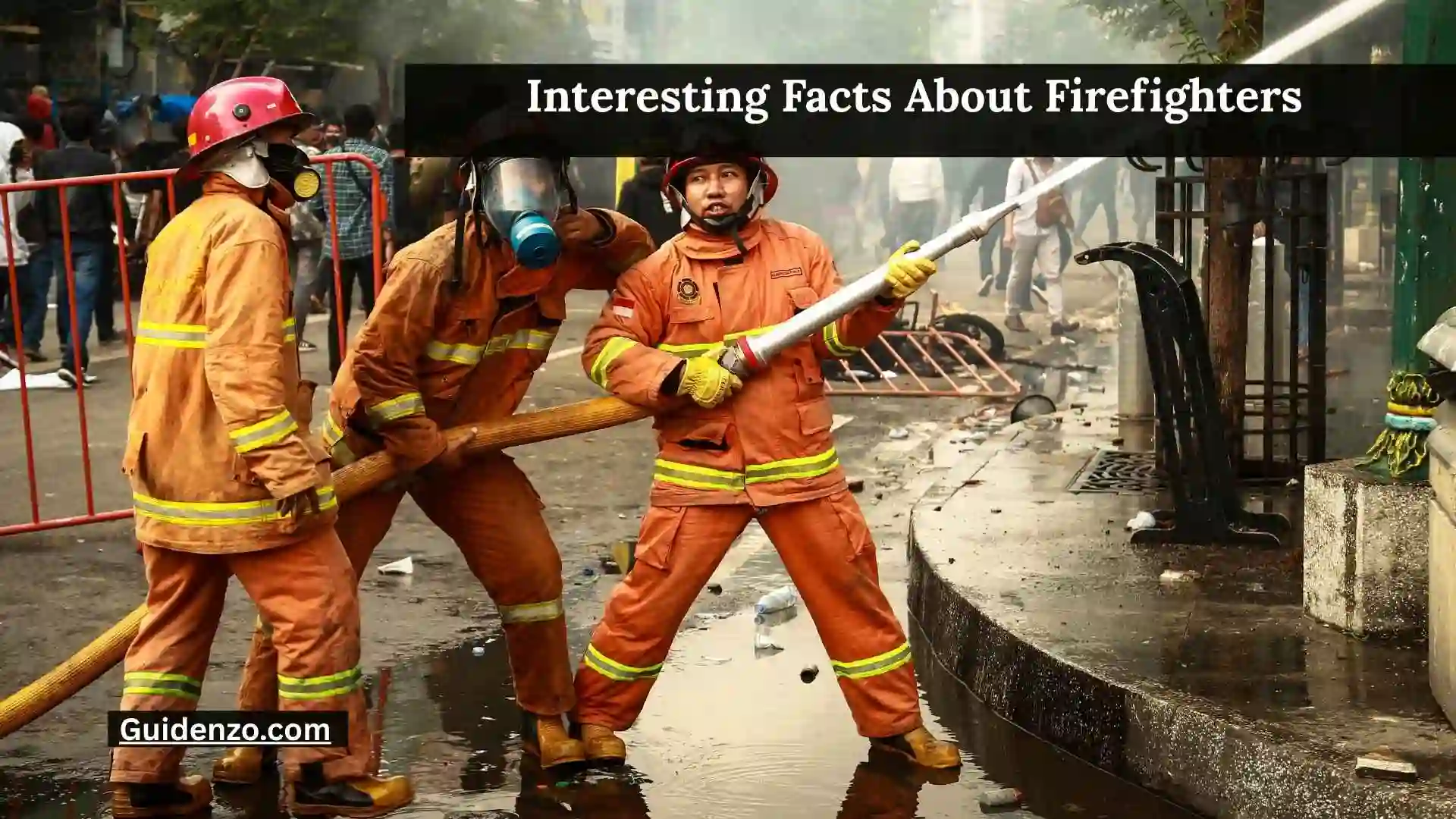
Firefighters do far more than run into burning buildings. They provide emergency medical care, rescue people from crashes, respond to hazardous-material incidents, manage wildfires, and teach communities how to prevent emergencies.
These interesting facts about firefighters reveal how the profession developed, what modern crews actually do, why their protective equipment is so specialized, and which hidden health risks continue after the flames disappear. From ancient firefighting systems to thermal imaging cameras, each fact offers a closer look at the science, teamwork, discipline, and courage behind the fire service.
Quick Answer
Firefighters are specially trained emergency responders who suppress fires, rescue people, provide medical assistance, manage hazardous materials, and reduce community risks. Many firefighters in the United States are volunteers, and most fire-department calls are not building fires. The profession requires physical fitness, technical knowledge, teamwork, continuous training, and protection from long-term hazards such as toxic smoke, heat stress, heart disease, and occupational cancer.
Quick Facts About Firefighters
| Category | Quick Fact |
| Profession | Emergency response and public safety |
| Main responsibilities | Fire suppression, rescue, EMS, prevention, and hazard control |
| U.S. personnel mix | Career, volunteer, paid-per-call, part-time, and wildland firefighters |
| Training | Fire behavior, rescue, medical aid, equipment, hazardous materials, and incident command |
| Common equipment | Turnout gear, helmet, gloves, boots, SCBA, hose, radio, and hand tools |
| Work setting | Fire stations, homes, roads, businesses, forests, industrial sites, and disaster zones |
| Major occupational risks | Heat, smoke, structural collapse, trauma, heart strain, and toxic exposure |
| Surprising fact | Emergency medical and rescue calls make up a much larger share of fire-department responses than fires |
35 Interesting Facts About Firefighters
1. Most Fire-Department Calls Are Not Fires
The Fact: Modern fire departments respond to medical emergencies, traffic collisions, gas leaks, hazardous materials, rescues, false alarms, and public-assistance calls. In USFA’s national run-profile analysis, approximately 64% of reported fire-department calls involved emergency medical services or rescue, while only about 4% were fire calls. Why It Matters: Firefighters must master medicine, communication, rescue systems, and scene safety, not just hose operations.
Did You Know? In many communities, a fire engine may reach a medical patient before an ambulance.
Additional Context: The exact duties vary by department, staffing model, and local emergency system.
2. Many American Firefighters Serve as Volunteers
The Fact: Volunteer firefighters remain essential to emergency protection, particularly in small towns and rural communities. USFA registry data released in 2026 classified 52% of active firefighting personnel as volunteers, 35% as career firefighters, and 13% as paid-per-call personnel.
Why It Matters: Thousands of communities could not maintain local fire protection using full-time staffing alone.
Did You Know? Volunteers often complete formal training while balancing regular jobs and family responsibilities.
Additional Context: A volunteer department can still operate with professional standards, certified personnel, modern apparatus, and structured command systems.
3. Firefighters Rarely Enter a Fire Alone
The Fact: Structural firefighting depends on coordinated teams. Firefighters may work in hose, search, ventilation, rescue, rapid-intervention, water-supply, and command assignments.
Why It Matters: Smoke can eliminate visibility, heat can change conditions quickly, and weakened structures can collapse without warning. Team members help monitor hazards and protect one another.
Did You Know? Crews regularly perform personnel-accountability checks to confirm who entered a hazardous area and whether everyone has exited.
Additional Context: Fireground discipline matters as much as individual bravery. Unplanned action can endanger rescuers, victims, and neighboring crews.
4. Protective Clothing Does Not Make Firefighters Fireproof
The Fact: Turnout gear creates a protective barrier against heat, moisture, cuts, and contaminants, but it cannot make a person immune to fire.
Why It Matters: Heat can pass through protective layers, especially during prolonged exposure. Moisture inside the clothing may also increase the risk of steam burns.
Did You Know? A firefighter may not immediately feel dangerous heat because the gear delays heat transfer.
Additional Context: Crews must read fire behavior, limit exposure, rotate personnel, and leave before protective equipment reaches its limits.
5. Firefighter Gear Can Be Extremely Heavy
The Fact: A complete working set may include turnout clothing, boots, helmet, gloves, radio, breathing apparatus, mask, flashlight, tools, and hose equipment. The total load can reach dozens of pounds before additional rescue tools are carried.
Why It Matters: Firefighters must climb stairs, crawl, search rooms, control hoses, and move victims while carrying that weight.
Did You Know? Heat trapped inside protective clothing increases physical strain.
Additional Context: Strength alone is not enough. Effective movement requires endurance, balance, flexibility, pacing, and practiced body mechanics.
6. Breathing Apparatus Provides Air, Not Oxygen
The Fact: A self-contained breathing apparatus, commonly called an SCBA, usually supplies compressed breathable air. It is not simply an “oxygen tank.”
Why It Matters: Pure oxygen can create serious fire and medical hazards. Compressed-air systems allow firefighters to breathe in smoke-filled or oxygen-deficient environments.
Did You Know? An alarm warns when the air supply is running low.
Additional Context: The working time of a cylinder depends on its rated capacity, the firefighter’s effort, stress, breathing rate, and equipment condition.
7. Smoke Is Often More Dangerous Than Flames
The Fact: Fire smoke may contain carbon monoxide, irritants, carcinogens, and toxic gases produced by burning plastics, furnishings, fuels, and construction materials.
Why It Matters: Smoke can disorient, incapacitate, or kill occupants before flames reach them. It can also create long-term health risks for responders.
Did You Know? A room can become unsurvivable even when the fire itself appears relatively small.
Additional Context: Firefighters wear breathing protection during active fires and increasingly during overhaul, when hidden hot spots may continue releasing contaminated smoke.
8. Firefighters May Search in Near-Zero Visibility
The Fact: Thick smoke can make a familiar room completely dark. Firefighters may crawl, maintain contact with a wall or hose line, use tools to check the floor, and communicate by touch or radio.
Why It Matters: Furniture, stairs, holes, fallen materials, and changing floor plans can become serious hazards.
Did You Know? Firefighters practice searching rooms while wearing covered masks to simulate smoke conditions.
Additional Context: Search techniques must be systematic because rushing without orientation can cause rescuers to become lost.
9. Thermal Imaging Cameras Detect Heat Patterns
The Fact: Thermal imaging cameras help firefighters identify temperature differences that human eyes cannot see through darkness and some smoke conditions.
Why It Matters: Crews may use them to locate people, identify hidden fire, examine walls, or find overheated equipment.
Did You Know? A thermal camera does not provide ordinary color vision or see clearly through every material.
Additional Context: Glass, reflective surfaces, insulation, water, and thick barriers can affect what the image shows. Firefighters must interpret the display rather than trust it blindly.
10. Water Can Make Some Fires Worse
The Fact: Water is highly effective on many ordinary combustible fires, but it is unsuitable for every emergency. Applying water to burning cooking oil can spread flaming material, while energized electrical equipment creates an electrocution risk.
Why It Matters: Firefighters select extinguishing agents according to the fuel, environment, and hazards.
Did You Know? Foam, dry chemicals, carbon dioxide, and specialized agents may be used instead.
Additional Context: Correctly identifying the fire class is a basic but essential firefighting skill.
11. A Hose Becomes Difficult to Control Under Pressure
The Fact: Water moving through a hose and nozzle creates a reaction force that pushes backward against the firefighters holding it.
Why It Matters: Poor positioning can exhaust a crew, reduce accuracy, or cause a firefighter to lose control of the line.
Did You Know? Firefighters use body position, teamwork, hose loops, doorframes, and coordinated movement to manage nozzle reaction.
Additional Context: Hose handling is a technical skill developed through repeated drills, not a simple matter of pointing water at flames.
12. Ventilation Can Help or Harm an Operation
The Fact: Firefighters sometimes open roofs, doors, or windows to release smoke and heat. However, every opening also changes airflow and may supply oxygen to the fire.
Why It Matters: Poorly timed ventilation can intensify flames or direct heat toward occupants and firefighters.
Did You Know? Breaking a window without coordination may make interior conditions more dangerous.
Additional Context: Modern fire tactics coordinate ventilation with water application, search activities, building construction, wind, and observed fire behavior.
13. Flashover Can Transform a Room Within Seconds
The Fact: Flashover occurs when intense heat causes many exposed combustible surfaces in a compartment to ignite almost simultaneously.
Why It Matters: Conditions can change from a localized fire to a fully involved room extremely quickly.
Did You Know? Warning signs may include rapidly increasing heat, rollover in the smoke layer, and smoke descending closer to the floor.
Additional Context: Protective clothing may provide only limited survival time during flashover conditions, making recognition and escape essential.
14. Backdraft Is Different From Flashover
The Fact: Backdraft involves the explosive ignition of hot, fuel-rich gases when oxygen enters an under-ventilated fire. Flashover involves widespread ignition caused by extreme heat.
Why It Matters: Confusing the two can lead to poor tactical decisions.
Did You Know? Possible backdraft indicators include smoke pulsing from openings, stained windows, limited visible flame, and air being drawn inward.
Additional Context: These signs are not perfect predictions. Firefighters combine observation, training, thermal information, and command decisions.
15. Firefighters Learn About Building Construction
The Fact: Construction type affects how fire spreads, where it hides, and how quickly structural components may fail.
Why It Matters: Lightweight roofs and engineered floor systems can lose strength faster than their intact appearance suggests.
Did You Know? Renovations may create concealed voids that carry fire beyond the room where it started.
Additional Context: Firefighters study roofs, walls, basements, trusses, stairways, utilities, and occupancy patterns before and during emergencies.
16. Fire Stations Are Organized for Rapid Departure
The Fact: Fire stations are designed so crews can receive an alert, collect essential information, reach apparatus, dress, and depart efficiently.
Why It Matters: Delays allow heat, smoke, and medical emergencies to grow more severe.
Did You Know? Equipment is placed in consistent locations so firefighters can find it quickly, even when awakened at night.
Additional Context: Speed matters, but safe driving, correct protective equipment, accurate dispatch information, and complete staffing remain equally important.
17. Firefighters Train Even When No Emergency Is Happening
The Fact: Station life includes equipment inspections, physical conditioning, building familiarization, hose drills, medical practice, documentation, public education, and station maintenance.
Why It Matters: Rare but dangerous events demand an automatic, coordinated response.
Did You Know? Crews may repeatedly practice ladder placement, victim removal, pump operation, and emergency escape procedures.
Additional Context: Training also changes as building materials, vehicle technology, batteries, protective equipment, and medical protocols evolve.
18. Firefighters Often Provide Medical Care
The Fact: Many firefighters are certified as emergency medical responders, emergency medical technicians, or paramedics.
Why It Matters: Medical emergencies occur more often than structure fires in many response systems. Fire crews may perform CPR, control bleeding, administer approved medications, assist childbirth, or stabilize trauma patients.
Did You Know? Some fire departments operate the community’s ambulances, while others assist a separate EMS agency.
Additional Context: Certification levels and permitted treatments differ by jurisdiction.
19. Firefighters Respond to Vehicle Crashes
The Fact: Traffic collisions can involve trapped occupants, leaking fuel, unstable vehicles, damaged electrical systems, traffic hazards, and serious injuries.
Why It Matters: Firefighters may stabilize the vehicle, disconnect power, manage fire hazards, remove doors or roofs, and assist medical personnel.
Did You Know? Modern electric vehicles require specialized knowledge because high-voltage systems and lithium-ion batteries create different hazards.
Additional Context: Rescue crews aim to create safe access without causing additional movement or injury.
20. Not Every Firefighter Works in a City
The Fact: Structural, airport, industrial, military, marine, wildland, and specialized rescue firefighters operate in very different environments.
Why It Matters: A high-rise fire, refinery incident, aircraft emergency, and forest fire demand different equipment and tactics.
Did You Know? Some wildland firefighters work far from roads and carry tools, water, food, and protective shelters on foot.
Additional Context: The term “firefighter” covers a broad family of emergency-response roles rather than one universal job description.
21. Wildland Firefighters Sometimes Use Fire Against Fire
The Fact: Under controlled conditions, crews may intentionally burn vegetation to remove fuel in the path of an approaching wildfire.
Why It Matters: A carefully planned burnout can help create a wider barrier that limits fire spread.
Did You Know? Prescribed fire is also used before emergencies to improve ecosystem health and reduce hazardous fuel buildup.
Additional Context: Intentional burning requires weather information, trained personnel, containment plans, legal authorization, and careful coordination. Wind changes can quickly alter the risk.
22. Firefighters Cannot Always Save a Building
The Fact: Incident commanders must compare possible benefits with risks to responders. If a structure is already lost or likely to collapse, crews may fight the fire from outside.
Why It Matters: Firefighting is not based on sacrifice at any cost. Human life takes priority, followed by property and environmental protection.
Did You Know? A strategy can change from offensive interior operations to defensive exterior operations as conditions worsen.
Additional Context: Withdrawal is a safety decision, not a sign that firefighters have stopped working.
23. Firefighters Use a Formal Command System
The Fact: The Incident Command System establishes leadership, communication, assignments, accountability, and manageable areas of responsibility.
Why It Matters: Large emergencies may involve fire departments, police, EMS, utilities, public works, environmental agencies, and disaster teams.
Did You Know? A small incident may have one commander, while a disaster may develop multiple branches, divisions, groups, and operational periods.
Additional Context: A shared command structure helps different agencies work together without losing control of the scene.
24. Fire Hydrants Are Not the Only Water Source
The Fact: Rural firefighters may use tanker or tender trucks, portable water tanks, ponds, lakes, dry hydrants, swimming pools, or long hose relays.
Why It Matters: A structure fire can consume water faster than a single truck can carry it.
Did You Know? Some departments organize a continuous shuttle in which water-carrying vehicles fill, dump, and return for more.
Additional Context: Reliable water supply requires planning, traffic coordination, pump calculations, and knowledge of local geography.
25. A Firefighter’s Helmet Communicates Information
The Fact: Depending on local policy, helmet color, front shields, markings, and identification numbers may show rank, department, company, or assignment.
Why It Matters: Clear identification helps responders recognize leadership and team roles in chaotic conditions.
Did You Know? There is no single worldwide color system for firefighter helmets.
Additional Context: Never assume that a particular color means the same rank everywhere. Traditions, standards, and department rules vary widely across countries and communities.
26. Firefighters Protect Evidence After a Fire
The Fact: Once immediate threats are controlled, investigators may examine burn patterns, electrical systems, appliances, witness statements, debris, and other evidence to determine origin and cause.
Why It Matters: Careless overhaul could accidentally destroy important clues.
Did You Know? Firefighters document what they observed when they arrived, including smoke, flame location, open doors, and unusual activity.
Additional Context: Determining that a fire was intentionally set requires evidence. Unusual damage alone does not prove arson.
27. Firefighters Face Serious Cancer Risks
The Fact: Fire smoke and contaminated soot can contain carcinogenic substances. A major NIOSH study involving nearly 30,000 firefighters found modestly higher rates of cancer diagnoses and cancer-related deaths than expected
Why It Matters: Danger does not end when the fire is extinguished.
Did You Know? Contamination can remain on clothing, tools, vehicles, and skin.
Additional Context: Departments increasingly emphasize respiratory protection, on-scene decontamination, clean gear, showering, and separation of contaminated equipment from living areas.
28. A National Registry Studies Firefighter Cancer
The Fact: The CDC’s National Firefighter Registry for Cancer collects information to help researchers understand how firefighting exposures relate to cancer. By February 2026, more than 40,000 firefighters had enrolled, making it the nation’s largest firefighter cohort dedicated to occupational cancer research.
Why It Matters: Larger and more diverse data can support better prevention.
Did You Know? Career, volunteer, structural, wildland, active, retired, and cancer-free firefighters can contribute valuable information.
Additional Context: Long-term research is necessary because cancers may develop years after exposure.
29. Heart Strain Is a Major Fire-Service Concern
The Fact: Firefighting combines heavy exertion, extreme heat, stress hormones, dehydration, disrupted sleep, and sudden alarm response.
Why It Matters: These factors can place intense demands on the cardiovascular system, particularly in people with underlying risk factors.
Did You Know? Fire-service wellness programs may include medical screening, fitness support, rehabilitation monitoring, hydration, nutrition, and behavioral-health services.
Additional Context: A firefighter can appear physically strong while still having hidden cardiovascular risks, which makes preventive health care especially important.
30. Mental Health Is Part of Firefighter Safety
The Fact: Firefighters may repeatedly witness death, severe injury, violence, child emergencies, and community disasters.
Why It Matters: Repeated trauma can contribute to sleep problems, anxiety, depression, substance misuse, relationship strain, or post-traumatic stress symptoms.
Did You Know? Peer-support teams allow firefighters to speak with trained colleagues who understand fire-service culture.
Additional Context: Confidential counseling, supportive leadership, recovery time, and early treatment help reduce stigma and protect long-term well-being.
31. Women Have Served in Firefighting for Generations
The Fact: Women work as career, volunteer, wildland, industrial, military, and command-level firefighters.
Why It Matters: The idea that firefighting belongs to only one gender overlooks decades of service and leadership.
Did You Know? Poorly fitting protective clothing can reduce mobility and increase exposure, which is why researchers continue studying PPE fit for female firefighters
Additional Context: Effective firefighting depends on training, fitness, judgment, communication, and teamwork rather than a single body type.
32. Firefighters Also Prevent Emergencies
The Fact: Prevention work includes inspecting buildings, reviewing fire-protection systems, teaching evacuation, checking hydrants, supporting smoke-alarm programs, and planning for high-risk properties.
Why It Matters: The safest fire is the one that never starts or is detected before it grows.
Did You Know? Crews may tour schools, nursing facilities, factories, and large buildings before an emergency occurs.
Additional Context: Pre-incident planning helps responders locate entrances, hazards, utility controls, water supplies, and occupants who may need assistance.
33. Firefighters Use More Than Axes and Hoses
The Fact: Fire apparatus may carry hydraulic rescue tools, saws, ropes, airbags, gas detectors, medical equipment, ventilation fans, thermal cameras, absorbent materials, ladders, salvage covers, and specialized nozzles.
Why It Matters: The variety reflects the broad range of incidents handled by modern departments.
Did You Know? Equipment placement is carefully planned so crews can retrieve critical tools quickly.
Additional Context: Every tool requires inspection, maintenance, training, and safe operating procedures.
34. Firefighter Fatality Counts Can Differ by Organization
The Fact: National organizations sometimes report different annual totals because they may use different definitions, inclusion rules, time frames, or methods for classifying occupational deaths.
Why It Matters: Readers should examine what a statistic includes before comparing it with another source. USFA, for example, reported 72 on-duty firefighter deaths for 2024 under its criteria.
Did You Know? Some studies separately discuss delayed deaths, wildland personnel, contractors, or illnesses linked to earlier incidents.
Additional Context: A difference in totals does not automatically mean one source is inaccurate.
35. The Fire Service Continues to Change
The Fact: Firefighters now face hazards involving lithium-ion batteries, solar panels, energy-storage systems, lightweight construction, synthetic furnishings, extreme wildfire conditions, and increasingly complex vehicles.
Why It Matters: Yesterday’s tactics may not fully address today’s risks.
Did You Know? Battery fires can reignite after appearing controlled because damaged cells may enter thermal runaway.
Additional Context: Continuous research, updated codes, improved protective equipment, incident reporting, and realistic training help the profession adapt.
Firefighting History Timeline
| Period | Important Development |
| Ancient Rome | Organized groups, including the Vigiles, performed firefighting and public-safety duties |
| 1600s | Growing cities developed local watch systems and manual fire brigades |
| 1736 | Benjamin Franklin helped organize the Union Fire Company in Philadelphia |
| 1800s | Hand-powered and steam fire engines improved water delivery |
| Mid-1800s | Paid municipal fire departments expanded in major American cities |
| Late 1800s | Alarm boxes, improved hydrants, ladders, and protective equipment became more common |
| Early 1900s | Motorized apparatus gradually replaced horse-drawn fire engines |
| Mid-1900s | Breathing apparatus, radios, building codes, and standardized training advanced |
| Late 1900s | Incident command, hazardous-material response, EMS, and technical rescue became central duties |
| 2000s–present | Thermal imaging, digital dispatch, cancer prevention, data systems, drones, and battery-fire research continue reshaping operations |
Firefighter Statistics
| Statistic | Verified Information |
| Active personnel by status | 35% career, 52% volunteer, and 13% paid-per-call in the USFA registry summary available in June 2026 |
| EMS and rescue activity | Approximately 64% of reported fire-department calls in the USFA 2020 run profile |
| Fire calls | Approximately 4% of reported calls in the same run profile |
| U.S. firefighter estimate | About 1,041,200 career and volunteer firefighters in the estimate cited by USFA |
| Change from 2010 | Approximately 62,100 fewer firefighters than in 2010 |
| 2024 USFA on-duty deaths | 72 firefighters under USFA’s definitions and classifications |
| NIOSH cancer study | Nearly 30,000 firefighters from Chicago, Philadelphia, and San Francisco |
| Cancer findings | 9% more cancer diagnoses and 14% more cancer-related deaths than expected in the studied population |
| National Firefighter Registry | More than 40,000 enrolled firefighters by February 2026 |
Firefighter Myths vs Facts
| Myth | Fact |
| Firefighters spend most calls fighting fires | Medical, rescue, alarm, and service calls make up most responses in many departments |
| Protective gear makes firefighters fireproof | Gear delays heat exposure but has strict limits |
| An SCBA contains pure oxygen | It normally supplies compressed breathable air |
| Breaking windows always helps | Uncoordinated ventilation can intensify fire |
| All firefighters are full-time employees | Many communities rely on volunteers and paid-per-call personnel |
| Firefighters can see through smoke | Dense smoke can create near-zero visibility |
| Water extinguishes every kind of fire | Some fires require specialized agents or tactics |
| Firefighters only face danger during incidents | Cancer, cardiovascular strain, sleep disruption, and trauma create long-term risks |
| Every department uses the same helmet colors | Identification systems vary by jurisdiction |
| Withdrawing from a building means giving up | Defensive operations may be the safest and most effective strategy |
Common Misconceptions About Firefighters
A major misconception is that courage means ignoring danger. Professional courage involves entering risk with training, protective equipment, communication, and a realistic objective. Firefighters continually compare the potential benefit of an action with its danger.
Another misunderstanding is that every firefighter performs identical duties. Training, authority, staffing, medical certification, and equipment vary considerably between city departments, volunteer companies, industrial brigades, airports, military installations, and wildland agencies.
People also underestimate the work performed after visible flames disappear. Overhaul, contamination control, evidence preservation, equipment cleaning, report writing, medical monitoring, and restoring apparatus for the next call may take hours.
Why Firefighters Matter Today
Firefighters provide an adaptable emergency workforce that communities can call for fires, cardiac arrests, crashes, storms, hazardous materials, rescues, explosions, and natural disasters.
Their role is becoming more complex as climate-related wildfire conditions, dense development, aging infrastructure, alternative-energy systems, and new construction materials create unfamiliar hazards. Firefighters also support prevention by inspecting buildings, educating residents, installing alarms, and studying local risks.
Understanding their work helps the public make safer decisions. Residents who maintain smoke alarms, keep exits clear, follow evacuation instructions, and yield to emergency vehicles directly improve firefighters’ ability to save lives.
Related Fire-Service Concepts
Important related subjects include fire behavior, combustion science, emergency medical services, hazardous-material control, technical rescue, wildland fire management, building codes, sprinkler systems, smoke alarms, emergency communications, disaster management, occupational health, and incident command.
These fields are connected. Building codes slow fire spread, alarms provide warning, sprinklers control early growth, dispatchers send resources, firefighters manage the incident, investigators identify causes, and public educators use those findings to prevent similar emergencies.
Expert Insights
The most effective fire departments focus on risk reduction rather than dramatic response alone. Fast arrival matters, but prevention, staffing, reliable equipment, water supply, training, health monitoring, and public cooperation shape the outcome long before an alarm sounds.
Modern fire safety also requires learning from data. Accurate incident reports reveal patterns involving locations, causes, injuries, response demands, and vulnerable populations. USFA’s reporting systems and statistical programs help departments and policymakers understand national fire problems, although participation and reporting completeness can affect individual datasets
Finally, firefighter safety depends heavily on culture. Members must feel able to report hazards, stop unsafe actions, request help, discuss mental health, and follow contamination-control procedures without being treated as weak. Strong teams combine courage with accountability.
Frequently Asked Questions
What do firefighters do besides fight fires?
Firefighters respond to medical emergencies, vehicle collisions, hazardous-material incidents, gas leaks, floods, confined-space emergencies, alarms, and technical rescues. They also inspect equipment, train, prepare emergency plans, educate the public, maintain apparatus, and help reduce fire risks before emergencies occur.
How long does it take to become a firefighter?
The timeline varies by department and position. Candidates may complete written testing, physical assessments, interviews, medical screening, background checks, an academy, emergency medical training, and a probationary period. Volunteer departments may use a different schedule, but members still require structured training before performing hazardous duties.
Are most firefighters in the United States volunteers?
Volunteer and paid-per-call personnel form a major part of the American fire service. USFA registry data available in June 2026 classified 52% of active personnel as volunteers, 35% as career firefighters, and 13% as paid per call. Registry participation and definitions should be considered when interpreting these figures.
Why do firefighters crawl inside burning buildings?
Heat and smoke generally rise, so conditions may be cooler and visibility slightly better near the floor. Crawling also helps firefighters maintain balance and search lower areas where an unconscious person may be found. However, floor-level conditions can still be deadly, so breathing protection remains necessary.
What is inside a firefighter’s air tank?
A firefighter’s SCBA cylinder normally contains compressed breathable air rather than pure oxygen. The system includes a cylinder, regulator, mask, pressure indicators, and warning devices. The available working time depends on cylinder size, physical effort, stress, breathing rate, and environmental conditions.
Why do firefighters break windows?
Firefighters may open or remove windows as part of coordinated ventilation, rescue, access, or emergency escape. Breaking glass without a tactical reason can supply oxygen to the fire and worsen conditions. Ventilation must be timed with water application, search activities, wind direction, and fire location.
Why are firefighter uniforms different colors?
Turnout gear colors may reflect purchasing choices, visibility needs, department tradition, or material design. Helmet colors and shields sometimes identify rank or assignment, but there is no universal system. A white helmet, for example, may indicate an officer in one department but something different elsewhere.
How dangerous is firefighting?
Firefighters face burns, smoke exposure, structural collapse, traffic, hazardous chemicals, strenuous work, traumatic events, heart strain, and occupational cancer. Training and protective equipment reduce risk but cannot eliminate it. Long-term health programs are therefore as important as emergency-scene procedures.
Can firefighters enter any burning building?
Firefighters base entry decisions on life hazards, structural stability, fire conditions, available resources, water supply, and the likelihood of achieving a useful result. If collapse is likely and no survivable victims are expected, command may order exterior operations rather than risk crews inside.
What is the hardest part of being a firefighter?
The answer differs by individual. Common challenges include sleep disruption, intense physical demands, repeated exposure to trauma, responsibility for life-or-death decisions, long-term health risks, separation from family, and coping with incidents that cannot be resolved successfully despite the crew’s best effort.
Key Takeaways
- Firefighters handle far more medical and rescue calls than fire calls.
- Volunteer and paid-per-call firefighters protect many American communities.
- Protective clothing reduces danger but does not make firefighters fireproof.
- Smoke, toxic contamination, structural collapse, and heat are major hazards.
- Firefighters depend on teamwork, accountability, and incident command.
- Building construction and fire behavior strongly influence tactics.
- Cancer, heart strain, sleep disruption, and trauma are serious occupational concerns.
- Fire prevention and public education are central fire-service responsibilities.
- New technology creates both useful tools and new emergency risks.
- Professional firefighting combines courage with science, discipline, and careful risk assessment.
Conclusion
The most interesting facts about firefighters show that the profession is more technical, demanding, and varied than popular images suggest. Firefighters must understand medicine, chemistry, construction, hydraulics, rescue systems, human behavior, and rapidly changing technology while remaining prepared to act under severe pressure.
Their greatest contribution is not limited to dramatic rescues. It also appears in the emergencies they prevent, the patients they stabilize, the hazards they identify, and the communities they help prepare. Behind every response stands continuous training, disciplined teamwork, personal sacrifice, and a commitment to protecting life.

I am Amelia Whitmore, a writer fascinated by the strange, wonderful, and often overlooked details of our world. I love researching unusual facts about people, places, animals, and history. My goal is to share knowledge in a friendly way that sparks curiosity and encourages readers to keep discovering something new.
Books:
- Amazing Facts You Never Learned at School
- The Little Book of Big Surprises