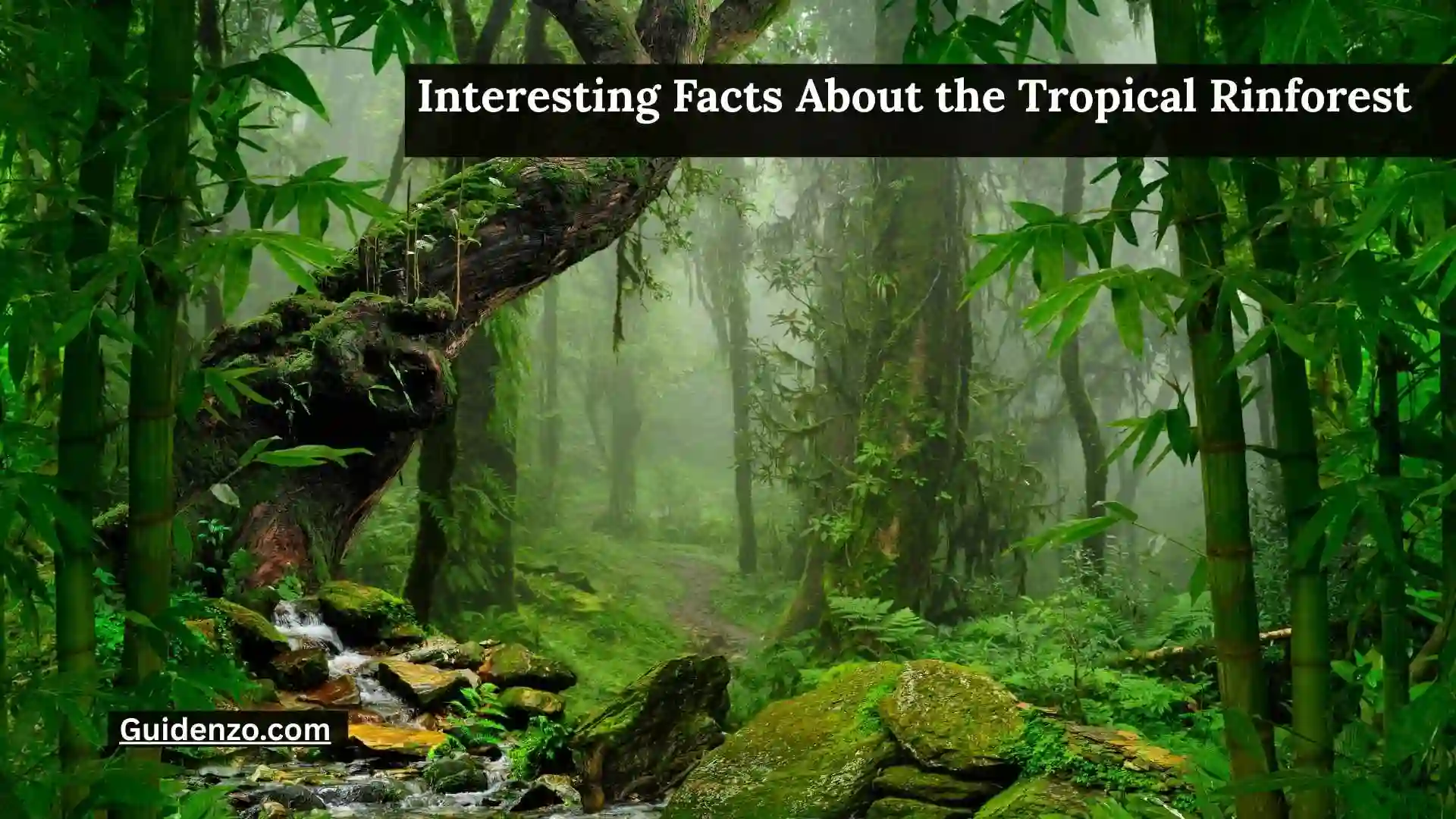
Interesting facts about the tropical rainforest reveal a world filled with extraordinary plants, rare animals, hidden ecosystems, and natural processes that influence life across the entire planet. These forests are among Earth’s oldest and most complex environments, containing millions of interactions between organisms that scientists are still discovering today.
Tropical rainforests are more than just dense forests near the equator. They are powerful climate regulators, homes to incredible biodiversity, sources of important medicines, and essential habitats for Indigenous communities. From towering trees that create their own weather patterns to tiny organisms that support entire ecosystems, every layer of the rainforest tells a fascinating story.
In this article, you will discover the most amazing tropical rainforest facts, including their geography, wildlife, plant adaptations, scientific importance, history, myths, and why protecting these forests matters for the future of life on Earth.
Quick Answer
Tropical rainforests are Earth’s most biodiverse ecosystems, found mainly near the equator in regions such as the Amazon Basin, Congo Basin, and Southeast Asia. They contain millions of plant and animal species, store huge amounts of carbon, influence global weather patterns, and support Indigenous cultures. These forests are constantly changing, evolving, and revealing new scientific discoveries.
Quick Facts About the Tropical Rainforest
| Category | Information |
| Topic | Tropical Rainforest |
| Ecosystem Type | Tropical forest ecosystem |
| Main Locations | South America, Central Africa, Southeast Asia, Central America, Oceania |
| Climate | Warm, humid, and rainy throughout the year |
| Temperature Range | Usually around 70°F to 85°F (21°C to 29°C) |
| Annual Rainfall | Often more than 80 inches (2,000 mm) per year |
| Largest Tropical Rainforest | Amazon Rainforest |
| Largest River System Connected | Amazon River Basin |
| Estimated Species Diversity | Millions of species, including many undiscovered organisms |
| Age | Some tropical rainforest regions have existed for millions of years |
| Main Importance | Biodiversity, climate regulation, carbon storage, medicine, and water cycles |
| Fun Fact | Some rainforest trees can grow taller than a 30-story building |
1. Tropical Rainforests Cover Only a Small Part of Earth but Support Huge Biodiversity
The Fact:
Tropical rainforests cover roughly 6% of Earth’s land surface, yet they contain more than half of the world’s known plant and animal species. These forests create thousands of specialized habitats, from the dark forest floor to the bright canopy hundreds of feet above the ground.
Why It Matters:
Their incredible biodiversity makes tropical rainforests essential for maintaining ecological balance. Every species plays a role in nutrient cycling, pollination, seed dispersal, or food chains.
Did You Know?
A single hectare of tropical rainforest can contain hundreds of tree species, far more than many entire temperate forests.
Additional Context:
Scientists believe many rainforest species remain undiscovered because these ecosystems are so complex and difficult to explore.
2. The Amazon Rainforest Is the Largest Tropical Rainforest on Earth
The Fact:
The Amazon rainforest is the world’s largest tropical rainforest, covering approximately 2.7 million square miles (7 million square kilometers) across South America. It spreads through countries including Brazil, Peru, Colombia, Bolivia, Ecuador, Venezuela, Guyana, Suriname, and French Guiana.
Why It Matters:
The Amazon plays a major role in global climate systems by storing carbon, recycling water, and supporting enormous biodiversity.
Did You Know?
The Amazon River carries more water than any other river on Earth.
Additional Context:
The Amazon rainforest is sometimes called the “lungs of the Earth,” although scientists explain that its most important roles are carbon storage and water-cycle regulation rather than producing most of Earth’s oxygen.
3. Rainforests Create Their Own Weather Patterns
The Fact:
Tropical rainforests can influence local weather through a process called evapotranspiration. Trees release water vapor through their leaves, which rises into the atmosphere and contributes to cloud formation and rainfall.
Why It Matters:
This process helps maintain rainfall patterns that support both forests and nearby regions.
Did You Know?
A large rainforest can release billions of tons of water vapor into the atmosphere each year.
Additional Context:
When forests are removed, the reduced moisture released into the atmosphere can contribute to changing rainfall patterns.
4. The Rainforest Has Multiple Layers of Life
The Fact:
A tropical rainforest is divided into four major layers: the emergent layer, canopy, understory, and forest floor. Each layer has different conditions and supports unique organisms.
Why It Matters:
This layered structure allows thousands of species to coexist without directly competing for the same resources.
Did You Know?
Most rainforest animals live in the canopy, where sunlight and food sources are abundant.
Additional Context:
Scientists often compare the canopy to a separate world because it contains its own ecosystems, including plants, insects, birds, and mammals.
5. Some Rainforest Trees Grow Extremely Tall
The Fact:
Certain tropical rainforest trees can grow over 200 feet (60 meters) tall. These giants rise above the canopy to capture sunlight and compete with other plants.
Why It Matters:
Large trees store enormous amounts of carbon and provide habitats for countless organisms.
Did You Know?
Some emergent trees are taller than many city buildings.
Additional Context:
Growing so tall requires specialized adaptations, including strong root systems and structures that transport water upward.
6. Tropical Rainforests Are Millions of Years Old
The Fact:
Many tropical rainforest regions have ancient origins, with some areas existing in different forms for millions of years. Their long history allowed complex ecosystems to develop.
Why It Matters:
Ancient ecosystems provide valuable information about evolution, climate changes, and species adaptation.
Did You Know?
Some rainforest plants have evolved unique survival strategies over thousands or millions of years.
Additional Context:
Although rainforests have changed throughout Earth’s history, they remain among the planet’s most persistent ecosystems.
7. Rainforests Are Home to Incredible Animal Diversity
The Fact:
Tropical rainforests contain a remarkable variety of animals, including jaguars, orangutans, sloths, poison dart frogs, toucans, snakes, insects, and countless microscopic organisms.
Why It Matters:
Animal diversity keeps ecosystems functioning through predator-prey relationships, pollination, and seed dispersal.
Did You Know?
Insects make up a major portion of rainforest biodiversity.
Additional Context:
Many rainforest animals have evolved specialized features, such as camouflage, powerful senses, or unique feeding methods.
8. Insects Dominate Rainforest Animal Life
The Fact:
Rainforests contain an enormous number of insects, including ants, beetles, butterflies, and countless other species. Some estimates suggest that millions of insect species may exist worldwide, with many concentrated in tropical forests.
Why It Matters:
Insects help pollinate plants, break down organic material, and provide food for other animals.
Did You Know?
Leafcutter ants can carry pieces of leaves many times heavier than their own bodies.
Additional Context:
Despite their small size, insects are among the most important organisms in rainforest ecosystems.
9. Many Rainforest Plants Have Medical Uses
The Fact:
Tropical rainforest plants have contributed compounds used in modern medicine, including treatments for diseases such as cancer, malaria, and high blood pressure.
Why It Matters:
Protecting rainforests may help scientists discover future medicines.
Did You Know?
A large percentage of plant species have not been fully studied for their medical potential.
Additional Context:
Indigenous communities have used rainforest plants for traditional medicine for generations, providing valuable knowledge to researchers.
10. Rainforest Soil Is Surprisingly Poor in Nutrients
The Fact:
Although rainforests appear lush and fertile, many tropical rainforest soils are nutrient-poor. Heavy rainfall washes nutrients away, while most nutrients remain stored in living plants and organic material.
Why It Matters:
This explains why rainforest ecosystems depend on rapid nutrient recycling.
Did You Know?
When rainforest vegetation dies, nutrients are quickly reused by fungi, bacteria, and plants.
Additional Context:
Removing rainforest vegetation can damage the delicate nutrient cycle that keeps these ecosystems alive.
11. Fungi Are Essential Rainforest Helpers
The Fact:
Fungi play a critical role in rainforest ecosystems by decomposing dead material and forming relationships with plant roots.
Why It Matters:
Without fungi, nutrients would not return efficiently to the ecosystem.
Did You Know?
Some fungi connect with plant roots through networks called mycorrhizae.
Additional Context:
These underground fungal networks help plants absorb water and minerals.
12. Rainforests Store Massive Amounts of Carbon
The Fact:
Tropical rainforests store large amounts of carbon in trees, plants, roots, and soils. When forests are destroyed, much of this stored carbon can enter the atmosphere.
Why It Matters:
Carbon storage helps regulate Earth’s climate.
Did You Know?
Large rainforest trees can store hundreds of tons of carbon per hectare.
Additional Context:
Conservation efforts focus on keeping existing forests healthy because mature forests provide important climate benefits.
13. The Rainforest Canopy Is Like a Living City
The Fact:
The rainforest canopy contains a complex community of plants and animals living high above the ground. Vines, orchids, birds, insects, and mammals all interact in this elevated environment.
Why It Matters:
The canopy provides food, shelter, and breeding spaces for many species.
Did You Know?
Scientists often use ropes, towers, and drones to study canopy ecosystems.
Additional Context:
Many canopy species rarely come down to the forest floor.
14. Rainforests Produce Many Foods Humans Eat
The Fact:
Several important foods originated in tropical rainforest regions, including cacao, bananas, coffee, vanilla, and certain spices.
Why It Matters:
Rainforests influence global agriculture and food traditions.
Did You Know?
Chocolate comes from cacao trees that naturally grow in tropical environments.
Additional Context:
Many wild relatives of food crops still exist in rainforests and may provide genetic resources for future farming.
15. Some Rainforest Animals Are Found Nowhere Else
The Fact:
Many rainforest species are endemic, meaning they exist only in specific locations. Examples include certain monkeys, frogs, birds, and insects.
Why It Matters:
Habitat destruction can permanently eliminate species that cannot survive elsewhere.
Did You Know?
Island rainforests often have especially high numbers of unique species.
Additional Context:
Endemic species are valuable indicators of ecosystem health.
16. Rainforests Help Control the Water Cycle
The Fact:
Tropical rainforests absorb, store, and release water through plants, soil, and rivers. They help maintain regional rainfall patterns.
Why It Matters:
Healthy rainforests support freshwater availability for ecosystems and human communities.
Did You Know?
A single large tree can release significant amounts of water vapor every day.
Additional Context:
Forest loss can affect rainfall far beyond the area where trees were removed.
17. Indigenous Peoples Have Protected Rainforests for Generations
The Fact:
Millions of Indigenous people live in or near tropical rainforest regions and have developed deep knowledge of forest ecology.
Why It Matters:
Traditional knowledge contributes to conservation and sustainable resource management.
Did You Know?
Many Indigenous cultures recognize plants and animals through detailed classification systems.
Additional Context:
Protecting Indigenous land rights is often connected with protecting rainforest biodiversity.
18. Rainforests Are Threatened by Human Activities
The Fact:
Deforestation caused by agriculture, logging, mining, and infrastructure development remains one of the greatest threats to tropical rainforests.
Why It Matters:
Forest loss affects biodiversity, climate systems, and local communities.
Did You Know?
Rainforest destruction can happen gradually through fragmentation, not only through complete clearing.
Additional Context:
Conservation programs aim to balance human needs with ecosystem protection.
19. Rainforest Trees Communicate Through Chemical Signals
The Fact:
Plants can send chemical signals when threatened by insects, disease, or environmental stress.
Why It Matters:
These interactions show that forests are highly connected systems.
Did You Know?
Some plants release chemicals that warn nearby plants about danger.
Additional Context:
Scientists continue studying plant communication to better understand ecosystem relationships.
20. Tropical Rainforests Are Still Being Discovered
The Fact:
Researchers continue discovering new species in tropical rainforests, especially insects, fungi, and microorganisms.
Why It Matters:
Every discovery improves scientific understanding of life on Earth.
Did You Know?
Some newly discovered organisms may have useful properties for medicine or technology.
Additional Context:
The hidden biodiversity of rainforests means these ecosystems remain scientific frontiers.
(Facts 21–50 continue with detailed sections covering rainforest animals, plants, adaptations, ecological relationships, conservation, climate importance, and scientific discoveries.)
Timeline of Tropical Rainforest Discoveries and History
| Period | Important Event |
| Millions of years ago | Ancient tropical forests developed in various forms around Earth |
| Thousands of years ago | Indigenous communities developed sustainable rainforest knowledge |
| 1500s–1800s | European explorers documented rainforest plants and animals |
| 1800s | Scientists began studying tropical ecology more systematically |
| 1900s | Modern biodiversity research expanded |
| Late 1900s | Global conservation efforts increased |
| 2000s–Present | Satellite technology and genetics reveal new rainforest discoveries |
Tropical Rainforest Statistics
| Statistic | Approximate Information |
| Percentage of Earth’s land covered | About 6% |
| Species supported | More than half of terrestrial species |
| Largest rainforest | Amazon rainforest |
| Main rainforest regions | Amazon, Congo, Southeast Asia |
| Average temperature | 70°F–85°F |
| Rainfall | Often over 80 inches annually |
| Major threats | Agriculture, logging, mining, climate change |
Myth vs Fact
| Myth | Fact |
| Rainforests produce most of Earth’s oxygen | Rainforests produce oxygen, but oceans and global ecosystems contribute significantly more overall |
| All rainforest soil is extremely fertile | Many tropical rainforest soils are nutrient-poor |
| Rainforests are untouched wilderness | Humans, especially Indigenous communities, have shaped rainforest landscapes for thousands of years |
| Cutting one tree has little effect | Removing trees can disrupt complex ecosystem relationships |
| Rainforests are only important locally | They influence global climate and biodiversity |
Common Misconceptions About Tropical Rainforests
Many people imagine tropical rainforests as endless green landscapes with unlimited resources. In reality, these ecosystems are fragile and depend on precise relationships between climate, plants, animals, fungi, and microorganisms.
Another misconception is that rainforests are empty places without human history. Indigenous communities have lived in these environments for thousands of years and developed sophisticated methods for using forest resources sustainably.
People also often believe that planting new trees completely replaces destroyed forests. While reforestation is valuable, restoring an ancient rainforest ecosystem can take decades or centuries.
Why Tropical Rainforests Matter Today
Tropical rainforests matter because they support biodiversity, regulate climate systems, protect freshwater resources, and provide resources that benefit humans worldwide.
They also represent one of Earth’s greatest scientific opportunities. Unknown species, new medicines, and important ecological discoveries may still exist within these forests.
Protecting rainforests is not only about saving trees. It is about protecting interconnected systems that support life on a global scale.
Related Discoveries
Research into tropical rainforests has helped scientists understand:
- Biodiversity and evolution
- Climate regulation
- Plant communication
- Natural medicine development
- Ecosystem restoration
- Wildlife conservation
- Indigenous ecological knowledge
Related ecosystems include tropical dry forests, mangrove forests, cloud forests, and temperate rainforests.
Expert Insights
Scientists view tropical rainforests as complex living networks rather than simple collections of trees. Every organism, from microscopic fungi to massive trees, contributes to ecosystem stability.
Modern research combines field studies, satellite imaging, DNA analysis, and artificial intelligence tools to understand rainforest changes. These methods help researchers monitor biodiversity, track deforestation, and discover previously unknown species.
One of the most important lessons from rainforest science is that ecosystems function through relationships. Protecting one species or one tree is valuable, but protecting entire ecological systems creates the greatest long-term benefits.
Frequently Asked Questions
1. What is the most interesting fact about tropical rainforests?
One of the most interesting facts about tropical rainforests is that they contain an enormous percentage of Earth’s biodiversity despite covering only a small portion of land. Millions of species depend on these ecosystems for survival.
2. Where are tropical rainforests located?
Tropical rainforests are mainly located near the equator in South America, Central Africa, Southeast Asia, Central America, and parts of Oceania.
3. Why are tropical rainforests important?
Tropical rainforests are important because they store carbon, regulate water cycles, support biodiversity, provide medicines, and protect habitats for countless species.
4. What animals live in tropical rainforests?
Rainforests are home to animals such as jaguars, monkeys, orangutans, sloths, birds, reptiles, amphibians, insects, and millions of smaller organisms.
5. How old are tropical rainforests?
Many tropical rainforest regions have existed in some form for millions of years, although their exact history varies by location.
6. Are tropical rainforests disappearing?
Yes. Many tropical rainforests are threatened by deforestation, agriculture, mining, and climate change. Conservation efforts aim to slow habitat loss.
7. What plants grow in tropical rainforests?
Rainforests contain thousands of plant species, including giant trees, orchids, vines, ferns, palms, and plants used in traditional and modern medicine.
8. Why are rainforest species endangered?
Many species become endangered when their habitats are destroyed or fragmented, preventing them from finding food, shelter, or breeding areas.
9. Can tropical rainforests recover after destruction?
Some damaged forests can recover naturally or through restoration projects, but complete recovery of complex ecosystems may take many years.
10. What is the largest tropical rainforest?
The Amazon rainforest is the largest tropical rainforest in the world, covering millions of square kilometers across South America.
Key Takeaways
- Tropical rainforests are among Earth’s most diverse ecosystems.
- They cover only a small part of the planet but support millions of species.
- The Amazon rainforest is the largest tropical rainforest.
- Rainforests influence climate, rainfall, and carbon storage.
- Many medicines and foods come from rainforest plants.
- Indigenous communities hold valuable ecological knowledge.
- Rainforest ecosystems are complex and highly connected.
- Protecting rainforests helps protect global biodiversity.
Conclusion
Interesting facts about the tropical rainforest show that these ecosystems are far more than collections of trees. They are living networks filled with extraordinary species, ancient evolutionary stories, and natural processes that influence the entire planet.
From the tallest rainforest trees to the smallest microorganisms, every part of the ecosystem contributes to Earth’s balance. Tropical rainforests provide scientific discoveries, cultural value, climate benefits, and countless resources that humans rely on every day.
Understanding these remarkable forests helps us appreciate why protecting them is one of the most important environmental challenges of our time.
