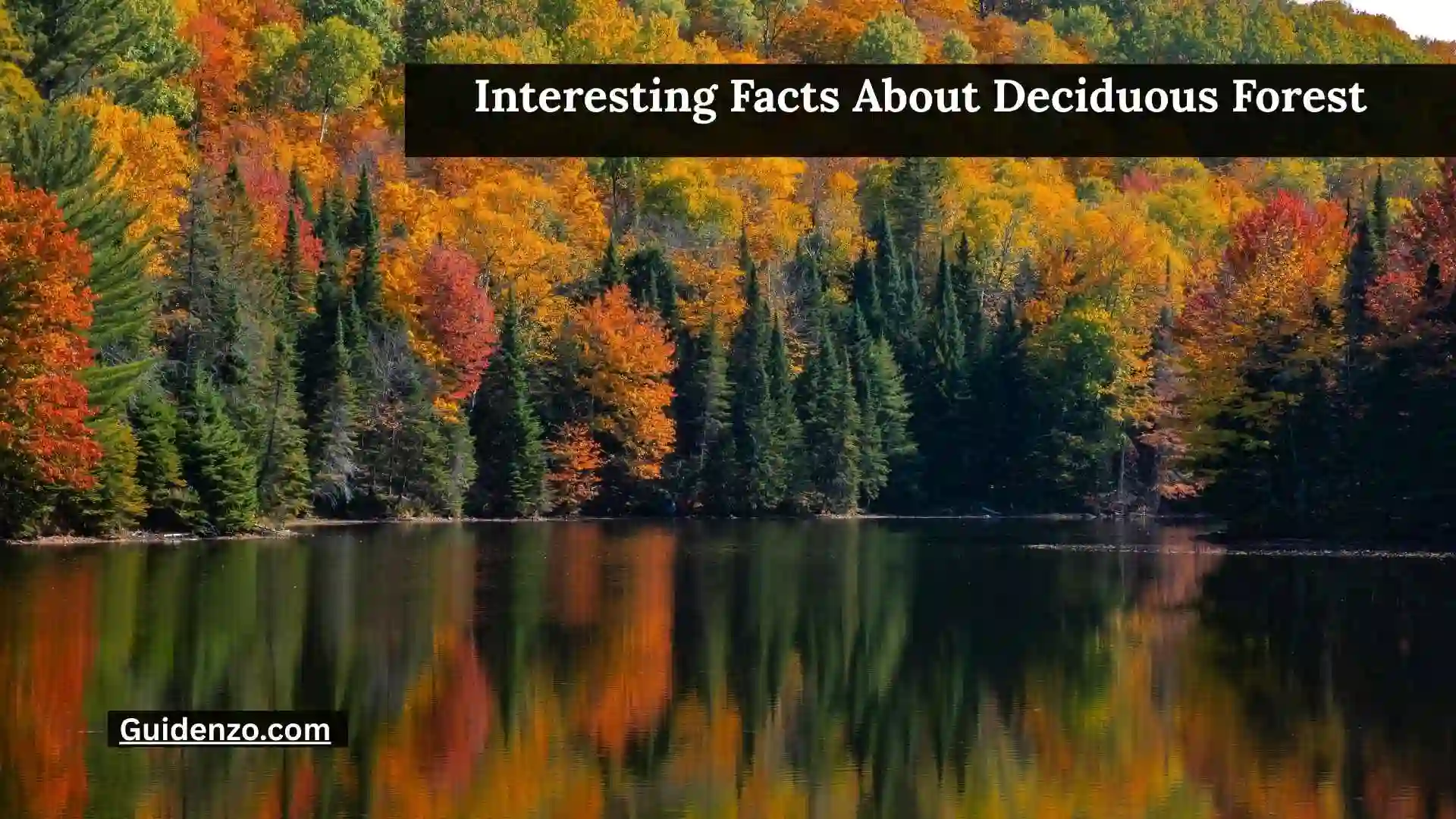
Interesting facts about deciduous forest reveal one of Earth’s most remarkable ecosystems, where trees change with the seasons and create a constantly shifting landscape. Unlike evergreen forests that keep their leaves year-round, deciduous forests follow a natural rhythm of growth, color change, dormancy, and renewal. These forests support thousands of plant and animal species, influence global climate patterns, and provide essential resources for humans.
From the brilliant red and gold colors of autumn leaves to the hidden lives of insects, fungi, and forest animals, deciduous forests are full of surprising scientific discoveries. This guide explores their characteristics, history, biodiversity, importance, and the fascinating processes that make these forests unique.
Quick Answer
Deciduous forests are ecosystems dominated by trees that lose their leaves annually, usually in response to seasonal changes in temperature and rainfall. They are mainly found in temperate regions of North America, Europe, and Asia. These forests are known for rich biodiversity, fertile soils, colorful autumn foliage, and their important role in carbon storage, climate regulation, and wildlife protection.
Quick Facts Table
| Category | Information |
| Topic | Deciduous Forests |
| Ecosystem Type | Temperate forest biome |
| Main Location | North America, Europe, East Asia, parts of South America and Australia |
| Climate | Four distinct seasons with moderate rainfall |
| Dominant Plants | Oak, maple, beech, birch, hickory, and chestnut trees |
| Leaf Behavior | Trees lose leaves annually |
| Age | Millions of years as an ecosystem type |
| Tree Lifespan | Some species can live hundreds of years |
| Biodiversity | Supports thousands of plant, animal, and fungal species |
| Fun Fact | Autumn leaf colors appear because green chlorophyll breaks down, revealing hidden pigments |
What Is a Deciduous Forest?
A deciduous forest is a woodland ecosystem where most trees shed their leaves during a specific season. The word “deciduous” comes from a Latin term meaning “falling off,” referring to the annual loss of leaves.
These forests usually occur in regions with warm summers, cold winters, and enough rainfall to support dense tree growth. The seasonal leaf loss helps trees survive harsh winters by reducing water loss when frozen ground prevents roots from absorbing moisture.
Unlike tropical rainforests with consistently warm conditions, deciduous forests experience dramatic seasonal changes. Spring brings new leaves and flowers, summer creates thick green canopies, autumn produces colorful foliage, and winter reveals bare branches.
30 Interesting Facts About Deciduous Forest
Fact 1: Deciduous Forests Change Appearance Four Times a Year

The Fact:
One of the most fascinating features of deciduous forests is their seasonal transformation. In spring, trees grow fresh leaves and flowers. During summer, forests become dense green environments filled with life. Autumn turns the landscape into a mixture of red, orange, yellow, and gold. Winter removes the canopy, allowing sunlight to reach the forest floor.
Why It Matters:
These seasonal changes influence animal behavior, plant growth, and nutrient cycles. The forest is not a static place but an ecosystem that constantly adapts.
Did You Know?
A single forest can look completely different depending on the month you visit.
Additional Context:
Seasonal changes are controlled by temperature, sunlight duration, and water availability.
Fact 2: Trees Lose Leaves to Survive Winter
The Fact:
Deciduous trees drop their leaves because keeping them during cold months would waste energy and water. Leaves release water through tiny openings called stomata. During winter, frozen soil limits water absorption, making leaf loss a survival strategy.
Why It Matters:
Leaf shedding allows trees to conserve resources and survive conditions that would otherwise damage their tissues.
Did You Know?
Leaf drop is not a sign that a tree is dying. It is a carefully controlled biological process.
Additional Context:
Trees create a protective layer between the branch and leaf stem before leaves fall.
Fact 3: Autumn Colors Come From Hidden Pigments
The Fact:
The famous colors of fall appear when chlorophyll, the green pigment used for photosynthesis, breaks down. Once green fades, other pigments become visible, including carotenoids that create yellow and orange colors and anthocyanins that produce red shades.
Why It Matters:
Autumn colors are evidence of complex chemical processes happening inside leaves.
Did You Know?
Weather conditions can influence how bright autumn colors become.
Additional Context:
Cool nights and sunny days often create stronger red and orange displays.
Fact 4: Deciduous Forests Have Extremely Fertile Soil
The Fact:
When leaves fall, they create a natural layer of organic material called leaf litter. Decomposers such as fungi, bacteria, and insects break this material down and return nutrients to the soil.
Why It Matters:
Rich soil supports strong plant growth and makes deciduous forests highly productive ecosystems.
Did You Know?
A forest floor may contain thousands of tiny organisms working together to recycle nutrients.
Additional Context:
This natural recycling system reduces the need for outside sources of nutrients.
Fact 5: Oak Trees Are Major Deciduous Forest Species
The Fact:
Oak trees are among the most important trees in many deciduous forests. They provide food and shelter for hundreds of species, including birds, insects, and mammals.
Why It Matters:
Removing large oak populations can affect entire food webs.
Did You Know?
Acorns produced by oak trees are an important food source for squirrels, deer, and birds.
Additional Context:
Some oak trees can survive for several centuries.
Fact 6: Deciduous Forests Support Huge Biodiversity
The Fact:
Although they may appear less diverse than tropical forests, deciduous forests support many species of plants, animals, fungi, and microorganisms.
Why It Matters:
Biodiversity helps ecosystems remain stable and recover from disturbances.
Did You Know?
A small patch of forest can contain thousands of interacting organisms.
Additional Context:
Species diversity depends on location, climate, and forest age.
Fact 7: Many Animals Prepare for Winter in Deciduous Forests
The Fact:
Animals living in deciduous forests have developed different survival strategies. Some migrate, some hibernate, and others store food.
Why It Matters:
Seasonal adaptation allows wildlife to survive periods when food becomes scarce.
Did You Know?
Squirrels collect and hide nuts months before winter arrives.
Additional Context:
Migration and hibernation are examples of behavioral adaptation.
Fact 8: Fungi Are Essential Forest Partners
The Fact:
Fungi play a crucial role in deciduous forests by decomposing dead material and forming partnerships with tree roots through mycorrhizal networks.
Why It Matters:
These underground connections help trees absorb nutrients and communicate with their surroundings.
Did You Know?
A teaspoon of healthy forest soil may contain millions of microscopic organisms.
Additional Context:
Fungi help maintain forest health and nutrient movement.
Fact 9: Deciduous Forests Store Large Amounts of Carbon
The Fact:
Trees absorb carbon dioxide during photosynthesis and store carbon in their trunks, branches, roots, and soil.
Why It Matters:
Healthy forests help reduce the amount of carbon dioxide in the atmosphere.
Did You Know?
Older forests can contain massive carbon reserves.
Additional Context:
Protecting forests is an important part of climate management.
Fact 10: Temperate Deciduous Forests Have Four Seasons
The Fact:
The defining feature of temperate deciduous forests is their seasonal cycle. They experience warm summers, cold winters, and noticeable transitions between seasons.
Why It Matters:
Seasonal changes shape everything from plant growth to animal activity.
Did You Know?
Many forests receive between 30 and 60 inches of rainfall annually.
Additional Context:
The combination of rainfall and temperature creates ideal conditions for deciduous trees.
Fact 11: Forest Canopies Create Unique Habitats
The upper layers of deciduous forests form a canopy where birds, insects, and small animals live. This area receives the most sunlight and supports important ecological interactions.
The canopy matters because it controls temperature, moisture, and light levels below. Many species depend on different forest layers for survival.
Did you know that a forest is not just the trees you see? It includes underground ecosystems, the forest floor, shrubs, and canopy communities.
Fact 12: Spring Brings a Burst of Forest Life
Spring is one of the busiest times in deciduous forests. Trees grow new leaves, flowers bloom, insects become active, and many animals reproduce.
This seasonal explosion provides food and shelter for countless organisms. Early spring plants often grow quickly before trees create a dense canopy.
Some wildflowers complete their entire life cycle before summer arrives.
Fact 13: Deciduous Forests Exist Around the World
Although most famous in North America, Europe, and East Asia, deciduous forests appear in several regions worldwide.
Their exact species vary depending on climate and geography. European forests may contain beech and oak, while Asian forests include maple and other native species.
Location strongly influences forest appearance and biodiversity.
Fact 14: Maple Trees Create Famous Autumn Landscapes

Maple trees are well known for their brilliant fall colors, especially in North America and parts of Asia.
Their leaves can turn bright red, orange, and yellow, attracting millions of visitors every year.
Maples are also economically important because some species produce maple syrup.
Fact 15: Forests Protect Water Resources
Deciduous forests help regulate water by absorbing rainfall, reducing flooding, and protecting streams.
Tree roots stabilize soil and prevent erosion. Forest vegetation also filters pollutants before they reach waterways.
Healthy forests contribute to cleaner rivers and groundwater supplies.
Fact 16: Many Medicinal Plants Grow in These Forests
Deciduous forests contain plants that have been used in traditional medicine for centuries.
Scientists continue studying forest plants for possible pharmaceutical compounds.
The diversity of forest plants makes these ecosystems valuable for future discoveries.
Fact 17: Forests Communicate Through Underground Networks
Trees can exchange nutrients and chemical signals through fungal networks connected to their roots.
These relationships show that forests function as connected communities rather than isolated trees.
Research into these systems has changed how scientists understand forest cooperation.
Fact 18: Humans Have Relied on Deciduous Forests for Thousands of Years
People have used deciduous forests for food, medicine, wood, and shelter throughout history.
These forests supported early human settlements because they provided resources and fertile land.
Today, responsible management is necessary to balance human needs with conservation.
Fact 19: Many Birds Depend on Deciduous Forests
Birds use these forests for nesting, feeding, and migration stops.
Tree cavities, seeds, insects, and berries provide essential resources.
Loss of mature forests can reduce bird populations by removing important habitats.
Fact 20: Insects Play Important Roles
Insects pollinate plants, break down organic matter, and serve as food for other animals.
Although some insects damage trees, most play helpful ecological roles.
A healthy forest requires insect diversity.
Fact 21: Dead Trees Are Important Ecosystem Features
Fallen logs and dead trees provide homes for fungi, insects, birds, and small mammals.
Dead wood is not waste. It is part of the natural recycling system.
Removing all dead material can reduce biodiversity.
Fact 22: Forest Fires Can Shape Ecosystems
Some deciduous forests experience natural fires that influence regeneration and species composition.
However, frequent or intense human-caused fires can damage ecosystems.
Fire effects depend on timing, severity, and forest conditions.
Fact 23: Deer Are Common Forest Animals
Many deciduous forests provide habitat for deer species.
They feed on leaves, grasses, and shrubs and influence plant growth through grazing.
Balanced populations are important for ecosystem health.
Fact 24: Deciduous Forests Inspired Art and Culture
The beauty of seasonal forests has influenced paintings, poetry, photography, and storytelling.
Autumn forests especially represent change, renewal, and natural cycles in many cultures.
Fact 25: Forests Help Improve Human Well-Being
Spending time in forests can support relaxation, recreation, and mental well-being.
Activities such as hiking and nature observation connect people with natural environments.
Fact 26: Urban Areas Can Protect Deciduous Trees
City parks and green spaces often preserve deciduous tree species.
Urban forests help reduce heat, improve air quality, and support wildlife.
Fact 27: Climate Change Affects Deciduous Forests
Changing temperatures and rainfall patterns influence growing seasons, migration, and tree health.
Some forests may shift geographically as conditions change.
Conservation helps ecosystems adapt.
Fact 28: Forest Layers Create Different Worlds
A deciduous forest contains several layers: canopy, understory, shrub layer, and forest floor.
Each layer supports different organisms.
This structure increases ecosystem complexity.
Fact 29: Many Deciduous Trees Have Thick Bark Protection
Some trees develop protective bark that helps defend against insects, disease, and environmental stress.
Bark also protects the living tissues beneath.
Fact 30: Deciduous Forests Are Among Earth’s Most Valuable Ecosystems

These forests provide biodiversity, climate benefits, clean water protection, and resources for humans.
Their seasonal beauty is only one part of their importance.
Protecting them helps maintain ecological balance.
Timeline of Deciduous Forest History
| Time Period | Important Event |
| Millions of years ago | Early deciduous tree species evolved as climates changed |
| Thousands of years ago | Humans began using forests for food, shelter, and tools |
| 1800s | Scientific study of forest ecosystems expanded |
| 1900s | Conservation movements increased protection of forests |
| Today | Research focuses on climate change, biodiversity, and restoration |
Statistics Table
| Feature | Information |
| Major Regions | North America, Europe, East Asia |
| Seasons | Four distinct seasons |
| Main Tree Types | Oak, maple, beech, birch |
| Primary Producers | Trees, shrubs, grasses |
| Major Decomposers | Fungi and bacteria |
| Main Ecological Role | Carbon storage and habitat support |
Myth vs Fact
| Myth | Fact |
| Deciduous trees lose leaves because they are unhealthy | Leaf loss is a natural survival strategy |
| Forests are only made of trees | Forests include animals, fungi, soil organisms, and plants |
| Dead trees harm forests | Dead wood supports biodiversity |
| All forests have the same species | Forest species vary by region and climate |
| Autumn colors come from dying trees | Colors appear through natural pigment changes |
Common Misconceptions About Deciduous Forests
One common misunderstanding is that deciduous forests become inactive during winter. While many plants slow growth, animals and microorganisms continue important activities.
Another misconception is that forests are simply collections of trees. In reality, forests are complex communities where thousands of species interact.
People also often assume all leaf-changing forests are identical. However, forests differ greatly depending on geography, climate, soil, and species composition.
Why Deciduous Forests Matter Today
Deciduous forests remain essential because they support biodiversity, store carbon, protect water systems, and provide natural resources. As climate change and habitat loss affect ecosystems worldwide, protecting these forests has become increasingly important.
Conservation efforts include restoring damaged forests, protecting wildlife habitats, and promoting sustainable forestry practices.
Related Discoveries
Research on deciduous forests connects to many scientific fields, including:
- Ecology and biodiversity studies
- Climate science
- Soil microbiology
- Plant biology
- Wildlife conservation
- Sustainable forestry
Understanding these connections helps scientists develop better methods for protecting natural ecosystems.
Expert Insights
A deciduous forest should be viewed as a living system rather than a group of individual trees. Every component, from fungi beneath the soil to birds in the canopy, contributes to ecosystem stability.
Experts emphasize that preserving mature forests is especially important because older forests often contain complex habitats that cannot quickly be replaced.
Forest management works best when it protects biodiversity while allowing humans to use resources responsibly.
Frequently Asked Questions
What is the most interesting fact about deciduous forests?
One of the most fascinating facts is that trees lose their leaves as a survival strategy. This process helps them conserve water and energy during cold or dry seasons.
Where are deciduous forests mainly found?
Temperate deciduous forests are mainly found in eastern North America, Europe, and East Asia, where seasonal temperature changes occur.
Why do deciduous trees lose their leaves?
They lose leaves to reduce water loss and survive winter conditions when water may be frozen and unavailable to roots.
What animals live in deciduous forests?
Common animals include deer, squirrels, foxes, bears, birds, insects, reptiles, and many small mammals.
Why are deciduous forests important?
They support biodiversity, protect soil and water, store carbon, and provide resources for people.
How old are deciduous forests?
The ecosystems have existed for millions of years, although their species and distribution have changed over time.
What causes autumn leaf colors?
Autumn colors appear when green chlorophyll breaks down and reveals other pigments inside leaves.
Are deciduous forests endangered?
Many deciduous forests face threats from development, pollution, invasive species, and climate change.
What is the difference between deciduous and evergreen forests?
Deciduous trees lose their leaves seasonally, while evergreen trees usually keep leaves throughout the year.
Can deciduous forests grow back after damage?
Yes, many deciduous forests can recover naturally if conditions allow and human pressures are reduced.
Key Takeaways
- Deciduous forests are seasonal ecosystems where trees lose leaves annually.
- They are mainly found in temperate regions around the world.
- Autumn colors result from changes in leaf pigments.
- These forests support enormous biodiversity.
- Fungi, insects, plants, and animals all play important roles.
- Deciduous forests help regulate climate and protect water resources.
- Conservation is essential for maintaining these valuable ecosystems.
Conclusion
Interesting facts about deciduous forest show that these seasonal woodlands are far more than beautiful landscapes filled with colorful leaves. They are complex living systems where plants, animals, fungi, and microorganisms work together to maintain balance.
From their ability to survive harsh winters to their role in climate regulation and biodiversity protection, deciduous forests demonstrate the incredible adaptability of nature. Protecting these forests ensures that future generations can continue to learn from, explore, and benefit from one of Earth’s most fascinating ecosystems.

I am Henry Calloway, an independent researcher and writer who enjoys finding extraordinary facts in ordinary places. From mysterious historical events to remarkable discoveries in nature and science, I believe every subject has a surprising side. I write to entertain curious minds and make complex information easy for everyone.
Books:
- Strange But True: Facts From Around the World
- The Unexpected Guide to Everything