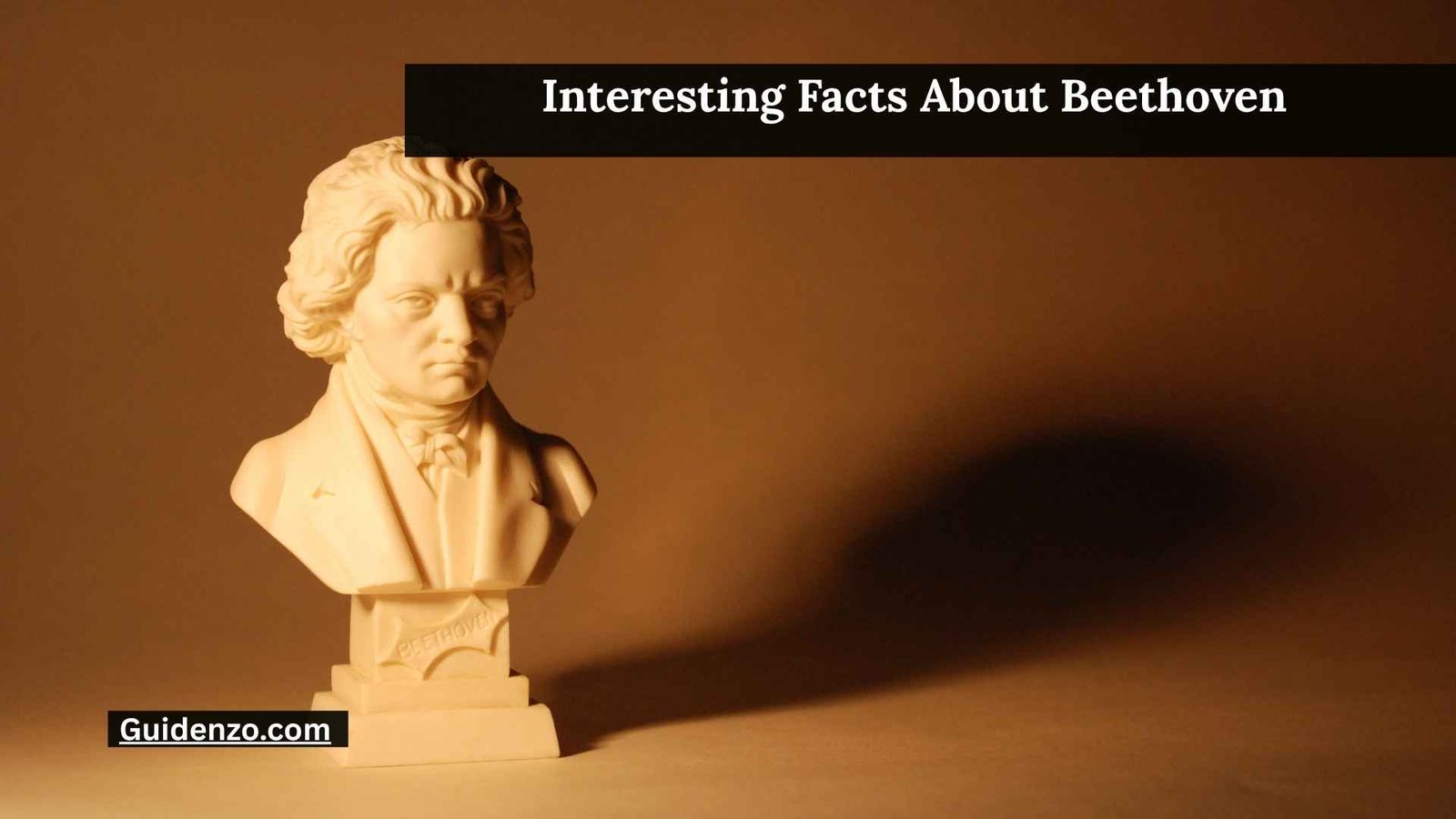
Ludwig van Beethoven stands as one of history’s most transformative figures in Western music. His nine symphonies, piano sonatas, and string quartets reshaped what instrumental music could express, pushing past the elegant balance of the Classical era into something more personal, dramatic, and human.
Yet behind the towering reputation lies a complex man whose life was marked by struggle, eccentricity, fierce independence, and extraordinary creative will. These interesting facts about Beethoven go far beyond the familiar story of the deaf composer who wrote the Ninth Symphony. They reveal the daily habits, relationships, contradictions, and quiet triumphs that made his achievement possible.
Quick Answer
Ludwig van Beethoven (1770–1827) was a German composer and pianist whose progressive hearing loss never stopped him from creating some of the most powerful music ever written. Born in Bonn and based in Vienna for most of his adult life, he produced nine symphonies, 32 piano sonatas, and groundbreaking chamber works while navigating personal isolation, financial pressure, and total deafness in his final years. His music bridged Classical form and Romantic expression and continues to define the concert repertoire.
Quick Facts Table
| Category | Detail |
| Full Name | Ludwig van Beethoven |
| Birth | December 16 or 17, 1770, Bonn, Electorate of Cologne (now Germany) |
| Death | March 26, 1827, Vienna, Austrian Empire |
| Primary Location | Bonn (youth); Vienna (from 1792) |
| Major Works | 9 symphonies, 32 piano sonatas, 16 string quartets, 5 piano concertos |
| Hearing Loss Onset | Late 20s; total by around 1818–1819 |
| Notable Documents | Heiligenstadt Testament (1802); Immortal Beloved letter (1812) |
| Fun Fact | He counted exactly 60 coffee beans for every cup he drank |
Main Interesting Facts
1. His Father Falsified His Age to Market Him as a Prodigy
Johann van Beethoven, a court singer and heavy drinker, promoted his son as a child prodigy modeled after Mozart. When Ludwig gave his first public performance in 1778, posters claimed he was six years old even though he was seven and a half. The deception continued for years. This early pressure shaped Beethoven’s complicated relationship with performance and public image. Why it matters: It shows how the “genius” narrative was manufactured from the start. Did you know? Beethoven later corrected his age in documents, but the early myth stuck in some biographical accounts. Additional context: The same pressure that produced technical skill also contributed to emotional strain that lasted into adulthood.
2. He Never Mastered Basic Arithmetic Beyond Addition
Despite extraordinary musical intelligence, Beethoven struggled with multiplication and division. He solved multiplication problems by repeated addition—adding a column of numbers instead of multiplying. This limitation appeared early in school and persisted. Why it matters: It undercuts the idea that genius must be universal. Did you know? Contemporary accounts note that he could add accurately but found more complex operations frustrating. Additional context: His notebooks and conversation books reveal a mind that thought in musical structures far more fluently than in numbers.
3. Beethoven Met Mozart, but the Encounter Was Brief
In 1787, the teenage Beethoven traveled to Vienna and played for Wolfgang Amadeus Mozart. Mozart is reported to have said something encouraging about the young man’s future. The visit was cut short by news of Beethoven’s mother’s illness, and he returned to Bonn. Why it matters: The meeting represents a symbolic passing of the Classical torch, even if the personal connection remained limited. Did you know? Beethoven later studied briefly with Haydn after moving to Vienna permanently in 1792. Additional context: The story has been embellished over time, but the core visit is documented.
4. He Began Losing His Hearing in His Late Twenties
The first clear signs of hearing trouble appeared around 1798–1800. Beethoven described buzzing, ringing, and difficulty hearing high frequencies and soft speech. By his mid-forties the loss was severe; by about 1818–1819 he was effectively totally deaf. Why it matters: Nearly all of his most celebrated late works were composed under progressive or total deafness. Did you know? He used conversation books so friends could write questions and comments. Additional context: The exact medical cause remains uncertain; theories include otosclerosis, lead poisoning, or autoimmune conditions, but none is proven beyond doubt.
5. The Heiligenstadt Testament Reveals His Deep Despair
In 1802, while staying in the village of Heiligenstadt near Vienna, Beethoven wrote a long, emotional letter to his brothers. He confessed suicidal thoughts caused by his growing isolation and hearing loss, then resolved to continue living for the sake of his art. The document was found after his death. Why it matters: It provides the most direct window into his psychological struggle. Did you know? He never sent the letter; it remained private. Additional context: The Testament marks a turning point toward the “heroic” middle-period style that produced the Third, Fifth, and Seventh Symphonies.
6. The “Fate Knocking at the Door” Story Is Almost Certainly Invented
Anton Schindler, Beethoven’s unreliable early biographer, claimed the famous opening motif of the Fifth Symphony represented “fate knocking at the door.” No contemporary evidence supports the claim. Why it matters: The anecdote has shaped how generations hear the piece, yet it reflects later myth-making more than Beethoven’s own words. Did you know? Beethoven himself left no program notes for the Fifth. Additional context: Many dramatic interpretations of his music were added by later writers eager to heighten the romantic narrative.
7. He Composed the Ninth Symphony While Completely Deaf
Symphony No. 9 in D minor, with its choral finale setting Schiller’s “Ode to Joy,” was completed in 1824. Beethoven could not hear the performance. At the premiere he stood facing the orchestra; a singer had to turn him around so he could see the applause. Why it matters: The work expanded the symphony to include voices and became a universal symbol of human solidarity. Did you know? The premiere was only moderately successful at first; its status grew over the following decades. Additional context: The Ninth remains one of the most frequently performed and recorded works in the classical canon.
8. He Counted Exactly Sixty Coffee Beans for Every Cup
Beethoven was meticulous about his morning coffee. He counted out sixty beans, ground them himself, and prepared the brew carefully. Why it matters: The ritual reveals a man who sought control in small daily acts amid larger chaos. Did you know? He was also particular about the quality of the beans. Additional context: Coffee was an expensive luxury; the precision may have been both practical and obsessive.
9. His Temper Could Explode in Public
On one occasion, while performing, Beethoven became so angry at talking audience members that he slammed the piano lid shut and stormed off, declaring he would not play for swine. Why it matters: The incident shows both his fierce artistic standards and the social friction his personality created. Did you know? Similar outbursts appear in multiple contemporary accounts. Additional context: Patrons and friends often had to smooth over the consequences of his abrupt behavior.
10. He Wrote Comic Canons Mocking Friends
Despite the grandeur of his major works, Beethoven delighted in short, humorous canons. One poked fun at the if talking about a specific person violinist Ignaz Schuppanzigh, calling him a rogue and worse in playful German verse. Why it matters: These pieces humanize a figure often portrayed as perpetually tragic. Did you know? He also wrote canons for other acquaintances, including ones celebrating food and drink. Additional context: The light-hearted side coexisted with the profound seriousness of the late quartets and piano sonatas.
11. He Once Fired a Cook for Telling a Lie
Beethoven believed that anyone who lied could not make honest soup. When a cook was caught in a falsehood, he dismissed her on the spot. Why it matters: The anecdote illustrates his rigid moral code applied even to domestic matters. Did you know? He was notoriously difficult with household staff. Additional context: Multiple cooks and housekeepers came and went; few lasted long.
12. Nature Deeply Inspired Him
Beethoven took long walks in the countryside around Vienna and claimed that nature was his true teacher. The Pastoral Symphony (No. 6) explicitly evokes scenes of rural life, storms, and thanksgiving. Why it matters: The work helped establish the idea of program music that later Romantic composers expanded. Did you know? He preferred to compose outdoors whenever possible. Additional context: Sketchbooks contain notes made during walks, capturing musical ideas triggered by landscape.
13. He Was One of the First Composers to Live Primarily from His Work
Unlike most predecessors who depended on court or church positions, Beethoven earned income through publications, commissions, concerts, and eventually a lifetime annuity from aristocratic patrons who required no specific duties. Why it matters: This independence allowed him greater artistic freedom. Did you know? The annuity was arranged in 1809 by Archduke Rudolph and two other nobles. Additional context: Financial security remained precarious; he still faced periods of hardship and constant negotiation with publishers.
14. The Identity of the “Immortal Beloved” Remains Unresolved
In 1812 Beethoven wrote an intense, unsent love letter addressed only to his “Immortal Beloved.” Candidates have included Antonie Brentano, Josephine Brunsvik, and others, but no definitive proof exists. Why it matters: The letter reveals a capacity for passionate attachment that contrasts with his often solitary image. Did you know? The letter was found with the Heiligenstadt Testament after his death. Additional context: Scholars continue to debate the evidence; the mystery itself has become part of the legend.
15. He Moved House Dozens of Times in Vienna
Beethoven’s restlessness and frequent arguments with landlords led him to change residences repeatedly—sometimes several times in a single year. Why it matters: The constant relocation reflects both practical difficulties and a restless temperament. Did you know? Friends and patrons often helped him find new lodgings. Additional context: Some apartments were chosen for quieter surroundings as his hearing declined.
16. His Nephew Karl Became the Focus of a Bitter Custody Battle
After his brother Caspar Carl died, Beethoven fought for and eventually gained guardianship of his nephew Karl. The relationship was turbulent, marked by high expectations, conflict, and Karl’s eventual suicide attempt. Why it matters: The episode shows Beethoven’s desire for family connection alongside his difficulty sustaining it. Did you know? Karl later joined the army and survived his uncle. Additional context: Conversation books from the period contain many exchanges about Karl’s education and behavior.
17. He Continued to Perform Publicly Long After Hearing Loss Began
Even as his hearing deteriorated, Beethoven gave public concerts and premiered his own works as pianist and conductor. Only gradually did he withdraw from the stage. Why it matters: The persistence demonstrates both professional necessity and personal determination. Did you know? Audience members sometimes noticed his difficulty following the ensemble. Additional context: By the time of the Ninth Symphony premiere he no longer conducted in the conventional sense.
18. Late String Quartets Were Considered Almost Unplayable at First
The late quartets, especially Op. 131 in C-sharp minor, challenged performers and listeners with unprecedented formal freedom, emotional range, and technical demands. Why it matters: They expanded the possibilities of chamber music and influenced generations of composers. Did you know? Early players found some movements nearly impossible. Additional context: Today they are regarded as among the pinnacles of the repertoire.
19. He Had a Distinctive Physical Appearance
Contemporaries described Beethoven as stocky, with a broad face, dark complexion, and thick, often unkempt hair. Some nicknamed him “the Spaniard” because of his darker features. Why it matters: Visual stereotypes of the wild-haired genius grew from these descriptions. Did you know? Portraits vary widely in how idealized or realistic they appear. Additional context: Illness and poor diet in later years further altered his appearance.
20. Lead Levels in His Hair Have Sparked Medical Theories
Analysis of locks of Beethoven’s hair has revealed elevated lead levels. Some researchers suggest chronic lead exposure may have contributed to health problems, including possible effects on hearing or temperament. Why it matters: The findings offer a modern scientific window into historical illness, though causation remains debated. Did you know? Lead was common in wine, water pipes, and medical treatments of the era. Additional context: Other theories about his deafness continue to be explored; no single cause is universally accepted.
21. He Sketched Extensively Before Completing Works
Beethoven’s compositional process involved dense sketchbooks filled with thematic ideas, rejected passages, and gradual refinement. Why it matters: The sketches prove that the finished masterpieces resulted from intense labor rather than sudden inspiration alone. Did you know? Many sketchbooks survive and are studied by scholars. Additional context: The methodical approach contrasts with the popular image of effortless genius.
22. The “Moonlight” Sonata Nickname Came Later
Piano Sonata No. 14 in C-sharp minor received its popular title from a critic who compared the first movement to moonlight on Lake Lucerne. Beethoven himself called it a sonata “quasi una fantasia.” Why it matters: The nickname shaped how listeners approach the piece. Did you know? Beethoven dedicated it to his pupil Countess Giulietta Guicciardi. Additional context: The dramatic third movement is far more stormy than the serene opening suggests.
23. He Wrote “Für Elise” for Someone Named Therese—or Possibly Not

The famous bagatelle known as “Für Elise” may have been intended for Therese Malfatti; a possible misreading of the dedication created the familiar title. Why it matters: The piece’s enormous popularity rests partly on a romanticized story. Did you know? It was not published until long after Beethoven’s death. Additional context: The manuscript history remains partly obscure.
24. Archduke Rudolph Was His Most Important Patron and Pupil
Archduke Rudolph, brother of the Austrian emperor, studied piano and composition with Beethoven and received the dedication of major works including the “Archduke” Trio and the Missa Solemnis. Why it matters: The relationship provided both financial support and genuine artistic exchange. Did you know? Rudolph’s elevation to Archbishop of Olmütz inspired the Missa Solemnis. Additional context: Beethoven valued the connection highly and expressed genuine affection in correspondence.
25. He Refused to Bow to Aristocratic Protocol on Principle
When walking with the poet Goethe, Beethoven allegedly refused to step aside for the imperial family, while Goethe bowed. The story, whether fully accurate or not, captures Beethoven’s democratic ideals. Why it matters: It aligns with the revolutionary spirit expressed in works such as the “Eroica” Symphony (originally dedicated to Napoleon, then angrily withdrawn). Did you know? Goethe found Beethoven’s manners rough. Additional context: The composer’s letters frequently express contempt for unearned privilege.
26. Conversation Books Preserve Hundreds of Daily Exchanges
From about 1818 onward, visitors wrote questions and comments in notebooks so the deaf composer could respond. The surviving books offer an unparalleled record of his opinions, humor, and practical concerns. Why it matters: They humanize him beyond the monumental music. Did you know? Some books were later altered or destroyed by early biographers. Additional context: Topics range from politics and music to household shopping lists.
27. His Final Illness Was Prolonged and Painful
In the months before his death, Beethoven suffered from jaundice, ascites, and other complications. Doctors performed multiple abdominal taps. He died on March 26, 1827, during a thunderstorm according to popular accounts. Why it matters: The circumstances of his death became part of the romantic legend. Did you know? An autopsy was performed; the report describes an enlarged liver and other findings. Additional context: Thousands attended the funeral; Franz Schubert was among the torchbearers.
28. He Influenced Nearly Every Major Composer Who Followed
From Schubert and Schumann through Brahms, Wagner, Mahler, and into the twentieth century, composers measured themselves against Beethoven’s achievement. Why it matters: His expansion of form, emotional range, and structural ambition set new standards. Did you know? Even composers who reacted against him still engaged with his legacy. Additional context: The “Beethoven myth” of the heroic individual artist became a powerful cultural model.
29. Many of His Most Famous Works Premiered to Mixed Reviews
Contemporary critics and audiences sometimes found his music too long, too loud, or too unconventional. The “Eroica” and late quartets especially puzzled early listeners. Why it matters: The eventual elevation of these works shows how taste evolves. Did you know? Some early performances were under-rehearsed by modern standards. Additional context: Beethoven himself sometimes complained about the quality of available orchestras.
30. He Kept Working Until the Very End
Even in his final months, Beethoven continued sketching a tenth symphony and other projects. Why it matters: The drive to create persisted despite physical collapse. Did you know? Incomplete sketches for a tenth symphony have been studied and occasionally reconstructed by later musicians. Additional context: The unfinished state of some late works adds to their sense of restless exploration.
31. His Piano Playing Style Was Revolutionary
As a young virtuoso, Beethoven was known for powerful, dramatic playing that contrasted with the lighter, more refined style favored by many contemporaries. Why it matters: His approach helped expand the expressive possibilities of the piano. Did you know? He owned several pianos and constantly sought instruments with greater power and range. Additional context: Later deafness forced him to rely more on internal hearing and physical sensation of vibration.
32. He Dedicated Works Strategically and Emotionally
Dedications went to patrons, pupils, friends, and occasionally figures he later rejected. The “Eroica” dedication to Napoleon was famously scratched out when Napoleon declared himself emperor. Why it matters: The dedications map both practical relationships and ideological positions. Did you know? Some dedications were later changed by publishers. Additional context: The practice was common, but Beethoven’s choices often carried extra weight.
33. He Lived Through the Napoleonic Wars and Political Upheaval
The French occupation of Vienna, censorship, and shifting alliances formed the backdrop of his adult life. Why it matters: Political events directly affected his finances, movements, and even the character of certain works. Did you know? He composed the “Battle Symphony” (Wellington’s Victory) celebrating a military success against Napoleon. Additional context: His correspondence occasionally comments on the turbulent times.
34. Early Biographers Shaped—and Distorted—His Image
Anton Schindler and others mixed genuine recollection with invention, creating lasting myths. Why it matters: Separating documented fact from later embroidery remains an ongoing scholarly task. Did you know? Schindler destroyed some conversation-book pages that contradicted his preferred narrative. Additional context: Modern research relies more heavily on primary documents and less on colorful anecdotes.
35. His Music Crossed Social Boundaries Even in His Lifetime
Works were performed in aristocratic salons, public concerts, and eventually broader civic settings. Why it matters: The growing public concert culture helped free composers from exclusive dependence on courts. Did you know? Benefit concerts for Beethoven himself drew large crowds in his later years. Additional context: The Ninth Symphony premiere was a major public event.
Timeline of Key Milestones
- 1770: Born in Bonn.
- 1778: First public performance (age falsely advertised).
- 1787: Brief visit to Vienna; plays for Mozart.
- 1792: Moves permanently to Vienna; studies with Haydn.
- 1795: Public debut as pianist and composer in Vienna.
- 1802: Writes the Heiligenstadt Testament.
- 1803–1804: Completes the “Eroica” Symphony.
- 1808: Premieres the Fifth and Sixth Symphonies.
- 1812: Writes the Immortal Beloved letter.
- 1818–1819: Hearing loss becomes total; begins regular use of conversation books.
- 1824: Premiere of the Ninth Symphony.
- 1827: Dies in Vienna on March 26.
Myth vs Fact
| Myth | Fact |
| Beethoven was completely isolated and friendless | He maintained friendships, students, and patrons throughout his life |
| Deafness suddenly struck and then he created masterpieces | Hearing loss was gradual over more than two decades |
| He said the Fifth Symphony’s opening was “fate knocking” | The phrase comes from an unreliable biographer, not Beethoven |
| He composed purely by divine inspiration | Extensive sketchbooks show painstaking revision |
| He never heard the Ninth Symphony at all | He never heard a performance, but he had composed it internally |
Common Misconceptions
One widespread misconception is that Beethoven’s deafness somehow “caused” his late style or made the music greater in a mystical sense. The reality is more complex: he adapted his working methods, relied on internal hearing developed over decades of experience, and continued refining craft under difficult conditions. Another misconception treats him as a solitary Romantic hero from the start. In fact, he operated within a network of aristocratic support, professional musicians, and publishers while simultaneously asserting unusual independence. Finally, the image of the perpetually raging, unkempt genius flattens a personality that also included humor, loyalty, and careful daily rituals.
Why This Topic Matters
Beethoven’s life and work still matter because they demonstrate the possibility of profound creation under severe constraint. His music continues to serve as a shared cultural language—performed at celebrations, memorials, and moments of collective hope. Understanding the real man behind the myth helps listeners hear the music with greater clarity and empathy. In an age that often celebrates effortless talent, his documented labor, revision, and persistence offer a more useful model of artistic achievement.
Related Discoveries and Connections
Beethoven’s expansion of sonata form, motivic development, and large-scale architecture influenced the entire Romantic generation. His late works anticipate aspects of modernist fragmentation and intensity. The conversation books provide rare primary material for social historians of early nineteenth-century Vienna. Medical researchers continue to study his remains and hair samples for clues about historical disease. The “Ode to Joy” theme has been adopted as the anthem of the European Union, giving the music ongoing civic significance.
Expert Insights
What distinguishes Beethoven is not merely the quantity of masterpieces but the consistent raising of formal and emotional stakes. Each major genre he touched—symphony, sonata, quartet, concerto—was stretched in length, complexity, and expressive range. The late style in particular refuses easy resolution; movements can feel simultaneously fragmented and deeply unified. Listeners who approach the works with knowledge of the life circumstances often find the music more, not less, powerful. The combination of rigorous craft and personal urgency remains rare.
Practical listening tip: Start with the middle-period “heroic” works (Symphonies 3, 5, 7; the “Appassionata” Sonata) for dramatic impact, then move to the late piano sonatas and string quartets for their more inward, exploratory quality. The contrast reveals the full arc of his development.
Frequently Asked Questions
Was Beethoven completely deaf when he wrote the Ninth Symphony?
Yes. By the early 1820s his hearing loss was total. He composed the work using his internal sense of sound developed over a lifetime and never heard a live performance of it.
Did Beethoven really meet Mozart?
Yes, briefly in 1787. Mozart reportedly spoke positively of the young visitor, but the meeting was short and Beethoven soon returned to Bonn because of his mother’s illness.
What caused Beethoven’s deafness?
The exact cause is unknown. Theories include otosclerosis, autoimmune disease, lead poisoning, or complications from earlier illness. No single explanation has been proven conclusively.
Who was the Immortal Beloved?
The identity remains uncertain. Leading candidates include Antonie Brentano and Josephine Brunsvik, but definitive evidence is lacking. The letter itself is authentic.
How many symphonies did Beethoven write?
Nine completed symphonies. Sketches for a tenth exist but were never finished.
Was Beethoven a difficult person?
Contemporary accounts describe him as abrupt, temperamental, and sometimes rude, yet also capable of loyalty and generosity toward friends and students.
Did he have any formal education beyond music?
His general schooling was limited. He never mastered advanced arithmetic and left formal education early to focus on music.
Why is the Fifth Symphony so famous?
Its concise, dramatic opening motif, relentless energy, and clear sense of struggle-to-triumph made it an immediate and lasting emblem of Beethoven’s style.
How did he compose after going deaf?
He relied on mental hearing, physical sensation of vibration through the piano, and decades of internalized knowledge of harmony, counterpoint, and form.
Where is Beethoven buried?
He was originally buried in Vienna’s Währing Cemetery; his remains were later moved to the Zentralfriedhof, where they remain today.
Key Takeaways
- Beethoven’s hearing loss was gradual and total only in his final decade.
- He produced many of his greatest works while severely or completely deaf.
- Early biographical myths often exaggerate isolation and sudden inspiration.
- Daily habits—coffee counting, long walks, meticulous sketching—grounded his creativity.
- The Heiligenstadt Testament and Immortal Beloved letter remain the most intimate surviving documents.
- His expansion of musical form permanently altered the expectations of Western art music.
- Primary sources such as conversation books and sketchbooks offer the clearest path beyond legend.
- Understanding the real difficulties he faced deepens appreciation of the music rather than diminishing it.
Conclusion
These interesting facts about Beethoven reveal a man who was neither pure myth nor simple tragic hero. He was a working composer of fierce independence, uneven temperament, and unbreakable creative discipline.
From the falsified childhood performances to the final sketches for an unfinished tenth symphony, his life shows both the costs and the extraordinary rewards of sustained artistic ambition.
The music he left continues to speak across centuries because it was forged in the tension between limitation and limitless imagination. Listening with knowledge of that tension makes every note more vivid.

I am Henry Calloway, an independent researcher and writer who enjoys finding extraordinary facts in ordinary places. From mysterious historical events to remarkable discoveries in nature and science, I believe every subject has a surprising side. I write to entertain curious minds and make complex information easy for everyone.
Books:
- Strange But True: Facts From Around the World
- The Unexpected Guide to Everything